Category Archives: Race & Ethnicity

Racial and ethnic cultural differences

Threats to the future of the Black Press – by Terry Howard

As a lifetime reader of Black newspapers – among them the Baltimore Afro-American, Chicago Defender, Pittsburgh Courier, New York Amsterdam News – I woke up to the headline, “The Richmond Free Press ceased publication,” a Black newspaper and held onto the fragile hope that someone had played cruel AI hoax on me. I wish I could sit here and say that was the case, but I can’t. Lord knows I can’t. 

Continue reading Threats to the future of the Black Press – by Terry Howard

Renewing Diversity: Part 15: Perspectives from Intercultural Pioneers – by Carlos Cortés

In August, 2023, two of my friends — Sandra Fowler and Daniel Yalowitz — set out to make a difference.  They envisioned a book on the field of interculturalism structured around individual professional autobiographies written by twelve people, mostly in their eighties, whom they deemed to be intercultural pioneers .  I was one of the dozen selected, also the oldest at 91 when the book — Creating the Intercultural Field: Legacies from the Pioneers — was published in 2025.

Within diversityworld, the field of interculturalism is not all that prominent.  It isn’t a widely-trumpeted diversity term like microaggressions or white fragility or critical race theory.   It doesn’t make headlines like DEI.  In fact, although its origins date back to the early twentieth century, interculturalism has operated effectively in the shadows without the widespread public recognition of hotter and more critically scrutinized fields like ethnic studies.

Continue reading Renewing Diversity: Part 15: Perspectives from Intercultural Pioneers – by Carlos Cortés

Bombing innocent children – Terry Howard

Okay, I’ll take my licks and apologize if anyone finds my headline repulsive; SorryLo siento …Je suis désolé(e) …Es tut mir leid …or Entschuldigung …. 对不起 . …..Now if I missed a sorry in another language, well here’s my blanket apology; I’m sorry about that too.

So, with that said and out of the way, how about we consider our “repulsiveness” in a historical context. Let’s talk about the lingering power of images that are burnt into our subconscious and remain buried there sometimes for a lifetime. 

Continue reading Bombing innocent children – Terry Howard

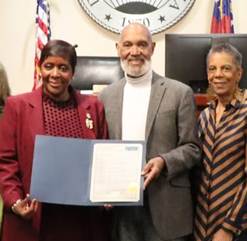
Introducing Professor Bill (“Paul Revere”) Willis – by Terry Howard

Like millions, I was riveted to the breaking news about the passing of Civil Rights advocate Jesse Jackson and at 5:30 pm, during a commercial, I called Bill Willis to follow up on a conversation we’d had two days before. 

“Will I see you at this evening’s Board of Commissioners meeting (Douglas County, Georgia)  during which I will accept their African American History Month proclamation?  It starts at six and will be preceded by an art exhibition on the third floor.” I thanked him for the heads up and promised to get there as soon as I could.

 Well as it typically is it is for Bill Willis, not only was he there with one of paintings, but the impeccably dressed Willis was there to accept the Commissioners proclamation.

Continue reading Introducing Professor Bill (“Paul Revere”) Willis – by Terry Howard

Renewing Diversity #13: Diversity History as a Foreign Country – by Carlos Cortés

In his mesmerizing novel, The Go-Between, L. P. Hartley wrote one of the finest opening lines of any novel I have ever read:  “The past is a foreign country; they do things differently there.”

That certainly holds true for the historical trajectory of diversity.  At age 91, I’ve lived through myriad changes in the American diversity landscape.  As we wrestle with ongoing, inevitable challenges faced by the diversity movement, it behooves us to thoughtfully consider our past trajectory.  Yet to actually learn from that trajectory, we need to recognize how our presentist lenses can distort the very past that we are trying to understand.

Continue reading Renewing Diversity #13: Diversity History as a Foreign Country – by Carlos Cortés

DEI: The Heart and Soul of America – by Niloo Soleimani

Why Micro-Belonging Is the Future

When people talk about DEI, they often turn to statistics, trends, and political debates — but for me, it began as something far more personal. I didn’t begin my American journey with belonging. I began it with silence, loneliness, and a depression I didn’t have words for at fourteen. I came with colored olive skin and an accent that marked me as “other” the moment I opened my mouth. I watched people connect effortlessly while I stood at the edges — unseen, unheard, and aching for a place in a world that was unkind to someone who didn’t quite fit. Those early years taught me how deeply not belonging can cut into the human heart. And it was in the small, unexpected moments — a classmate who smiled, a teacher who believed in me, a coworker who listened — that I learned something even more powerful: belonging is built in tiny, human gestures. And those gestures became my first understanding of what America could be at its best.

Continue reading DEI: The Heart and Soul of America – by Niloo Soleimani

Rewriting History: Playing the Race Card – by Terry Howard

 ‘DEI Hire’ and other dog whistles 

I have something to say and will say it on a few issues I’ll get to shortly. 

Why me? Well, I guess it is because I’m blessed with several platforms to educate, elevate, cajole, annoy, encourage, or enrage based on what happens to crop in the latest news or on the sociopolitical menu. And this is a privilege I don’t take for granted. If I win or lose friends, well so be it. It comes with the territory. 

Now class, pull out your notebooks and ready yourselves for a lecture beginning with how one migrates from “Rewriting” to “Revealing” to “Amending” History. After lunch, we’ll switch to “Responding to the ‘playing the race card’ nonsense then finish up with boogeyman number three, dubbing someone a “diversity hire.” 

Continue reading Rewriting History: Playing the Race Card – by Terry Howard

Black History: A Personal and Historical Reflection – by Gail Dawson

Origins and Significance of Black History Month

In February 1926, Carter G. Woodson initiated the celebration of Black History Week to honor the achievements and contributions of Black Americans, which had largely been overlooked in mainstream history. Woodson specifically chose February to coincide with the birthdays of Abraham Lincoln and Frederick Douglass, which fall on February 12th and 14th, respectively. Fifty years later, in 1976, the observance was officially expanded to cover the entire month of February. Subsequently, in 1986, Congress passed Public Law 99-244, formally designating February as National Black History Month.

Continue reading Black History: A Personal and Historical Reflection – by Gail Dawson

20 Interview Questions I Should Have Asked – by Sharon Hurley Hall

More than 300,000 Black women have lost their jobs this year. As a Black woman who’s navigated similar systems, it’s made me think about the interview processes I faced: extremely stressful, multiple rounds, and not a person who shared my identity at any of them. I know from my own experience that there are double-takes as you walk in the door. There’s extensive questioning about birth, nationality and my right to be there, and extreme scrutiny of my qualifications. And even if I then get the job, there’s no guarantee it’s a safe place to work. 

I know I’m not the only one to experience this. But what if you could use the interview process to get the answers you really need as a Black person? You might not get the job, but you’d be a whole lot clearer about whether it was the right workplace for you.

Here are 20 questions I wish I’d been able to ask.  Continue reading 20 Interview Questions I Should Have Asked – by Sharon Hurley Hall

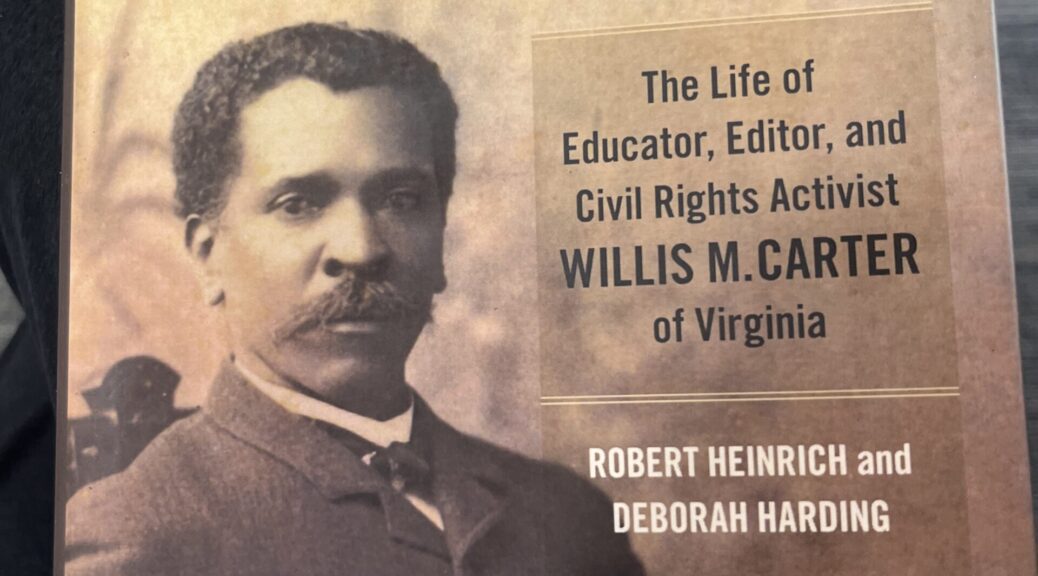
The little known life of Willis Carter – by Terry Howard

I could be wrong (and hope that I am) but the guess here is that those about to read this column are probably unfamiliar with the name Willis McGlascow Carter. (How about a show of hands by those who do and are anxious to prove me wrong.)

But for those who don’t, no worry since until recently, neither did I although he spent most of his life as a teacher, newspaper editor and activist in Staunton, Virginia, which happens to be my hometown.

Continue reading The little known life of Willis Carter – by Terry Howard