Path to Religious Literacy
 While leadership training will often include issues related to Diversity & Inclusion, few programs include instruction in religious diversity. Yet, cultural awareness, cultural competence, global leadership, and cross-cultural communication are embraced as the tools of the market place of the future. What accounts for this black hole of information on diverse religions? One has only to turn on the TV, open a newspaper, or check the internet headlines to see that religion is a major factor in interactions across the planet. It is both puzzling and disturbing that a virtual vacuum of expertise exists in the relationship-oriented sectors of our society: business, education, government, and human services. Trying to avoid culture clash of belief systems can result in a paralyzing sense of being overwhelmed and under-prepared. Too many leaders are left scrambling for strategies and resources designed to turn the religious diversity novice into an expert.
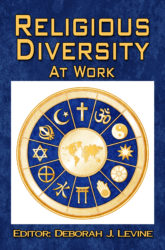
Continue reading Quick Reference Religious Diversity Cards – by Deborah Levine
 I was excited to return to Cincinnati where my father had been the CFO of the American Jewish Archives. I was on the road, speaking on Religious Diversity in our Schools and at Work at the invitation of a Women of Faith event sponsored by American Jewish Committee, Xavier University & the Brueggeman Center for Dialogue, Islamic Center of Greater Cincinnati, and the Jewish Community Relations Council.
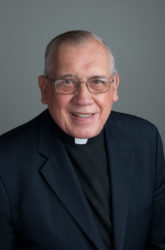 The Rev. Dr. John T. Pawlikowski is a Servite Friar priest, Professor Emeritus of Social Ethics, and Former Director of the Catholic-Jewish Studies Program, part of The Bernardin Center for Theology and Ministry, at Chicago’s Catholic Theological Union (CTU). Pawlikowski was appointed to the United States Holocaust Memorial Council by several presidents, chaired the council’s Subcommittee on Church Relations, served on its executive committee, the Committee on Conscience, and academic committee. He also served as president of the International Council of Christians and Jews (ICCJ) and its Abrahamic Forum and currently holds the title of Honorary Life President. Pawlikowski is a member 3 key committees of the Parliament of the World’s Religions (Global Ethic, Peace and Justice, and Climate Action Task Force). He has authored/edited 15 books on Christian-Jewish Relations as well as on social issues such as economic justice, war and peace, and ecological sustainability. He is the former editor of New Theology Review and a member of the editorial board of the Journal for Ecumenical Studies.
 In a time when racial, political, economic and religious divisions in the United States are increasingly obvious, the people of one southern city, Chattanooga, Tennessee, are attempting, through dialogue, to understand the religious beliefs of one another. On a chilly November Monday evening a group of over fifty people gathered at a Hindu temple for the Sixth Interfaith Panel Discussion. The attendees and panelists were ordinary people, with extra-ordinary beliefs concerning the value of gaining knowledge and understanding of the faith traditions of one another.