Category Archives: Inclusion

Diversity and Inclusion

An African American in Women’s History Month – by Terry Howard

To kick off March, Women’s History Month, I decided to write about Unita Blackwell and her place in both African American and women’s histories. Among so many great women of all backgrounds, among them Eleanor Roosevelt, Viola Liuzzo and Susan B. Anthony who advocated for civil and voting rights, I wish that Unita Blackwell was alive and with us today. More than ever, we need her out on the battlefield leading protests and knocking on doors extolling the urgency of exercising our right to vote. Lord knows we need her (and them).

Continue reading An African American in Women’s History Month – by Terry Howard

Strategic Business Advantage of Gender Equity – by Rose Joneson

Inclusive Leadership

Inclusive leadership is no longer a “nice-to-have” or a seasonal initiative highlighted once a year. It is a strategic lever for growth. Companies that treat gender equity as a core business priority — not a public relations effort — consistently build stronger leadership pipelines, make better decisions, and outperform competitors.

Despite progress, women remain underrepresented in executive leadership globally. According to McKinsey & Company’s, women hold roughly one in four C-suite positions, and progress at senior levels remains uneven. This gap is not only a representation issue; it directly impacts organizational effectiveness. Leadership teams lacking diversity often experience narrower strategic thinking and reduced innovation capacity.

Inclusive leadership changes that dynamic. It deliberately creates environments where talent rises based on capability, not access, bias, or outdated systems. Organizations that embrace gender equity as a business strategy unlock measurable advantages: higher employee engagement, stronger retention, broader market insight, and improved financial outcomes.

Here are five strategic pillars that turn gender equity into a true competitive advantage.

1. Establish Clear and Transparent Pathways to Leadership

You cannot expect equitable outcomes from unclear systems. Many organizations still operate with vague promotion criteria, informal sponsorship networks, and inconsistent leadership standards. These environments unintentionally reward visibility over performance and access over merit.

Inclusive organizations remove ambiguity. They define what leadership requires — specific competencies, measurable performance benchmarks, and realistic timelines. They create structured development programs instead of relying on informal networks that often exclude underrepresented groups.

When career progression becomes transparent, confidence increases. Employees are more likely to pursue advancement when they can clearly see the path forward. This isn’t about lowering expectations; it’s about ensuring expectations are clearly defined and consistently applied.

2. Design Flexible Work Structures That Support Long-Term Advancement

Flexible work policies are not perks anymore — they are strategic retention tools. While caregiving responsibilities can affect professionals of all genders, women often carry a disproportionate share. Without structural flexibility, many talented leaders exit the pipeline before reaching senior roles.

Organizations that embrace meaningful flexibility — remote work options, outcome-based performance metrics, adaptable scheduling — expand access to leadership. But flexibility must be authentic. If leadership roles quietly reward presenteeism or 24/7 availability, flexibility becomes performative.

Companies that integrate flexibility into leadership culture see measurable benefits: stronger retention, improved productivity, and broader leadership representation. The result is continuity in talent development rather than constant rebuilding.

3. Address Bias Through Systems, Not Just Workshops

Unconscious bias exists in every organization. The real question is whether systems are designed to minimize their impact.

Bias training is valuable, but training alone does not change outcomes. Inclusive leadership embeds safeguards directly into hiring, evaluation, and promotion processes. Structured interview scoring, diverse hiring panels, standardized performance reviews, and promotion audits reduce subjective decision-making.

When organizations regularly review representation data, compensation patterns, and advancement rates, they move from assumptions to evidence. Data creates accountability. It transforms inclusion from aspiration into an operational discipline.

The goal is not to assign blame. It is to build decision-making frameworks that ensure talent is evaluated fairly and consistently.

4. Strengthen Infrastructure with Strategic HR Guidance

Human resources plays a critical strategic role in advancing gender equity. Effective HR guidance ensures that inclusion is not siloed within one department but embedded across the organization.

Strategic HR frameworks shape recruiting pipelines, compensation structures, succession planning, and leadership development programs. They create guardrails that prevent inequities from emerging and address them quickly when they do.

This includes pay equity audits, transparent compensation bands, structured mentorship initiatives, and formal sponsorship programs that connect emerging female leaders with executive advocates. It also means tracking progress consistently — not once a year, but as an ongoing metric tied to leadership accountability.

When HR operates as a strategic partner rather than an administrative function, it becomes a driver of inclusive growth.

5. Engage Leadership Commitment and Active Allyship

Inclusive leadership requires visible commitment from the top. Cultural transformation accelerates when executives model inclusive behaviors and actively support gender equity initiatives.

Male leaders, in particular, often hold influential sponsorship positions. When they advocate for qualified women, challenge biased assumptions in meetings, and ensure equal access to high-visibility projects, momentum increases.

True allyship is proactive. It involves opening doors, sharing influence, and reinforcing equitable standards in decision-making rooms. When leadership accountability is tied to measurable inclusion goals, equity becomes part of performance expectations — not a side project.

The Compounding Business Impact

When these strategies operate together, the results compound.

Inclusive leadership improves decision quality by incorporating broader perspectives. It strengthens employer branding by signaling fairness and opportunity. It reduces turnover costs by retaining high-performing talent. It enhances resilience by building adaptable, psychologically safe teams.

Most importantly, it aligns leadership capability with the realities of diverse markets. Companies serve diverse customers. Leadership teams that reflect that diversity are better positioned to understand, anticipate, and meet evolving needs.

Gender equity is not about symbolic representation. It is about maximizing available talent. Organizations that overlook half the talent pool limit their own growth potential.

Moving from Initiative to Strategy

Inclusive leadership becomes a competitive advantage when it shifts from initiative to infrastructure. That means embedding equity into hiring criteria, performance reviews, compensation decisions, succession planning, and executive accountability metrics.

It requires consistent measurement. It demands transparency. And it calls for leaders willing to challenge legacy systems that no longer serve a modern workforce.

The organizations that treat gender equity as strategy — not sentiment — are building the leadership teams of the future. They understand that inclusion fuels innovation, equity strengthens engagement, and diverse leadership drives smarter business outcomes.

In today’s competitive environment, that is not optional. It is decisive.

Graphic: pexels-yankrukov-7793699

Introducing Professor Bill (“Paul Revere”) Willis – by Terry Howard

Like millions, I was riveted to the breaking news about the passing of Civil Rights advocate Jesse Jackson and at 5:30 pm, during a commercial, I called Bill Willis to follow up on a conversation we’d had two days before. 

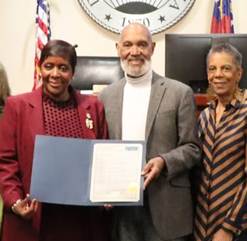
“Will I see you at this evening’s Board of Commissioners meeting (Douglas County, Georgia)  during which I will accept their African American History Month proclamation?  It starts at six and will be preceded by an art exhibition on the third floor.” I thanked him for the heads up and promised to get there as soon as I could.

 Well as it typically is it is for Bill Willis, not only was he there with one of paintings, but the impeccably dressed Willis was there to accept the Commissioners proclamation.

Continue reading Introducing Professor Bill (“Paul Revere”) Willis – by Terry Howard

Renewing Diversity #13: Diversity History as a Foreign Country – by Carlos Cortés

In his mesmerizing novel, The Go-Between, L. P. Hartley wrote one of the finest opening lines of any novel I have ever read:  “The past is a foreign country; they do things differently there.”

That certainly holds true for the historical trajectory of diversity.  At age 91, I’ve lived through myriad changes in the American diversity landscape.  As we wrestle with ongoing, inevitable challenges faced by the diversity movement, it behooves us to thoughtfully consider our past trajectory.  Yet to actually learn from that trajectory, we need to recognize how our presentist lenses can distort the very past that we are trying to understand.

Continue reading Renewing Diversity #13: Diversity History as a Foreign Country – by Carlos Cortés

DEI: The Heart and Soul of America – by Niloo Soleimani

Why Micro-Belonging Is the Future

When people talk about DEI, they often turn to statistics, trends, and political debates — but for me, it began as something far more personal. I didn’t begin my American journey with belonging. I began it with silence, loneliness, and a depression I didn’t have words for at fourteen. I came with colored olive skin and an accent that marked me as “other” the moment I opened my mouth. I watched people connect effortlessly while I stood at the edges — unseen, unheard, and aching for a place in a world that was unkind to someone who didn’t quite fit. Those early years taught me how deeply not belonging can cut into the human heart. And it was in the small, unexpected moments — a classmate who smiled, a teacher who believed in me, a coworker who listened — that I learned something even more powerful: belonging is built in tiny, human gestures. And those gestures became my first understanding of what America could be at its best.

Continue reading DEI: The Heart and Soul of America – by Niloo Soleimani

Rewriting History: Playing the Race Card – by Terry Howard

 ‘DEI Hire’ and other dog whistles 

I have something to say and will say it on a few issues I’ll get to shortly. 

Why me? Well, I guess it is because I’m blessed with several platforms to educate, elevate, cajole, annoy, encourage, or enrage based on what happens to crop in the latest news or on the sociopolitical menu. And this is a privilege I don’t take for granted. If I win or lose friends, well so be it. It comes with the territory. 

Now class, pull out your notebooks and ready yourselves for a lecture beginning with how one migrates from “Rewriting” to “Revealing” to “Amending” History. After lunch, we’ll switch to “Responding to the ‘playing the race card’ nonsense then finish up with boogeyman number three, dubbing someone a “diversity hire.” 

Continue reading Rewriting History: Playing the Race Card – by Terry Howard

Black History: A Personal and Historical Reflection – by Gail Dawson

Origins and Significance of Black History Month

In February 1926, Carter G. Woodson initiated the celebration of Black History Week to honor the achievements and contributions of Black Americans, which had largely been overlooked in mainstream history. Woodson specifically chose February to coincide with the birthdays of Abraham Lincoln and Frederick Douglass, which fall on February 12th and 14th, respectively. Fifty years later, in 1976, the observance was officially expanded to cover the entire month of February. Subsequently, in 1986, Congress passed Public Law 99-244, formally designating February as National Black History Month.

Continue reading Black History: A Personal and Historical Reflection – by Gail Dawson

Leadership in Our Challenging Times – by Deborah Levine

I often hear that leadership is greatly needed in these challenging times. But what does leadership mean? Is it a matter of personality? Is leadership defined by mission and goals? Are leaders inspirational figures who leave the nuts and bolts to others? The more we try to define leadership, the more the concept undefinable. “There are almost as many definitions of leadership as there are persons who have attempted to define the concept,” said Ralph Stogdill, a Professor of Management Science and Psychology known for his research and publications on the Personal Factors Associated with Leadership.

Continue reading Leadership in Our Challenging Times – by Deborah Levine

Holocaust Ethical Implications – by John T. Pawlikowski, OSM, Ph.D.

The academic study of ethics, in light of the experience of the Holocaust, has witnessed rapid development in the last decade. In addition to research into ethical decision making during the Holocaust itself in such volumes as Rab Bennett’s Under the Shadow of the Swastika: The Moral Dilemmas of Resistance and Collaboration in Hitler’s Europe, more general reflections on the significance of the Holocaust for contemporary ethics have come to the fore from Jewish and Christian scholars alike. There have also been voices such as Herbert Hirsch who have questioned whether we can learn anything from the Holocaust in terms of the moral challenge facing us today given the sui generis nature of that event as well as the immense complexity of a modern, global society.

Continue reading Holocaust Ethical Implications – by John T. Pawlikowski, OSM, Ph.D.

Renewing Diversity Part 12:  Diversity and the AI Frenzy – by Carlos Cortés

During 2025 few trends, if any, received more attention than developments in artificial intelligence.  You can hardly pick up a magazine or listen to a newscast without hearing something about AI.  However, I have encountered relatively little addressing the intersection of AI and diversity. 

What might AI mean for diversity?  What can diversity advocates do to address the implications of AI?  Questions range from the ethical to the practical.  In this column I will focus on one question: what are some of the diversity implications arising from the creation of AI databases and the resulting “information” that they supply when prompted?

Continue reading Renewing Diversity Part 12:  Diversity and the AI Frenzy – by Carlos Cortés