Warning: call_user_func_array() expects parameter 1 to be a valid callback, function 'sadlysplitdirect' not found or invalid function name in /home/ufq9pf973nnd/public_html/wp-includes/class-wp-hook.php on line 341
Skip to content
“Hold up! Did Senate Minority Leader Mitch McConnell say what I thought he said?” rhetorically asked columnist Jonathan Capehart.
Well, yes, Jonathan, your ears didn’t lie. You heard what you heard. And if you are any person of color, neither did it come as a surprise.
Now as much as I’d like to cut McConnell some slack because of his “caught with his pants down” moment, I couldn’t resist the opportunity. In case you missed it, here is what he said when asked about concerns about voter participation by African Americans:
On Monday the nation will pause to observe the annual holiday honoring the life and legacy of iconic civil rights leader, Dr. Martin Luther King, Jr. Yet too many Millennials and members of their younger cohort, Generation Z, consider civil rights history as ancient history at the dawn of a new millennium.
However, there are profound and poignant lessons which today’s young people need to learn. The most important lesson is how to make major changes in society through the type of peaceful means championed by the Rev. Dr. Martin Luther King Jr. and his fellow civil rights leaders of the time.
How will India respond in 2022 to this regressive stance towards women?
In December, 2021, millions of secondary school students in India appeared for their Class X (Grade 10) exams conducted by the Central Board of Secondary Education (CBSE).
Since its inception in the 1920s, the Board has gone through several changes and emerged as one of the largest such organisations in the world, with more than 25,000 school — based in India and other countries — affiliated to it. Each year, about 2 million students take the secondary board exams.
Hear the online dialogue between two television / media experts discuss their ties to their respective communities, how they’re shaped by them, and how they report stories about them. * Scroll down for the link. *
LaTrice Currie is a native Tennessean who graduated from Hampton U. LaTrice joined Chattanooga’s Channel 3 Eyewitness News in 1995. She now co-anchors news at noon and 5:30 and also serves as Eye On Health Reporter and host of Trends on 3.
LaTrice’s awards include Chattanooga Woman of Distinction, Hamilton County Outstanding Citizen, Black Excellence Chattanooga “Best Media Personality,” Times Free Press “Best Chattanoogan, and NAACP Image Awards. She serves as ambassador for Go Red For Women and on various boards: Moccasin Bend Girl Scout Council, Big Brothers Big Sisters of Chattanooga, advisory board for Volunteers in Medicine, and Partnership for Families, Children, and Adults.
Ilene Gould is a photographer, writer, illustrator and full time news producer for NewsChannel9 in Chattanooga where she has produced every show from mornings, to dayside evening shows, to nightside. She also co-produced an hour long Town Hall called “Changing Chattanooga”. Ilene is a Michigan State Graduate with a degree in Media and Information, a concentration in Film and Video Production, and minors in Fiction Filmmaking and Music.
Ilene also works part-time as Community Manager at Better Sax, where saxophonist Jay Metcalf teaches and creates online lessons to learn to play the saxophone by ear.
Be inspired! Hear these two creative souls who share a love of music from their respective religions. Scroll down for the link to the recording.
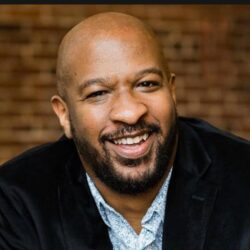
Melvin Kindall Myles is a Mississippi native, born and raised in the Delta area of Clarksdale, MS; known as the birthplace of the blues. He is a Soulful Christian and Jazz Vocalist now based in Atlanta, GA where you will find him regularly serving in the Worship and Arts Ministry of the Historic Ebenezer Baptist Church, the former pulpit of MLK Jr.
Editor’s Note: Article from DEI in Communications class at the University of TN / Chattanooga where I spoke on religious diversity.
Corporate America makes up nearly 45 percent of American employees. Each of those employees represent diversity in some form or fashion, representing an array of languages, cultures, classes, and religions. With these diverse aspects comes considering dealing with differences between employers, co-workers, CEO’s, etc. Religious Diversity seems to have the most significance when it comes to conflict or dealing with strategic communication. Religious Diversity plays an essential role in Corporate America, especially today in the age of Social Media and the public seeing what corporations are “all about.”
How a big corporation such as Delta, Nike, Target, Verizon, etc promotes being accepting of religion, no matter what religion, is essential from a Public Relations standpoint. Yes, they might look good on the outside to the public for consumer satisfaction and revenue, but it’s not always equally reflected within these corporations. Religion is defined by Equal Employment Opportunity Commission (EEOC) by saying; “Religion is not limited to traditional, organized religions, but also includes religious beliefs that are practiced by a small group of people and are not part of a formal church or sect.” (SHRM 2008) Religious diversity really shows itself with respect in how employers handle accommodating time off for religious holidays. According to most corporate Human Resource Managers, they report they work with ”most” religious holidays meaning Easter, Thanksgiving, Christmas etc- and not including holidays such as Diwali, Yom Kippur, Ramadan, etc.
Editor’s Note: Article from DEI in Communications class at the University of TN / Chattanooga where I spoke on religious diversity.
When discussing the idea of someone’s religious ideals and upbringings, it is important to treat these topics with the utmost respect. However, the church you may attend is much more than a business than you might expect. Religion is a $1.2 trillion dollar industry, and yes that is trillion. This can ultimately bring into question the character of those who operate these businesses. Does this mean that these establishments are ultimately trying to trick or confuse those who attend? Not necessarily, but it is shallow to operate behind closed curtains much like many church business markets.
It is also important to break down the similarities with a business and a church. The church offers a public speaking attendance for its viewers and does things such as play music. These things are often services that require payment to attend. Concerts and motivational speakers do not often offer the contents within their acts to the public for free. According to the Theology of Business Institute, annual collections for churches averaging 162 attendees is just south of $215,000. It is important to note as well that a church is a legal entity. They employ a group of people at each general location across the country and strive to ignite the community. If a church is operating for a long period of time, it is safe to assume that they are generating a profit.
Editor’s Note: Article from DEI in Communications class at the University of TN / Chattanooga where I spoke on religious diversity.
Many aspects of communication have changed over the years to become for the most part more inclusive. However, one part that seems to be falling a bit behind all the others is the inclusion of religious diversity. This topic is not one that is discussed a great deal when thinking about advertising, branding, or marketing. There is a lot of discussion about racial inclusion as well as gender inclusion, but the religious aspect does not get as much attention. This idea seems to be changing a bit at a time, especially with companies such as Apple, Facebook, and Google.
Advertising is a big part of media and communications, however there is not a lot of religious talk in regard to what is included in advertisements. It is not one of their main focuses within many companies when researching and determining what will generate the most success for their advertisements. When dealing with religious holidays it is taken into consideration that some things should be included, such as when dealing with Easter and Christmas, however there is rarely any research done into how best to reach those religious minorities. It is considered a general rule in advertising to not use generic religious symbols that could somehow offend a person of that religious affiliation. And while this is a good step there is work to be done in regards to making advertising a religiously inclusive part of marketing and communications. There are some companies who are making good progress in the right direction, such as Facebook.
Editor’s Note: Article from DEI in Communications class at the University of TN / Chattanooga where I spoke on religious diversity.
As we get older and merge into the world, we are often faced with meeting increasingly more diverse people. It is important to listen to each other with open minds to understand others and how they have lived their lives. Learning and understanding new points of view is the best way to be an active member of a diverse community. Generalizing religious people groups can be dangerous as everyone has different experiences even within the same religion. As Christians, we have different walks of faith and yet, we have had our own experiences in life. The following three testimonies are from college students who identify themselves as members of the Christian faith.
Racism, when it has become “structured” into a society and into its institutions, is a very complex thing. We like to think it is an “unfortunate incident” which happened because the person to whom it happened was complicit in some way. It is not. Every action you take is governed by the bigotry structured into the society in which you live which has successfully structured that bigotry into every core and every cell of its existence. The experience of bigotry is not a one time experience. It is all day everyday for those who are the “minority.” It is also an all day everyday experience for those who are “white.” Their lives move ahead beyond their talents and contributions to this society because of the fact that they are in the “better than” group.

 LaTrice Currie is a native Tennessean who graduated from Hampton U. LaTrice joined Chattanooga’s Channel 3 Eyewitness News in 1995. She now co-anchors news at noon and 5:30 and also serves as Eye On Health Reporter and host of Trends on 3.
 Ilene Gould is a photographer, writer, illustrator and full time news producer for NewsChannel9 in Chattanooga where she has produced every show from mornings, to dayside evening shows, to nightside. She also co-produced an hour long Town Hall called “Changing Chattanooga”. Ilene is a Michigan State Graduate with a degree in Media and Information, a concentration in Film and Video Production, and minors in Fiction Filmmaking and Music.