Category Archives: Social Issues

Social causes, activism, and projects

Two Letters – taking a stand! – by Terry Howard

As sheer coincidence would have it, I’d just finished rereading Dr. King’s famous “Letter from A Birmingham Jail” when the following excerpts of a letter from my good friend “Shirley” popped up in my email:
Dear Pastor, I first want to say that I have benefitted from your sermons since I have been a part of your congregation. I, however, have some concerns that prompted me to write to you. I know that my political beliefs aren’t necessarily in line with a large portion of the congregation. I knew that when I first started worshipping here but I didn’t perceive it to be a concern. I believed this to be true because I try to look at people and issues and determine the best course of action based upon all that I hear, read, observe and analyze. Based on that process, I pray that I know what is the most prudent to address and decisions to make.  

Continue reading Two Letters – taking a stand! – by Terry Howard
Healing the Trails of Tears – by Andréana Lefton

JOURNEY OF TEARS

That whole morning and night before were one long prayer for assistance. I woke at four, and sat in the living room of my friends’ river-side house, speaking aloud to the darkness, undamming the river, flooding inside.

Then I got ready, and drove to Red Clay State Park.

For years, my feet have taken me to Red Clay State Park, near Cleveland, Tennessee. This land was once the last seat of Cherokee government, and also the place where, in 1838, the Cherokee people learned that the Treaty had again been broken, their remaining land would be taken, and they would be forcibly “removed” to Oklahoma and parts unknown. Thousands and thousands of people died.

Continue reading Healing the Trails of Tears – by Andréana Lefton

Retaliation Still Commonplace in Workplace – by David Grinberg

America is fast becoming a retaliation nation. Look no further than the workplace, a microcosm of society.

Malicious managers are increasingly lashing out at aggrieved employees who have the courage to protest real or perceived discrimination. Retaliation against workers is an unlawful violation of their federally protected rights under anti-discrimination laws.

Nevertheless, retaliation is rampant from corporate America to small and mid-sized companies. This insidious form of discrimination is ruining company culture and hurting bottom-line productivity, among other negative repercussions for employers and employees alike.

Continue reading Retaliation Still Commonplace in Workplace – by David Grinberg

Navigating the “touch, no touch” quagmire: Part 2 – by Terry Howard

“Reach out and touch someone and make this a better world if you can.”  ~ Diana Ross

Wow, before the ink was dry on my, “Hug me not Joe Biden,” fundamentally a “don’t touch” (or touch selectively) advisory, in the American Diversity Report, along comes Tiffany Field who has spent decades trying to get people to do just the opposite…. touch one another more.

Okay, I say don’t touch, she says do touch!

So what gives?

Continue reading Navigating the “touch, no touch” quagmire: Part 2 – by Terry Howard

Stopping Sex Bias on Wikipedia – By David B. Grinberg

Wikipedia, the popular online encyclopedia, continues to marginalize women on its English language pages and among its staff. This conclusion is not theoretical but unequivocal. It’s based on academic studies, public statistics and anecdotal evidence.

Wikipedia’s data is daunting, according to the Wikidata Human Gender Indicator.
To wit:

• Less than 18% of 1.6 million English Wikipedia bios are about women, up from 15% in 2014.

• Put another way: of about 1,615,000 bio pages, fewer than 300,000 are about women.

• Meanwhile, men account for about 90% of all English Wikipedia’s volunteer editors.

Wikipedia’s brand image is more reflective of 1920s paternalism than 21st century modernism. The San Francisco-based nonprofit Wikimedia Foundation, which oversees Wikipedia, has a noble mission: Democratize the free flow of information and knowledge to diverse populations worldwide.

But is English Wikipedia practicing what it preaches?

Continue reading Stopping Sex Bias on Wikipedia – By David B. Grinberg

Hug me not Joe: Part 1 – by Terry Howard

Joe hugged!

Joe’s hugging ignited a media firestorm!

Joe as in Joe Biden, former VP who’s tottering on a decision to make a run for president.

Now this narrative less about Biden and more about hugging and the need to both establish and/or reset social norms relative to personal boundaries. More than anything this is a wake-up call on hugging and the issues and questions the behavior raises.

So let’s get started.

Thou art the outside (the South) agitator – by Terry Howard

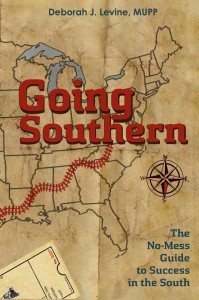
Going SouthernIn her enormously important book, Going Southern, Deborah Levine takes the inquisitive reader deep into many aspects of life in the South, Southern culture, and other things people need to know about us Southern folks.

And she courageously touches on the thorny issue of race as an undeniable part of southern history. Her experiences and mine are about occasionally stepping into racial landmines, reconciliation, contrition and hope.

Here’s one of my recent ones.

Continue reading Thou art the outside (the South) agitator – by Terry Howard

Diversity and Speech Part 2: A Changing Context – by Carlos E. Cortés

In my first column in this series, I began a discussion of the intersection of diversity and speech. This has grown out of my research as a current fellow of the University of California National Center  for Free Speech and Civic Engagement.   Let me expand upon those ideas.
The basic point is this: in the United States, free speech does not really exist.  It is an inspiring metaphor, but not an actual reality.  Unfortunately, the term has been overused.  Today people throw “free speech” around in a helter skelter manner.  Too often the term serves as an all-purpose knee-jerk response to diversity advocates when they raise issues of inequitable and non-inclusive language.  At times it can short-circuit serious diversity discussions.
 Our nation’s speech system is far too complex to be captured by those two words, “free speech.”

Continue reading Diversity and Speech Part 2: A Changing Context – by Carlos E. Cortés