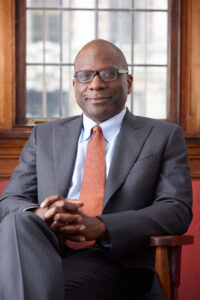
 Reverend Fred Davie is a Senior Advisor for Racial Equity at Interfaith America, where he executes programming with a primary focus on the intersection of race and religion. He is also a minister in the Presbytery of New York City, and recently served as the Executive Vice President at Union Theological Seminary.
Hear Rev. Davie address these vital questions:
- Why does Interfaith America consider religious diversity a foundational American strength?
- Why should religion be front and center in conversations about both diversity and social change?
- How does religious diversity help build better institutions and a better civil society?
You will be inspired to engage in ongoing discussions of …
- The need for a positive conversation about religious pluralism.
- How our diversity conversation should be more focused on highlighting the contributions that America’s varied communities bring to our potluck nation rather than continually centering tension and oppression.
- How religion is a force that inspires many and is a bridge of cooperation between our diversity and the largest contributor to our civil society.

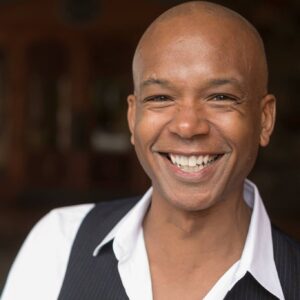 Everett Harper is an entrepreneur, strategist, and the CEO and Co-Founder of Truss, a technology infrastructure company. In his new book, “Move to the Edge, Declare it Center,” Harper shares effective methods for decision making in situations where there may be a lack of complete information, ways to sustain teams during uncertain and stressful periods, and effective techniques for managing personal anxiety—a crucial leadership skill.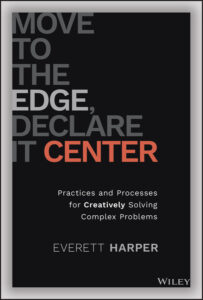

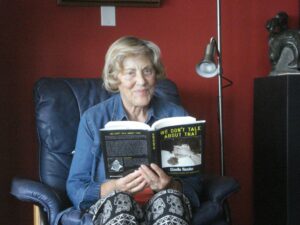 Born prior to WWII Giselle Roeder spent her early life in the relatively tranquil setting of a rural village in Pomerania, the most eastern part of Germany ceded to Poland in 1945. The bloody trauma of the fighting between the advancing Russians and the retreating German army in her neighborhood meant that thousands of people, including her family became displaced persons. l
 See
See 

 Joe Santana is Chairman of the CDO PowerCircle and the creator and host of the ERG PowerTalk podcast. The CDO PowerCircle is an association of top diversity, equity, and inclusion leaders within highly respected companies that collectively generate nearly three-quarters of a trillion dollars in annual revenue and employ almost one million people. Joe, a former line executive and diversity officer, is a published author and futurist whose mission is to develop DEI leaders at all levels for success in our new, highly disruptive world.
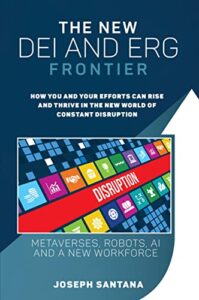 His latest book is
 The First, the Few, the Only: How Women of Color Can Redefine Power in Corporate America
 KALLIE MARIE is a recording engineer and record producer who has worked with a variety of artists and bands. She is also an award winning composer, whose work with MPath Tracks won a Broadcast Production Music Award. She has written music for film, TV, choreographers, and has a strong interest in creating music for video games. She is also a freelance writer for Sonic Scoop, as well as a published author with Routledge Taylor Francis, and her latest title with Rowman & Littlefield.
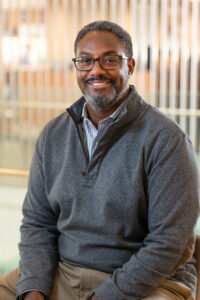 Christopher Johnson is the President of Global Financial Services at Pitney Bowes, where he manages the financing and lending businesses, as well as the consumer and merchant payments and risk management functions across the company. Christopher also holds leadership responsibility for Pitney Bowes Bank, a state chartered industrial loan company.
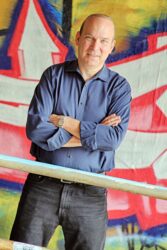
 Andrew documents the history of the Rosenwald schools program which transformed education for African Americans in the first half of the twentieth century. The founders were Julius Rosenwald, born to Jewish immigrants, who rose to lead Sears, Roebuck & Company and Booker T. Washington , born into slavery, who became the founding principal of Tuskegee Institute. In 1912 the two men launched an ambitious program to partner with Black communities to build public schools for African American children. Andrew examines the role of education as the onramp to the American middle class as well as the past, present and future of the Black/Jewish progressive alliance.
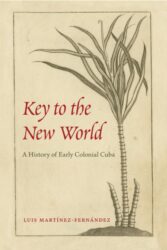
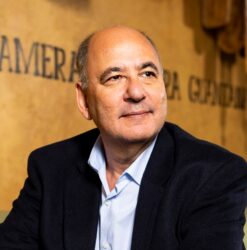 Luis Martinez-Fernandez is a Professor of History, University of Central Florida teaching Latin American and Caribbean history. He is a multiple-award winning author who has recently reinvented himself as a syndicated columnist at Creators Syndicate.