

It’s hard for me to get my head around the fact that it’s been more than a quarter century since the year 2000 publication of my book, The Children Are Watching: How the Media Teach about Diversity. In that book I proposed a framework for looking at the mass media as a sprawling, multifaceted informal educational curriculum that competes with schools in the teaching process. Whether or not media makers think of themselves as teachers is irrelevant. Once they create media, their products become sources from which people learn.
As the title suggests, the book focused on the theme of diversity. I argued that the mass media provide a form of informal public multicultural education through the ways they depict groups, portray intergroup interactions, and publicly examine how institutions and organizations interact with diversity. Continue reading Renewing Diversity Part 16: Revisiting ‘The Children Are Watching’ – by Carlos Cortés

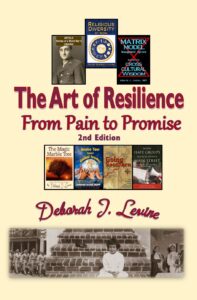 Far from being abstract research on the dynamics of resilience, Deborah Levine has provided us with a life story, and highly relevant biography, an ethnography if you will, of the struggle for resilience lived out, day by day. It is filled with the challenges to resilience from health, work, environments, and relationships. Today we speak of the cost of intersectionality on oneself. The term is extremely relevant here, as Deborah herself is bundled into her white female identity, her Jewish ethnicity, the cultural marks of her places of upbringing, her immigrant status, her health vulnerability, and her religious belongings. Each of these shows up repeatedly both as a liability and an asset in her resilience narrative.
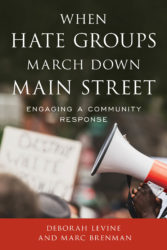 FBI Director Christopher Wray recently told Congress the following about hate groups: “A majority of the racially motivated violent extremist domestic terrorism is at the hands of white supremacists.”