
Okay, I’ll take my licks and apologize if anyone finds my headline repulsive; Sorry… Lo siento …Je suis désolé(e) …Es tut mir leid …or Entschuldigung …. 对不起 . …..Now if I missed a sorry in another language, well here’s my blanket apology; I’m sorry about that too.
So, with that said and out of the way, how about we consider our “repulsiveness” in a historical context. Let’s talk about the lingering power of images that are burnt into our subconscious and remain buried there sometimes for a lifetime.
Need a historical reference? Well, how about that time when Jet Magazine put on its front cover the mangled face of young Emmitt Till who was brutally murdered in Mississippi, an image that’s stood the test of time and today is conjured up by a finger touch on Google.
My point is that try as you might, it’s virtually impossible to dislodge the grisly images of victims of atrocities, particularly those recent ones of innocent children in religious institutions, schools and hospitals in the Ukraine and Iran. Remember that it was in 1995 when bombs exploded in front of the Alfred Murrah Federal building in Oklahoma City that took the lives of 167 people, including 19 children.
Without doubt, deplorable images have a way of hanging around for decades reminding us about our dirty laundry we’d rather not remember about ourselves. Our tendency is to mouth off our typical “thoughts and prayers” before kicking the proverbial ‘can down the road’ until the next bombing we know that’s coming. For heaven’s sake, bombing innocent people is one thing, but bombing innocent children is a degree of awfulness that should be incomprehensible to anyone who considers himself sane.
In a global context, from dropping bombs on the Ukraine, on small boats flowing in and out of Venezuela to the recent bombing of the school in which killed at least 175 people, many of them students attending class at a school in Iran, are challenging the sensibilities and patience on the part of those who care.
Oh yes, should let you off the hook thinking that all that bombing stuff happened decades ago – or in other countries – dare I mention that two young men were charged recently for attempting to detonate explosives outside the New York City mayor’s residence? Or that a little over a year ago a man drove a truck into a crowd on Bourbon Street, killing 14 people? Or during that same month an 18 year old in North Carolina was arrested for allegedly planning a deadly New Year’s Eve attack at a grocery store and fast-food restaurant in support of ISIS? Or the bombings of synagogues in America? What’s so worrisome is not only are recent bombers getting bolder, but they’re also getting younger.
Which takes us to the focus on this narrative: the bombing of the 16th Street Baptist Church in Birmingham, Alabama, on September 15, 1963, committed by the Ku Klux Klan and a girl, Sarah Collins Rudolph, who survived while four of her friends were not so fortunate.

In the early morning that day, four members of the KKK planted 15 sticks of dynamite under the steps of the church, close to the basement. At approximately 10:22 a.m., an anonymous man phoned the church. The call was answered by the acting Sunday School secretary, a 15-year-old girl named Carolyn Maull. The anonymous caller simply said the words, “Three minutes” before terminating the call. Less than one minute later the bomb exploded. Five children were in the basement at the time of the explosion. That fatal church bombing marked another turning point in the United States during the civil rights movement and contributed to support for the passage of the Civil Rights Act of 1964 by Congress.
Which takes us now to Sarah Collins Rudolph.
These days Sarah Rudolph – The 5th Girl (the title of her book) – is literally a carrier of that terrible history. She remembers every detail of that horrific day.
“I remember we were coming to church, the three of us, my sister Janie, Addie and myself. We walked to church that morning and were having so much fun throwing around Janie’s little purse, a purse shaped like a football.” Later that morning, she and Addie were waiting in the basement wondering when the next Sunday school class was out. “That’s when I saw Denise McNair, Cynthia Wesley and Carole Robertson as they came into the ladies lounge.”
“When the girls came out of the bathroom, Denise asked Addie to tie the sash on her dress. We all stood there looking to see her tie it when the bomb went off. I heard a cry, ‘Someone bombed the church!’ It was so clear.”
Rudolph remembers taking a couple of steps but didn’t get very far away from the impact. “I started walking away and thought the girls had run back to Sunday school. But they were gone.”
Needless it to say, the image of that day is, literally, burned into Rudolph’s memory. Blinded by the shattered glass, she was hospitalized. She says she thinks about it every day and still sees the scars on her face every time she looks at her reflection in the mirror.
Rudolph lost an eye from the bombing. While she was hospitalized, a Life Magazine photographer snapped an iconic photo of Rudolph lying in her hospital bed, her eyes covered in fist-sized gauze pads. She says she had no idea that the photo had been taken, nor that it polarized a nation that suddenly turned its focus to the civil rights issues rocking the South.
Despite the severity of her injuries, Rudolph reported that she received no counseling, little recognition and no restitution. “And we still haven’t gotten an apology from the city of Birmingham and are still paying bills for doctors for my eye.” After years of unwillingness to tell her story, these days Rudolph is traveling the country on a book tour telling her story.
Now, for those of you who hung with me until this juncture of my narrative, I want you to accept the blanket apology I shared at the outset. Why? Because I want to make you uncomfortable, very uncomfortable and wanting to cuss me out because of what you’re about to read.
First, take a few seconds to look at the four faces of innocence and ask yourself why. And while you’re at it, imagine the sounds of desperate screams for help from innocent victims, shattering glass and crumbling walls in schools, churches, hospitals and synagogues around the globe. Imagine the unforgettable sight of blood-soaked clothes and the stench of burning flesh. Next, think about the unimaginable pain suffered by sobbing parents who may never lay eyes on their loved ones again.
Wait, get back here readers. I’m not done with you yet.
Like the thoughts by those folks who worked in tobacco plants, imagine the haunting thoughts that run through the minds of scores of people who work in bomb making facilities who realize that their product will ultimately lead to the untimely deaths of millions of innocent people. Look, you do what you gotta do to put food on the table. We get that.
Yes, horrific memories and images have no expiration date, nor can they be erased or banned. That includes the bombing of innocent women, men and children all over the world because to this day we can’t seem to get our political, religious, racial and ethnicity act together. And when we can’t, we bomb then mouth off a litany of hallow “thoughts and prayers” before changing the channel.
Okay readers, join me in a silent reading of the names of the four young girls whose lives were snuffed out on that dreadful day in the basement of the 16th Street Baptist Church in Birmingham:
Mae Collins…..Denise McNair…..Carole Robertson…..Cynthia Wesley!
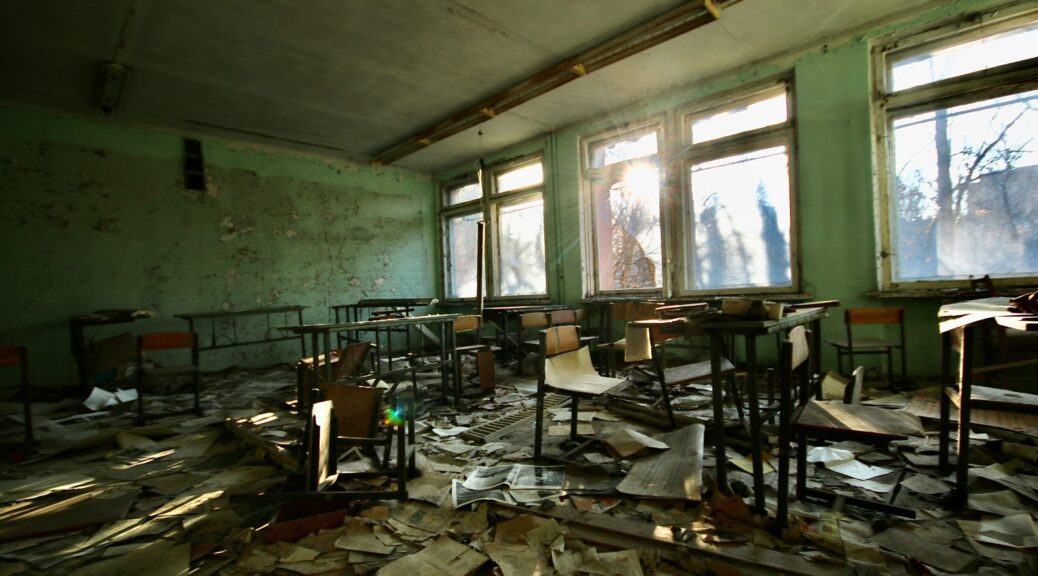
Photo by Jorge Fernández Salas on Unsplash
- Women’s History Month: Remember Viola Liuzzo – by Terry Howard - March 19, 2026
- Bombing innocent children – Terry Howard - March 11, 2026
- An African American in Women’s History Month – by Terry Howard - March 2, 2026