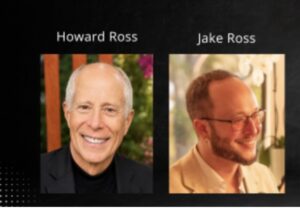
Howard J. Ross is the author of Reinventing Diversity: Transforming Organizational Community to Strengthen People, Purpose, and Performance and Our Search for Belonging: How Our Need to Connect is Tearing Us Apart. His work has been published by the Harvard Business Review, the Washington Post, the New York Times, and Forbes. He has worked with Fortune 500 companies across a variety of industries. A lifelong social justice advocate and founding partner of the nationally recognized diversity consulting firm Cook Ross, Inc., Howard still speaks broadly with his new company, Udarta Consulting LLC.
AI Bias and Mission-Driven Communities
Deborah welcomed Howard and Jake to discuss their backgrounds in creating mission-driven communities within the AI industry and addressing unconscious bias. Howard shared his journey from 60s activism to organizational development, highlighting his evolution from fixing individuals to understanding the role of unconscious bias in human behavior. Jake described his focus on compassion, communication, and connection, particularly in AI and healthcare settings. The discussion emphasized the importance of recognizing and addressing bias as a natural human trait rather than demonizing it, aiming to help people align their decisions with their values.
Information Overload and Cognitive Bias
Jake discussed how people are increasingly bombarded with information from various sources, leading to “weaponized confirmation bias” where individuals can convince themselves that any belief is true without ambient challenges to their viewpoints. Howard expanded on this by describing how modern environments, like baseball stadiums, create constant noise and light that disrupt human decision-making, referencing Daniel Kahneman’s research on how such environments affect cognitive processes. The discussion highlighted how today’s information-saturated world makes people more reactive and instinctive in their thinking.
Seeking Belonging in Polarized Communities
The group discussed how people seek belonging and community, particularly in polarized environments. Jake emphasized that social media allows people to find community without compromising their extreme views, while Howard shared a personal story about a man who felt forced to align with extremist groups after being rejected by both liberal friends and facing discrimination in the workplace. The discussion highlighted how people often seek a sense of belonging when they feel isolated or attacked by both mainstream and extreme positions.
Belonging and Identity Challenges
The group discussed challenges around belonging and identity in diverse communities. Deborah shared her experience of not fitting in anywhere and how she eventually stopped trying to belong, which led to her creative work. Jake challenged this perspective by referencing Brené Brown’s concept that belonging starts with belonging to oneself. Howard concluded by warning that technology, including AI, can actually magnify social divisions rather than help avoid them, citing examples of how algorithms can replicate historical biases.
Weaponized Confirmation Bias Discussion
Deborah, Jake, and Howard discussed the impact of weaponized confirmation bias driven by algorithms and social media, emphasizing the importance of slowing down and being mindful of one’s decision-making process. Howard stressed the value of self-reflection and using System 2 thinking to make better decisions, while Jake highlighted the significance of human connection and compassion in navigating overwhelming technology. The conversation concluded with Deborah expressing gratitude and mentioning an upcoming video series titled “We Restore Our Humanity.”
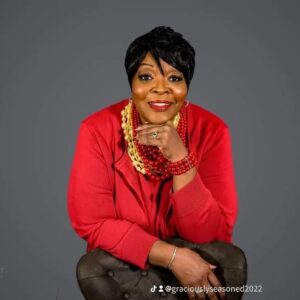 Veteran Venita Thomas, (ret. Corporal Military Intelligence) Administrative Specialist for headquarters of 3rd Infantry Division, Wurzburg, Germany. Publications Officer awarded Service Medal, Exceptional Service Award and Distinguished Honor. Thirty years experience as HR professional and educator. A State of Ohio certified Peer Support Recovery Specialist, Executive Director of the Greater Cincinnati Veteran Women’s Alliance and consultant.
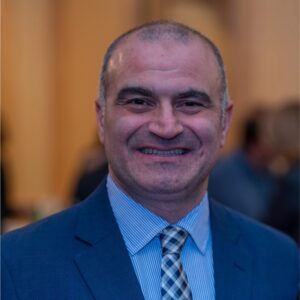 Ibrahim Anlı is the Executive Director of Rumi Forum in Washington, DC, where he leads initiatives advancing interfaith dialogue, religious literacy, and civic belonging. A scholar-practitioner with more than two decades of experience, he has built flagship programs, launched research platforms, and convened multi-stakeholder partnerships across North America, Europe, Africa, and the Middle East.
 Greg Jenkins is a dedicated leader, facilitator, trainer, coach, mentor, and small-business owner, committed to helping people and teams achieve higher performance. Greg completed a successful 28+ year US Army career that included overseas duties in Germany, South Korea, and combat duty in Iraq plus several stateside assignments culminating in Washington, D.C.
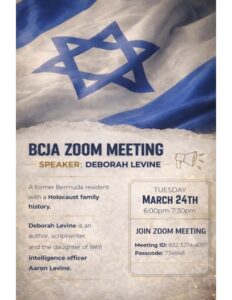 You were absolutely brilliant, sharing your family’s remarkable Jewish heritage and contributions, both locally and globally.

 Takeaways that the audience can continue to discuss:


 Rachelle Zola is a storyteller and advocate for racial equity, known for her 40-day hunger strike in 2021, urging Congress to pass H.R. 40 to create a commission to study reparations for African Americans. Recently, she completed an 825-mile pilgrimage from Chicago to Montgomery, performing her one-woman show, LATE: A Love Story, which explores personal and collective stories about racism in America.