
Building Bridges through
Constructive Conversations
To address the precipitous decline of civil dialogue, the American Diversity Report has launched a new book: Battlefield Dispatches from the Culture Wars: Building Bridges through Constructive Conversations. Co-authors, Carlos Cortés and Deborah Levine are well-known experts dealing with culture clash and aggressive intolerance.
TESTIMONIALS
Michelle Deutchman
In Battlefield Dispatches, Carlos Cortés mines his lifetime of pioneering work on diversity to honestly reflect on the progress and pitfalls of the field. An innovative and iconoclastic thinker, Carlos uses his American Diversity Report columns to take the reader on a meaningful ride, touching on his personal story and experiences as a scholar, teacher, consultant and commentator. His unique vantage point coupled with Deborah Levine’s invitation for self-reflection and storytelling creates an opportunity for human connection and conversation that transcends the page.
~ Michelle N. Deutchman, Exec. Director, UC National Center for Free Speech and Civic Engagement
Terry Howard
Given that we’ve reached a watershed moment in the evolution of the diversity movement, the timing for Battlefield Dispatches from the Culture Wars: Building Bridges through Constructive Conversations, couldn’t have been better. Drawing from his decades of hands-on involvement in the diversity movement as a teacher, writer, consultant and trainer, Dr. Cortés nails it with a brilliant mix of actual stories, experiences, observations – and humor- that makes the book difficult to put down. By parlaying his decades of knowledge, without finger pointing Carlos deftly moves the reader through the uses (and misuses) of the nomenclature of diversity – among them, diversity and free speech, privilege, microaggressions, business case – and the emerging murkiness of where traditional diversity meets Artificial Intelligence.
Each chapter (or seminal moment) in the book is followed by a “Discussion Segment” nicely written by Deborah Levine that expertly suggests for the reader practical steps for taking both individual and small group actions. For yours truly, given the turbulent past of the diversity movement and the uncertainties of what lies ahead, Dr. Cortés provides this powerful blueprint: “Look unflinchingly at the past, apply it to the present and pivot to the future.”
~Terry Howard: Former Diversity Director/Texas Instruments, Writer: Chattanooga News Chronicle, American Diversity Report, Recipient: Dr. Martin Luther King, Jr. Leadership Award.
James A. Banks
For more than 5 decades, Cortés has made original, practical, and incisive contributions to helping schools, colleges, and universities become more reflective of the diversity within the Unites States. This needed, timely, and compelling book contains some of Cortés’ seminal and prescient publications that will help educators to reform their institutions so that students from all racial, cultural, ethnic, and language groups will experience academic success. Teaching aids by Deborah Levine enhances this visionary book, which I highly recommend.
~ James A. Banks: Kerry and Linda Killinger Endowed Chair in Diversity Studies Emeritus, University of Washington, Seattle
Gail A. Dawson
Battlefield Dispatches from the Cultural Wars offers an innovative and accessible approach to cultural dialogue, showing how personal experience, guided reflection, and shared conversation can deepen understanding of diversity. Carlos Cortés and Deborah Levine each contribute distinct strengths to this process: Carlos draws readers in through stories of his lived experience and professional insight, while Deborah helps readers turn those ideas into personal reflection and meaningful conversation.
Carlos brings the book’s themes to life through personal stories shaped by his extensive work as a college professor, diversity scholar, and diversity consultant. His reflections draw from his cultural, ethnic, and religious experiences, giving readers concrete entry points into complex diversity topics. By weaving these stories with clarity and purpose, he invites readers not only to understand his experiences but also to connect them with their own.
Deborah complements the storytelling by identifying key takeaways and encouraging readers to personalize the lessons through their own experiences. Her reflective approach helps readers move from understanding diversity concepts to applying them in conversations. As readers connect the material to their lives and share their experiences with others, conversational learning occurs turning individual reflection into collective growth.
Together, Cortés and Levine create a practical model for learning across difference – one rooted in personal story, strengthened by reflection, and extended through dialogue. Their combined approach makes diversity topics more approachable while showing how meaningful conversation can expand understanding within communities.
~ Gail A. Dawson: Former management consultant at Price Waterhouse and General Motors. Taught HR management at U. of TN/Chattanooga and was a DEI Director.
Sandra M. Fowler
This remarkable collection of essays written over a span of 7 years describes the trajectory of diversity and inclusion. Diversity and inclusion reached a height in this century previously unknown then precipitously fell to the savagery of the current political situation. Carlos captures the battles for survival of the “public pinata” that diversity has become. Culture wars have long been part of the human landscape upon which Carlos sheds a bright (sometimes harsh) light while also focusing on the bridges that have and can be built to help us navigate that landscape. Deborah Levine’s chapter-ending questions are a gift to those who want to explore possibilities for a more inclusive future.
A delight of this book is tracing the evolution of the author’s thinking, while getting to know him better with each essay. Some of this dedicated contrarian’s conclusions may seem surprising, such as there is no such thing as totally free speech in the United States. Or that “diversity efforts are long overdue for renewal.” His sense of humor is sprinkled throughout the book. I chuckled at his defense of the term “senior citizen” whereas decrying “senile” as another matter. I defy anyone to read his description of Snow White and the dwarfs without a smile or two. Carlos is a human being who thinks deeply, reads widely, and brings over 9 decades of knowledge and experience to his observations on diversity as well as contemporary events. His future-action orientation is a beacon to readers who want to make a difference in the world.
~ Sandra M. Fowler: Former president of SIETAR International and SIETAR USA (Society for Intercultural Education, Training, and Research).
Lee Webster
In their book, Battlefield Dispatches from the Culture Wars, Carlos Cortés and Deborah Levine confront the hard work of navigating polarized issues with nuance and persistence. Two ideas in particular stayed with me: the reminder that “the past is a foreign country; they do things differently there,” and the critique of the tendency to merely “admire the problem” without moving toward future-oriented action. Both insights cut through the noise. This book offers a thoughtful, experienced perspective for anyone serious about building bridges rather than reinforcing divides. There are practical suggestions on how to engage polarized issues without simply deepening the divides or spiraling endlessly into negativity.
Another delicate challenge the authors address is language equity. They delve into the murky waters of free-speech, arguing that it may often be misunderstood, and examine how over-sensitivity can arise around labels like “microaggression.” Drawing on decades of experience, Cortés and Levine pivot to offering practical ways to keep constructive conversations alive amid complexity, competing values, and shifting cultural ground. Ultimately, their vision of bridge-building as the key to a promising future serves as a grand inspiration.
~ Lee Webster: Retired NJ State Administrator, Rehabilitation Services (NJDOL/DVRS), served as executive director of a national affiliate for a youth mentoring non-profit.
Joseph P. Zolner
Cortés and Levine have created an invaluable resource that combines — in very engaging and insightful ways — equal measures of intellectual rigor and practical wisdom.
Few, if any, battlefield “generals” have presided over as many culture war clashes as Carlos Cortés. His multi-generational perspective, scholarly analysis, and real-world insight are wonderfully aided by Deborah Levine’s astute discussion prompts in ways that foster in-depth consideration of and meaningful reflection on a host of thorny cross-cultural, diversity, and intersectionality challenges.
What I most appreciate, however, is the authors’ aversion to providing catchy acronyms, static formulas, or prescribed how-to lists to address what, at their core, are very nuanced, multi-dimensional, and context-specific issues. Instead, they offer a treasure trove of leadership experience, perspective, insight, and new ways of approaching long-standing and intractable problems.
Cortés and Levine provide a powerful one-two punch for leaders of myriad organizations and institutions who strive to achieve their fair share of victories on the culture wars battlefield.
What a treat to learn, yet again, from a true “Five-Star General” in the culture wars. Even better that his many insights are wonderfully enhanced by a thoughtful and perceptive colleague in ways that will yield many constructive conversations on fraught and contentious issues.
~ Joseph P. Zolner: Former Senior Director, Harvard Institutes for Higher Education, Harvard Graduate School of Education.
Simma Lieberman
Battlefield Dispatches from the Culture Wars shows people how to talk about the hardest issues without walking away from each other. Carlos Cortés draws on more than 90 years of lived history, from growing up in a Catholic and Jewish family in segregated Kansas City to decades of teaching and consulting. The stories and examples are real and relatable. Deborah Levine turns every chapter into action. Her Takeaways give readers questions to think about on their own, as well as Discussion Segments that give groups a clear way to share their own stories. The book is the perfect mix of theory, practice, and reality for today. It discards the dogmatism, and narrow thinking that consume some “DEI” individuals and organization, for what is possible and designed to bring individual and organizational change for the benefit of all. I’d give it to any leader, team, or community group that wants to move from arguing to understanding.”
~ Simma Lieberman: “The Inclusionist,” author of 110 Ways to Champion Diversity and Build Inclusion for Everyone.
Marc Brenman
Carlos Cortés and Deborah Levine have written an important, timely, and useful book. If this were Japan, Carlos would be considered a National Treasure, and Deborah would be editor of a major national newspaper. But instead they’ve served America by injecting thoughtful and discerning insights into the need for equity, diversity, and protected speech. Logic, critical thinking, and truth-telling are in critically short supply in the U.S., and this book is a goldmine of these rare commodities. Deborah and Carlos have tried hard to substitute facts and thought for misinformation and disinformation. Their intelligence is not artificial. There is a crying need for civic education in the U.S. that works, sticks, and is put into practice. This book helps fill that need. If we’re very lucky, it will be adopted as a required text at all levels of education.
~ Marc Brenman: Former Exec. Director of Washington State Human Rights Commission, served on President’s Commission on Asian-Americans & Pacific Islanders.
Susan Carpenter
Drawing on six decades of experience as a scholar, consultant, and public educator, Cortés provides a first-hand account of the evolution of diversity education in the United States. Each chapter presents insightful, thematically-organized columns including history and personal experiences originally written for The American Diversity Report. A discussion segment, crafted by Deborah Levine, accompanies each chapter. Battlefield is certain to be a valued asset for understanding and inspiring effective approaches to diversity education.
~ Susan Carpenter: mediator, author, trainer.
George F. Simons
Reading this stimulated awareness of my own story and the stories others have shared over the sixty years I have struggled to be a missionary for diversity. Understanding what got us here is an essential ingredient to establish where we are going. This book accumulates the insights of long-standing professional diversity service providers, giving us perspectives for communicating and collaborating for a better and more humane tomorrow.
~ Dr. George F. Simons: CEO, MTÜ diversophy, Cultural Consultant for international corporations and training institutes, serves on Management Centre Europe Advisory Boards.
Zen Benefiel
Battlefield Dispatches from the Culture Wars by Carlos E. Cortés and Deborah Levine is a timely and thoughtful invitation to move beyond polarization toward understanding. Drawing on decades of experience in diversity education and cultural history, Cortés examines America’s evolving diversity landscape with intellectual honesty, while Deborah Levine enriches the work through reflective storytelling and practical frameworks for meaningful dialogue.
The authors encourage readers to embrace nuance, historical perspective, and respectful conversation. Cortés’ willingness to challenge assumptions across the spectrum reflects a commitment to understanding complexity rather than deepening division. Levine’s emphasis on storytelling reminds us that lasting bridges are built through shared human experiences, not competing arguments.
The book reveals an even broader truth: diversity challenges are ultimately systemic challenges. Constructive dialogue is an essential beginning, but sustainable transformation requires coherent systems that reinforce trust, collaboration, and wise decision-making.
In an era shaped by rapid technological and social change, Battlefield Dispatches reminds us that while tools evolve, our capacity for empathy, thoughtful conversation, and bridge-building remains the foundation for a more inclusive and coherent future.
~ Zen Benefiel: Founder, Planetary Citizens and Co-Architect, AI Universal Engine™


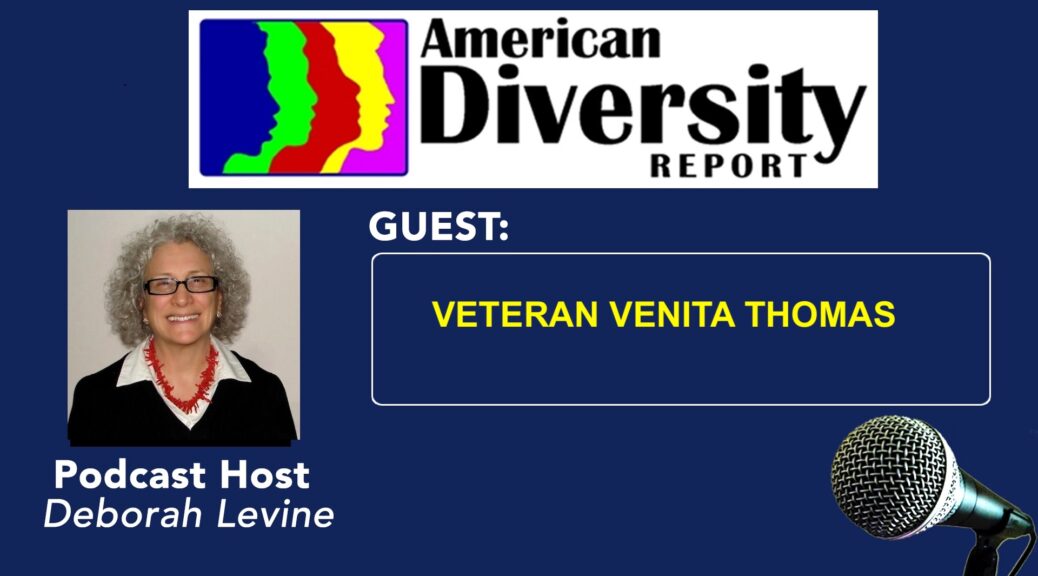
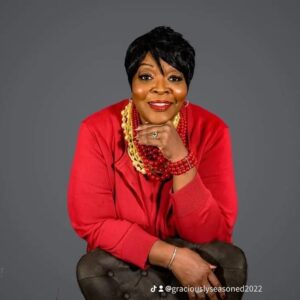 Veteran Venita Thomas, (ret. Corporal Military Intelligence) Administrative Specialist for headquarters of 3rd Infantry Division, Wurzburg, Germany. Publications Officer awarded Service Medal, Exceptional Service Award and Distinguished Honor. Thirty years experience as HR professional and educator. A State of Ohio certified Peer Support Recovery Specialist, Executive Director of the Greater Cincinnati Veteran Women’s Alliance and consultant.