Category Archives: Politics

Politically-focused articles contributed to the American Diversity Report

The Way Cousins Speak – by Tom Wegner

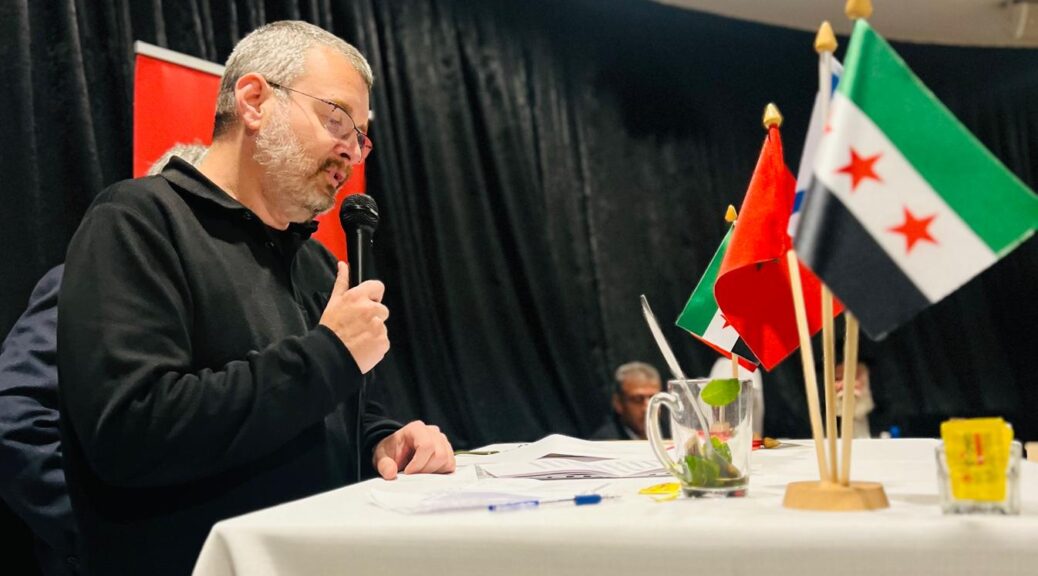
For decades, peace in our region has been negotiated between governments. What has been missing is a shared story between peoples. I learned this across divides that many Israelis never cross: in the IDF’s District Coordination and Liaison unit in Jericho, coordinating with the Palestinian Authority’s police, and later as a spokesperson for the Peres Center for Peace.

October 7, 2023 made one truth impossible to ignore: The way our region was living was not working for any of us. The massacre of the Yazidis and the civil wars in Iraq and Yemen made that clear long before that day. After it, I returned to those old relationships with one message: something had to change.

I did not believe that lines on a map, on their own, could resolve a conflict rooted in identity.

Continue reading The Way Cousins Speak – by Tom Wegner →

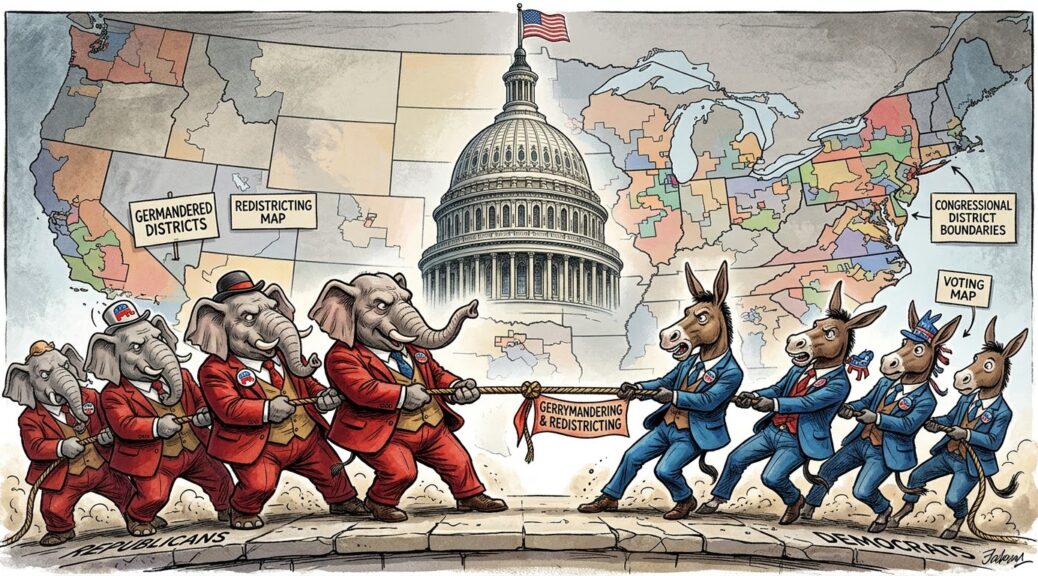
Pandering to Gerrymandering: Who Won the Redistricting War? – by David Grinberg

Here’s the Score…

Examining the race to redraw congressional maps prior to the midterm elections.

What started as so-called “Trump-mandering” quickly became a national political battle between Republicans and Democrats to redraw as many congressional districts as possible before the critically important midterm elections on November 3, 2026.

When the smoke finally cleared, one party emerged victorious and will likely have up to a 10-seat advantage in the race to control the House of Representatives going into Election Day. That’s theoretical, of course, because even though a district map is redrawn to heavily favor one party, there’s no guarantee that an upset won’t occur, even if it remains a long shot.

Continue reading Pandering to Gerrymandering: Who Won the Redistricting War? – by David Grinberg →

A Value-Based Peace Proposal for the Middle East – by W. Julian Korab-Karpowicz

The New Israel and the New Palestine

“The world is the totality of values, rather than the totality of facts.”
— Tractatus Politico-Philosophicus, 7.2021

Modern diplomacy consistently fails in the Middle East because it treats the Israeli-Palestinian conflict as a zero-sum collision of physical facts, borders, and raw power politics. This paper (Korab-Karpowicz 2026a) operationalizes the evolutionary axiology of the Tractatus Politico-Philosophicus to present a structural, value-based alternative.

By rejecting the Hobbesian trap of mechanically dividing the contested territory of the West Bank, I propose a grand geopolitical exchange: the complete integration of the West Bank into Israel to ensure its strategic and historical security, balanced by the creation of “The New Palestine”—a sovereign, world-class hyper-developed state encompassing the Gaza Strip and an expanded territory in the Sinai Peninsula, funded entirely by the international community.

Continue reading A Value-Based Peace Proposal for the Middle East – by W. Julian Korab-Karpowicz →

Wartime Part4: Why the West Fails to Defeat Regimes – by Chaim Goldberg

The Secret Pharaoh Hides from the Pentagon

A. The Biblical Question We Never Solved

How does the most sophisticated military force of the ancient world — the army of Egypt, the greatest empire on earth — march deliberately into a split sea and drown?

Think about what had just happened. Ten plagues had systematically dismantled Egyptian civilization. The Nile turned to blood. Crops were destroyed. Livestock died. And just days before that final march, death had visited every Egyptian household in a single night — the firstborn of every family, from Pharaoh’s palace to the lowest servant. Egypt was on its knees.

Yet — Pharaoh’s army charged into the parted waters. Willingly. With full force. Where was their free will? Where was the most basic human instinct — survival?

Continue reading Wartime Part4: Why the West Fails to Defeat Regimes – by Chaim Goldberg →

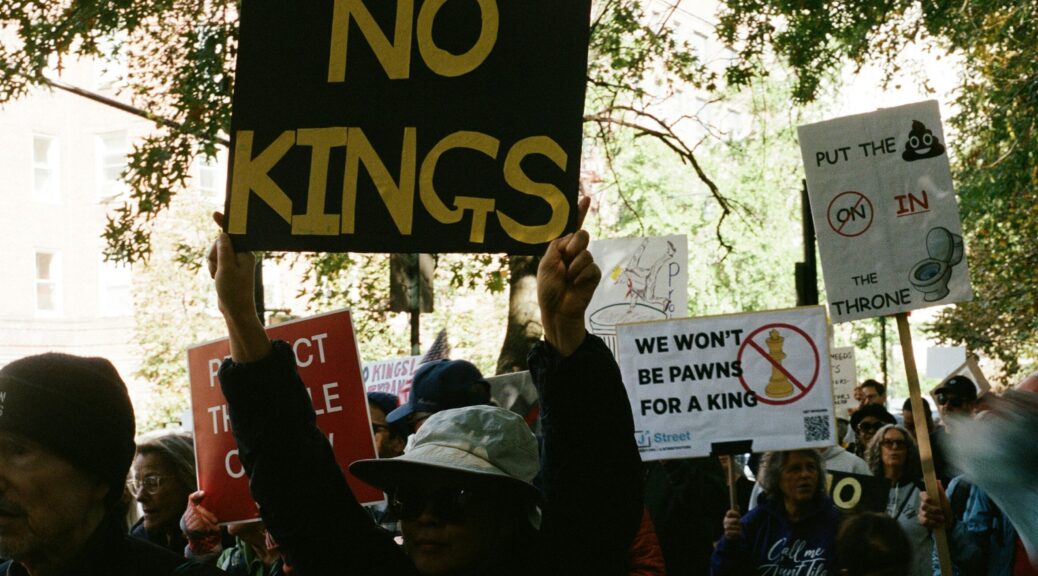
Random thoughts on No Kings Day protests – by Terry Howard

“Sorry, but I don’t remember seeing many white faces during civil rights protests and marches in the sixties.
So, I’ll take a pass.”

That was one of the “no thanks” responses I got from “Fernando,” one of several Black folks I invited to attend the recent No Kings Day protest with me. Hold that for now because I want to leave with a full-throated response to “Fernando” in closing.  

Now in case you didn’t know, cared to know, or reside on another planet (and much to the chagrin of “someone” who is obsessed with crowd size), in the largest single day of protest in American history, over 8,000,000 people took part in some 3,300 “No Kings” rallies recently spanning every continent on Earth while millions more participated remotely by watching coverage on television or online.

pastedGraphic.pngpastedGraphic_1.png

       Georgia protesters                       Virginia protester

So, despite temperatures in the mid-forties, I made the short drive to a local No Kings Day protest.  It seemed that the only difference between that protest compared to the one I attended last year was a much bigger turnout, more young people in attendance and more creative posters, some with graphic images and language way too inappropriate to include in this narrative. Plus, given that this an election year a few politicians were there deftly working the crowd. And from what I could glean from some conversations, many protesters were there not necessarily to protest for themselves but for generations to come. 

Continue reading Random thoughts on No Kings Day protests – by Terry Howard →

Pope Leo XIV is a Change Agent – by Mauricio Velásquez

A courageous voice in a wilderness of quiet conflict avoidance is refreshing, Pope Leo XIV’s regular critical comments of Trump’s policies are honorable and most important, necessary in today’s theater of hate and division.  Pope Leo XIV has been a “moral check” on our present administration, challenging them as not being even humanitarian.  He speaks  for so many – representing Catholics from all over the world.  

Most important to note is how Pope Leo XIV critizes policy, the administration’s actions and not Trump personally.  Donald J. Trump spews hate and suspicion every day and is a serial liar and it is Pope Leo XIV who cannot look the other way and “calls out Trump” constantly, regularly.  Pope Leo XIV has criticized Trump’s policies on immigrants (“inhuman”), Iran War (“atrocious”) and calls out Trump’s action as not Christian.  It is the right approach – separate the person from their actions and focus on their actions and consequences of their actions.

Continue reading Pope Leo XIV is a Change Agent – by Mauricio Velásquez →

Bombing innocent children – Terry Howard

Okay, I’ll take my licks and apologize if anyone finds my headline repulsive; Sorry… Lo siento …Je suis désolé(e) …Es tut mir leid …or Entschuldigung …. 对不起 . …..Now if I missed a sorry in another language, well here’s my blanket apology; I’m sorry about that too.

So, with that said and out of the way, how about we consider our “repulsiveness” in a historical context. Let’s talk about the lingering power of images that are burnt into our subconscious and remain buried there sometimes for a lifetime. 

Continue reading Bombing innocent children – Terry Howard →

A Zionist for Zohran, Sort of… by Rafaela Amrita Crevoshay

Counter intuitive? It certainly sounds incongruent. But dig a bit deeper and you’ll discover that Z and me share some unconventional complexities that match up. We both live in the cultural orbit of North India, and the Middle East. It includes language music, food, and politics. These things unite us more that they separate us yet superficially,  we don’t match up. He’s a partisan Muslim, I’m a Zionist Jew. Reconciliation would seem off the table. But I like this guy and that motivated me to excavate his background and his character despite an apparent ideological gulf that separates us. 

Continue reading A Zionist for Zohran, Sort of… by Rafaela Amrita Crevoshay →

Political Violence & Inclusion – by Deborah Ashton

Throughout history, political discourse in the United States has oscillated between civility and conflict. There were notable times when individuals from opposing perspectives engaged in constructive debate, exemplified by the 1965 exchange between author James Baldwin and conservative commentator William F. Buckley Jr., as well as the bipartisan relationships of leaders such as Ronald Reagan and Tip O’Neill during the 1980s. Yet, it is important to recognize that political violence is deeply rooted in the nation’s origins. The American Revolution itself was marked by actions that, had they failed, would have been deemed treasonous. As we complain about masks being worn to hide the perpetrator’s identity, colonists dressed up as Native Americans when they engaged in the Boston Tea Party. Hiding one’s identity is not new.

Continue reading Political Violence & Inclusion – by Deborah Ashton →

A plea for more “Howard (and Harriet) Beales!” – by Terry Howard

Howard Beale had finally reached his breaking point. He was not going to take it anymore. Beale is a fictional character from the film Network (1976) and one of its central characters. He is played by Peter Finch who won a posthumous Oscar for the Beale role. 

Here’s an excerpt from his advice for folks to do during those tumultuous times:

“I want you to get mad! I don’t want you to protest. I don’t want you to riot. I don’t want you to write to your congressman because I wouldn’t know what to tell you to write. I don’t know what to do about the depression and the inflation and the Russians and the crime in the street. All I know is that first you’ve got to get mad.  I want all of you to get up out of your chairs. I want you to get up right now and go to the window. Open it, and stick your head out and yell, ‘I’M AS MAD AS HELL, AND I’M NOT GOING TO TAKE THIS ANYMORE!’ 

Continue reading A plea for more “Howard (and Harriet) Beales!” – by Terry Howard →