
In October 2026, Arkansas Gov. Sarah Huckabee Sanders received a backlash for a promotional video she aired promoting the state’s stricter Medicaid work requirement rules. She dared to portray a welfare recipient as an unemployed young White man playing video games. Many people took exception to the video; some were unhinged. A panelist on The Five on the Fox network proclaimed that Black women were the largest recipients. Why? Because that is the common belief. But is it true?
Bias would say, Yes. The facts would say, No! According to the U.S. Census Bureau:
- White women are the single largest demographic group receiving public assistance. They are 22% to 25% of all adult recipients across programs like Medicaid and SNAP.
- White men represent the second-largest adult share at roughly 16% to 19%, followed by Hispanic women (14% to 17%) and Black women (12% to 15%).
(Please note that when White is used in this article it refers to Non-Hispanic White and Black refers to Non-Hispanic Black.)
When recipients without children are reviewed, the White percentages rise substantially, accounting for roughly 41% to 46% of all working-age adult beneficiaries who receive public assistance—with White women being 24% to 27% and White men being 17% to 19% of public assistance recipients.
Going a step further, according to the U.S. Bureau of Labor Statistics, 11% of U.S. prime‑aged men (ages 25–54) — roughly 7 million — are not in the labor force. Of that 7 million, approximately 56% or 3.96 million are White men and approximately 20.5% or 1.48 million are Hispanic men. All other groups represent less than a million men per group with Black men being 13.5%, Asian men being 6.9%, two or more races being 4.9%, American Indian/Alaskan Native being 2.1% and Native Hawaiian/Pacific Islander being 0.3% of the 7 million who opted out of the labor force.
Given the above data, it is not surprising that Gov. Sanders chose to portray an unemployed young White man playing video games. White men are the second largest recipient of public assistance in the United States. White women are the largest recipient of public assistance. This should not be surprising, given that White women and White men represent 56.1% of the total U.S. population.
White women are approximately 28.6% and White men approximately 27.5% of the U.S. population. In alignment with Gov. Sanders’ goal for implementing a work requirement, she portrayed what is the second largest group receiving public assistance in the U.S. She did not focus on which group was most likely to be below the poverty level or have the higher rate of unemployment within a racial/ethnic gender group. Her focus was which group made-up the bulk of recipients on public assistance, which would be White women and White men.
This controversy reminded me of the Clinton administration’s 1996 welfare-to-work initiative. At the time, I was living and working in Minnesota, where the public assistance department asked major Minneapolis-area corporations to help recipients transition from welfare to employment. The meeting was held at a public assistance office, so those of us from corporate America walked through a waiting area filled with benefit recipients on our way to the conference room.
In the mid-1990s, roughly 85–90% of Minnesota’s population identified as White, and the people we saw waiting that day were White. Yet even there, many of the representatives from corporate America assumed that most public assistance went to people of color. They were shocked to see White recipients of welfare. Given the demographics of Minnesota, logic should have suggested otherwise. In a state with an overwhelmingly White population, most recipients were likely to be White.
That experience illustrates the gap between common beliefs and observable facts. Let’s examine the other gaps that exist between beliefs and facts.
While the term going postal is a part of the lexicon for violence in the workplace, according to the U.S. Bureau of Labor Statistics, postal workers experience violence from co-workers at practically the same rate as the general U.S. workforce, at 4% and 3% rate, respectively. Regarding workplace homicides, postal workers are one-third as likely to be killed at work. The workplace for postal workers is less dangerous than healthcare, social assistance, and retail where there is an external threat from patients, clients, and robbers.
The other area where beliefs do not match the facts is who engages in sexual abuse of children. According to Federal child welfare data, 80% to 90% of child sexual abuse is committed by someone the child knows, usually a family member, stepparent, family friend, or neighbor, not by a clergy or a stranger.
While over 90% of child sexual perpetrators are men, only 1% to 5% of men are child sexual perpetrators. And despite the Catholic priest jokes, clergy members across major religions, whether priests, rabbis, imams, or protestant ministers commit child sexual abuse at rates broadly comparable to—or slightly lower than—the general adult male population. The U.S. Department of Education has estimated that the raw number of students experiencing physical sexual abuse by school employees is estimated to be more than 100 times greater than the number abused by Catholic priests over comparable periods.
And the belief that sexual orientation affects the likelihood of being a child sexual perpetrator has been dispelled by research. For example, Freunda and Watson’s research has found that sexual perpetrators have a 1:1 ratio for heterosexual and homosexual offenders. Given that straight men significantly out number gay men in the U.S. population, it is not surprising that more child sexual offenders are straight men. However, straight men are no more likely to be child sexual perpetrators than gay men. It is a 1:1 ratio.
Hopefully, we begin to verify whether our beliefs are aligned with the facts and the statistics!
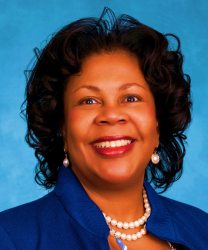
- Facts, Beliefs & Statistics – by Deborah Ashton - November 17, 2026
- R-E-S-P-E-C-TWomen’s History Month – by Deborah Ashton - March 12, 2026
- Defining the Role of Language, Culture, National Identity – by Deborah Ashton - January 8, 2026