
So here we are, the aftermath of one of the most consequential midterm elections in recent American history. Voters across the nation made their voices heard, and once again, Black women played an important role in shaping the political landscape.
In my previous column, I discussed the contributions of Black women to the election results. But the story did not begin in 2026. In fact, Black women have been showing up, speaking out and standing firm in the struggle for civil and voting rights for generations. And here’s an undeniable truth: Some of these women refused to accept the roles society—and even their own organizations—attempted to assign them.
During the civil rights movement, Black women often performed the essential work of organizing, preparing meetings, raising funds and sustaining campaigns. Yet men frequently occupied the pulpits, dominated the platforms and received much of the public recognition. But not every woman accepted those boundaries.
This brings us to three extraordinary women—Fannie Lou Hamer, Ella Baker and Gloria Richardson—challenged racial discrimination while refusing to remain silent about sexism, elitism and inequality within the very movement they helped build. Their methods sometimes differed, but their determination did not.
Now few names resonate more powerfully in the history of American voting rights than that of Fannie Lou Hamer. Proof positive is the number of times her name was cited along with fellow Mississippian, civil rights activist Medgar Evers during the senatorial election in Mississippi.
Born in Mississippi in 1917, Hamer understood racial injustice not as an abstract political issue but as an everyday reality. A sharecropper who became one of the nation’s most recognizable voting-rights activists, she possessed a remarkable combination of courage, faith and determination.
In 1961, while undergoing surgery, Hamer was subjected to a hysterectomy without her informed consent. The practice of involuntary sterilization disproportionately affected poor Black women and became known as the “Mississippi appendectomy.” But Hamer would face even greater brutality because of her determination to secure voting rights.
On June 9, 1963, while returning from a voter-registration workshop in South Carolina, Hamer and fellow activists stopped in Winona, Mississippi. After members of the group challenged segregation at a bus station restaurant, they were arrested. What followed was horrifying. While imprisoned, Hamer was brutally beaten by inmates acting under orders from law enforcement officers. She suffered permanent injuries affecting her eyes, legs and kidneys. The violence might have silenced another person. It did not silence Fannie Lou Hamer. She continued organizing voters, encouraging Black Mississippians to challenge an electoral system designed to exclude them.
In 1964, Hamer helped lead the Mississippi Freedom Democratic Party’s challenge to the state’s all-white Democratic delegation at the national convention in Atlantic City. Her televised testimony exposed the intimidation, brutality and systematic denial of voting rights that Black citizens endured. Later that year, during a speech in Harlem, she delivered the words …” We’re sick and tired of being sick and tired” …that would become inseparable from her legacy.
About Hamer’s presence at that convention in Atlantic City the executive director of the NAACP at that time dismissed Mrs. Hamer as an “Ignorant woman who did not understand politics.”
Hamer’s “We’re sick and tired…” words were not simply an expression of frustration. They were a demand for dignity, citizenship and justice. And now, more than six decades later, Mississippi has elected Scott Colom, its first Black United States senator since Reconstruction. Historical significance is difficult to ignore. The right to vote that Hamer fought so fiercely to protect continues to shape the possibilities of American democracy.
While Fannie Lou Hamer challenged racial injustice through passionate public testimony and voter organizing, Ella Baker believed that lasting change required something equally important: ordinary people developing the power to lead themselves.
Born in 1903, Baker became one of the most influential organizers in the civil rights movement. Her work included leadership within the NAACP and the Southern Christian Leadership Conference. She also played a central role in bringing together the young activists who established the Student Nonviolent Coordinating Committee in 1960.
But Baker was never particularly impressed by titles, celebrity or the concentration of power in the hands of a few prominent individuals. She believed movements could not depend entirely on charismatic leaders. They had to belong to the people; a philosophy that often brought her into disagreement with the male-dominated leadership structures of established civil rights organizations. She recognized that Black women, young people and working-class citizens had experiences and abilities that deserved recognition and rejected the assumption that leadership belonged primarily to educated professionals, ministers or men standing behind microphones. Her philosophy of participatory democracy encouraged people to organize within their own communities, identify and develop their own solutions.
Baker’s influence was especially important to the younger activists of SNCC, who became central figures in sit-ins, voter-registration campaigns and other direct-action efforts. She did not need to dominate the stage to help shape the movement. And therein lies one of the great lessons of her life: Leadership is not always about being in front. Sometimes it is about making sure others have the opportunity to lead.
Then there was Gloria Richardson.
If Hamer represented fearless resistance and Baker demonstrated the power of grassroots organization, Richardson became a symbol of direct confrontation and the right of Black communities to defend themselves.
Born in 1922, Richardson grew up in Cambridge, Maryland, and attended Howard University, where she participated in protests against discrimination. Her experiences helped shape her understanding that racism extended beyond segregated lunch counters. It affected employment, housing, medical care, education and nearly every aspect of daily life.
During the early 1960s, Richardson emerged as a leading figure in the Cambridge movement on Maryland’s Eastern Shore. The movement challenged segregation while demanding better jobs, housing and economic opportunities for Black residents. Richardson was outspoken, determined and unwilling to accept symbolic gestures in place of meaningful change.
Richardson’s position on nonviolence also distinguished her from some nationally recognized civil rights leaders. She supported nonviolent protest as a strategy but defended the right of threatened communities to protect themselves, a position that attracted criticism, including from individuals who believed women should be less confrontational and more accommodating. She refused to surrender her principles merely to satisfy the expectations of others.
Perhaps one of the most revealing moments of her career occurred during the historic March on Washington in 1963. Although Richardson had been invited to address the enormous gathering, her opportunity to speak was abruptly taken away. She managed to utter a single word— “Hello”—before the microphone was removed out of fear of that she’d challenge the non-violence framework and was quickly escorted off the stage.
Think about that. A woman who had helped lead a major civil rights struggle was standing before a crowd of approximately 250,000 people yet was denied the opportunity to share her message. Her experience exposed the contradictions within a movement demanding equality while sometimes denying women equal recognition. However, Richardson continued to insist that freedom meant more than the removal of segregation signs. It required genuine economic opportunity, dignity and power within one’s own community.
Fannie Lou Hamer, Ella Baker and Gloria Richardson: Their struggles also remind us that movements fighting for justice externally must also examine their own warts. An organization cannot credibly demand justice from society while denying women the respect, authority and recognition they have earned. That lesson remains relevant today.
Fannie, Ella and Gloria: They refused to Be silenced! And for that we’re eternally grateful.
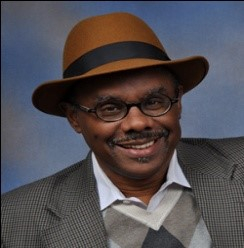
- Black Women Part 3: Refused to be Silenced – by Terry Howard - November 18, 2026
- Black women Part 2: I was wrong – by Terry Howard - November 10, 2026
- Black women Part 1: Assault – by Terry Howard - November 10, 2026