
In 2024, I was invited to deliver the opening keynote at a back-to-school convocation in Maine. The room was filled with nearly every adult who would serve the district’s children that year, including teachers, bus drivers, cafeteria workers, principals, and district leaders. Months before I took the stage, the superintendent made only one request. She was a Black woman leading a predominantly white school district, and she was deeply concerned about the enormous gaps in academic outcomes between students of color and their white peers. She explained that her teachers were still taking “baby steps” toward examining their own practices and addressing racial inequities. She asked me to be gentle with my comments.
I understood her concerns, and I agreed. But what happened next is something I am still not proud of.
The Morning I Let Fear Win
As I sat in the front row waiting to be introduced, I began thinking about everything that could go wrong if I spoke openly about racism. The teachers might become defensive and stop listening. The superintendent might face criticism long after I had returned home, and she would likely be disappointed that I had ignored her request. I also worried about the professional consequences. Maine was a state where my consulting company had opportunities to do meaningful work, and I feared that being too direct might close those doors.
So I made a choice. I delivered a warm, encouraging keynote about diversity, inclusion, and belonging. The audience responded enthusiastically. People applauded, and several approached me afterward to express their appreciation. By most measures, the speech was a success. But there was one glaring problem: I never once used the words race or racism.
That morning, I compromised one of my deepest professional commitments. I did not abandon the conversation entirely, but I softened my message to make it more comfortable for the audience. I allowed fear to determine what I was willing to say, and then I convinced myself that I was simply being strategic.
I share this experience because I have spent much of my career challenging educators to confront racism directly, even when doing so is uncomfortable. Yet there I was, standing before hundreds of educators, allowing the very fear I challenge in others to control my own actions. If antiracism phobia could influence me in that moment, it can influence anyone.
Fear Can Accomplish What Laws Cannot
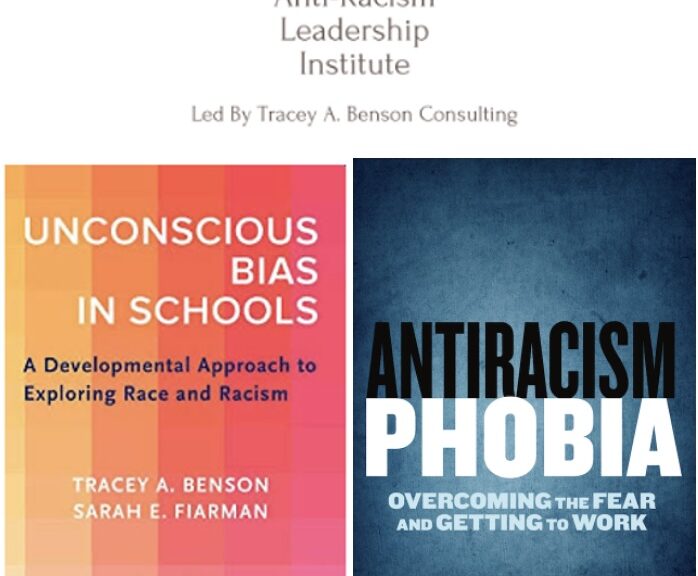
In my new book, Antiracism Phobia, I describe this problem as a deeply rooted, often unconscious fear of confronting racial oppression. This fear can prevent otherwise committed educators from taking meaningful action. It encourages people to avoid difficult conversations, settle for small gestures, and accept conditions they know are harmful to students. Over time, this avoidance allows racial inequities to continue, even in schools and districts that publicly claim to value equity.
The political climate of the past two years has made this fear even more powerful. Executive orders, state restrictions, the closing of equity offices, canceled professional development programs, and withdrawn funding have sent a clear message to educators that addressing racism may come with professional and personal consequences. But perhaps the most troubling development is that many educators have silenced themselves even when no law or policy requires them to do so.
A 2023 RAND survey found that 55 percent of teachers who were not subject to restrictions on discussing political and social issues still limited these conversations in their classrooms. One of their most common concerns was uncertainty about whether school leaders would support them if controversy arose. In other words, these teachers were not necessarily responding to an actual prohibition. They were responding to fear.
This is what makes fear such a powerful weapon in the backlash against racial equity. Opponents do not have to win every legal battle or pass restrictions in every state. They only have to create enough uncertainty that educators begin self-silencing. And far too many of us have done exactly that. We have removed the word race from strategic plans, replaced conversations about racism with more comfortable language about belonging, and stepped away from difficult work before anyone formally required us to stop.
The Problem With Contemporary DEI
We also need to acknowledge an uncomfortable truth: Not everything that schools were doing in the name of racial equity was making a meaningful difference for students. Some of those efforts deserved serious criticism long before the current political backlash.
Several years ago, I began describing this problem as Performative Antiracism, or PAR. It happens when schools and organizations take actions that make them appear committed to addressing racism without actually changing the conditions that produce racial inequities. We have all seen examples: a faculty book study, a one-day diversity workshop, a motivational speaker, or a new schoolwide program introduced with great enthusiasm but little attention to whether it improves student outcomes.
There is nothing inherently wrong with approaches such as restorative justice, culturally responsive teaching, or positive behavior supports. When implemented thoughtfully and in response to clearly identified problems, these approaches can make a real difference. The problem arises when schools adopt them without first understanding the specific racial inequities they are trying to address or establishing clear measures of success.
Too often, we measure how many teachers attended a training, how many meetings were held, or how many new programs were introduced. We rarely ask the more important questions: Did Black students experience fewer suspensions? Did reading achievement improve for Latino students? Did more students of color gain access to advanced coursework? Did the experiences and outcomes of the children we intended to serve actually change?
When we cannot answer those questions, we have a serious problem. Good intentions, professional development, and visible activity are not substitutes for results. Our students do not benefit simply because the adults around them are busy doing things under the umbrella of DEI.
A Political Opening Is Not a Plan
The November 2026 elections may create new opportunities for educators and school leaders who have felt constrained by the political environment of the past two years. For some, the changing political landscape may offer a sense of relief and renewed hope. But we should be careful not to confuse a more favorable political environment with meaningful progress.
An opportunity is not the same as a plan.
If schools simply return to the same book studies, diversity celebrations, and professional development programs without changing how they measure success, we will have learned very little from this moment. The same racial gaps in student outcomes will remain, and critics will continue to question whether our efforts have accomplished anything meaningful.
History reminds us that people working toward racial justice have rarely had the luxury of waiting for conditions to become comfortable. During the Montgomery Bus Boycott, Jo Ann Robinson helped organize resistance by producing thousands of leaflets overnight, despite the personal risks involved. In South Carolina, Septima Clark lost her teaching position and pension rather than give up her membership in the NAACP. She went on to help build Citizenship Schools that taught thousands of Black adults the literacy and civic skills needed to exercise their voting rights.
These leaders understood something that remains important today. They did not wait for permission to challenge injustice, and they did not confuse symbolic gestures with meaningful change. Their work was organized around clear goals and actions that produced tangible results.
Progress Begins With One Step
So, what would it look like for school leaders to move beyond fear and begin doing this work differently?
When I coach education leaders, I return to two fundamental questions: How will this benefit our Black and Brown students? And how will we know?
These questions may sound simple but answering them requires a level of honesty and accountability that many school systems have avoided. Leaders must be willing to identify racial gaps in student outcomes, discuss those gaps openly, and examine the adult decisions and practices that contribute to them. They must establish clear goals for improving students’ experiences and achievement, monitor progress throughout the year, and make changes when their strategies are not working. Most importantly, they must be willing to share the results, even when those results are disappointing.
This work does not require a new federal law, a special initiative, or an expensive program. It requires leaders who are willing to confront difficult truths and take responsibility for changing the conditions that produce unequal outcomes for children.
For educators who are still afraid, I encourage starting with one manageable step. Have an honest conversation with a trusted colleague about a racial inequity you have observed. Ask a question you have been hesitant to raise. Examine one practice that may be contributing to unequal outcomes. Then reflect on what actually happened. Did the consequences you feared occur? Often, they do not. And even when the conversation is uncomfortable, most discover they are more capable of handling that discomfort than you imagined.
Overcoming fear does not happen all at once. It happens through repeated experiences that build the confidence and courage to take the next step. I often describe this as climbing a ladder, one rung at a time. Leaders do not have to become fearless before they begin. They have to be willing to act while they are still afraid.
I often think back to that morning in Maine and wonder what I would do differently if I had another opportunity. I would still honor the superintendent’s request to be gentle. But I now understand that being gentle and being honest are not mutually exclusive. I could have acknowledged the difficult journey ahead while still naming racism, presenting the data, and challenging educators to examine their role in changing student outcomes.
I would not allow my fear of making adults uncomfortable to become more important than my responsibility to the children whose educational opportunities were at stake.
That is the challenge facing education leaders today. We cannot allow fear to determine what we are willing to name, question, or change. Our students need more than our good intentions, and they deserve more than symbolic commitments to equity. They need adults who are willing to confront racism, measure their progress, and remain committed even when the work becomes uncomfortable.
Our students are watching. The responsibility is ours. It is time to get to work.
- Fear is the real weapon – by Tracey Benson - November 11, 2026