
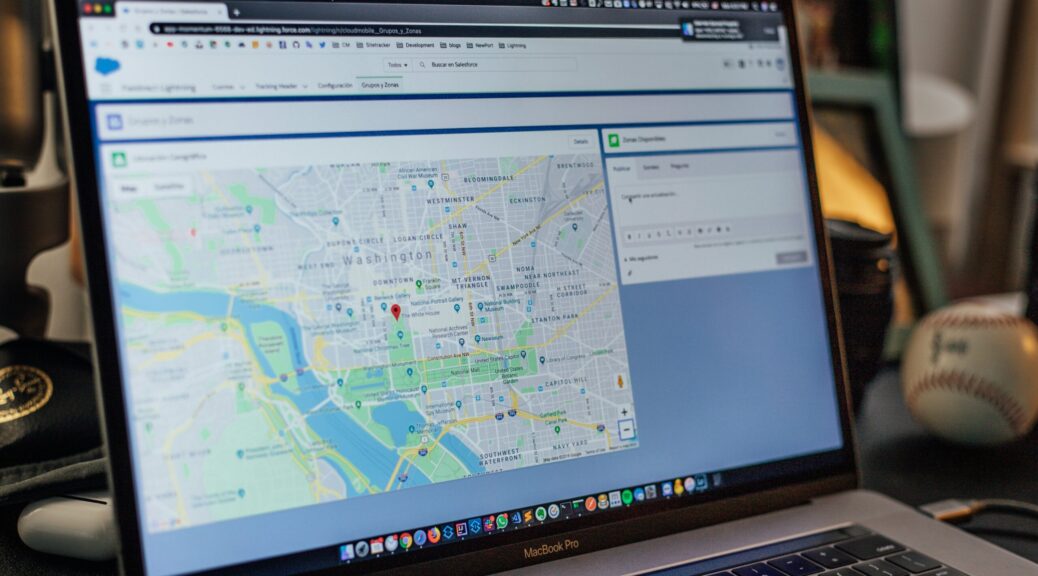
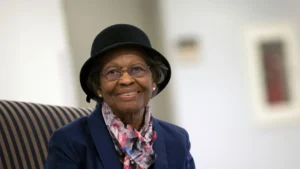
 “Thanks homegirl,” I said to myself as I left the car’s garage and punched my hotel’s address into my GPS. I thanked her again after the GPS she developed guided me through heavy California traffic and back roads and got me safely to my hotel. And thanks to your legacy, Dr. West, I’m proud and delighted to kick off African American History Month with your incredible story.
Now if anyone is as insecure as I am when you’re about to drive to some unfamiliar place, you’re probably quick to rely on your destination’s address in your GPS. Yes? No?
Well, the next time you do remember the name Gladys West, whose work on the development of the GPS is a matter of fact. Okay, I bring the West story to your attention for two reasons, again because we’re in the early days of African American History Month and second, and more ominous, we’re in the middle of efforts to erase Black and other identities from history.
Here’s another fact.
Like West, I’m a native born Virginian and graduate of a HBCU (Historically Black College and University.) But that’s where our similarities end.
You see, while Gladys West, a straight A student, pursued a rigorous mathematics curriculum in college, yours truly, at best a B student, studied American Literature and Elizabethan Writers as an English major in college which, as I think about it, should mean that I can write about West’s career in math and science with little understanding of the actual subject matter of her field of expertise. Put a complex math problem on my plate, I’m lost. Put a compelling paragraph on that plate, I salivate. While Mrs. West was adroit at analyzing complex mathematical problems at Virginia State University, during my time at Winston Salem State, I was busy trying to interpret a Shakespeare sonnet or deciphering the works of Emerson and Thoreau.
But before I share what I learned about Gladys West – and my motivation for writing about her- here’s what’s going on these days that has pushed me not far from outrage; the purposeful efforts to erase the history of African Americans in the United States.
Undeniably, there are forces at play these days that want to close the book on our history and insulate themselves from thoughts and images of those atrocities in history. Well – okay, here’s the English major coming out of me- “The past is never past. It’s not even past,” wrote William Faulkner. As a perfect bookend to that Faulkner quote, Pulitzer Prize winning author Nikole Hannah-Jones nailed it best with this: “White Americans desire to be free from a past they do not want to remember, while Black Americans remain bound to a past they can never forget.”
Let that sink in.
Well here’s our unequivocal response to the history-erasing ilk; for every book written about our history that you put on your asinine “banned books” list, for every portrait of our hero you take down, we’re coming at you with counteractions of our own. When you do something under the guise as MAGA, our response will be YBWP (You Ban, We Publish). Got it?
Now with that out of my gut, let’s turn now to Gladys West.
Gladys Mae West was an American mathematician known for her contributions to mathematical modeling of the shape of the Earth and her work on the development of satellite models later incorporated into the Global Positioning System (GPS). She was born in Sutherland, Virginia. Her family was an African American farming family in a community of sharecroppers. She spent much of her childhood working on her family’s small farm. As well as working on the farm, her mother worked in a tobacco factory and her father worked for the railroad. West saw education as her way to a different life.
In high school, she was one of the top two students in her graduating class to receive full scholarships to Virginia State College, a HBCU and graduated as valedictorian in 1948. At Virginia State she studied mathematics, a subject that was mostly studied by men. She graduated in 1952 with a Bachelor of Science degree in mathematics, and then taught mathematics and science for two years in Waverly, Virginia. She returned to Virginia State to complete a Master of Mathematics degree and graduated in 1955 before beginning another teaching position in Martinsville, Virginia.
In 1956, West was hired to work at the Naval Proving Ground in Dahlgren, Virginia, the second Black woman hired and one of only four Black employees. She was a computer programmer in the Dahlgren division, and a project manager for processing systems for satellite data analysis while earning a masters degree from the University of Oklahoma.
In the 1960s, West participated in an award-winning study that proved the regularity of Pluto‘s motion relative to Neptune. Subsequently, she analyzed satellite altimeter data from NASA’s Geodetic Earth Orbiting program to create models of the Earth’s shape. She became project manager for the Seasat radar altimetry project, the first satellite that could remotely sense oceans.
From the mid-1970s to the 1980s, West programmed an IBM 7030 Stretch computer to deliver increasingly precise calculations for the shape of the Earth; an ellipsoid with additional undulations known as the geoid. To generate an accurate geopotential model West used complex algorithms to account for variations in the gravitational and other forces that distort Earth’s shape.
In 1986, West published Data Processing System Specifications for the Geosat Satellite Radar Altimeter, a 51-page technical report from the Naval Surface Weapons Center. This explained how to improve the accuracy of geoid heights and vertical deflection, important components of satellite geodesy. This was achieved by processing data from the radio altimeter on the Geosat satellite, which went into orbit on March 12, 1984. West worked at Dahlgren for 42 years and retired in 1998. In 2000, she completed a Ph.D. at Virginia Tech.
West was inducted into the Air Force Hall of Fame in 2018, one of the highest honors bestowed by Air Force Space Command (AFSPC). The AFSPC press release hailed her as one of “the ‘Hidden Figures’ part of the team who did computing for the US military in the era before electronic systems”, a reference to the 2016 book by Margot Lee Shetterly, which was adapted into the film Hidden Figures. The commanding officer at the Naval Surface Warfare Center Dahlgren Division, described the role played by West in the development of Global Positioning System: “She rose through the ranks, worked on the satellite geodesy, and contributed to the accuracy of GPS and the measurement of satellite data.”
As Gladys West started her career in 1956, she likely had no idea that her work would impact the world for decades to come”. West agreed, saying “When you’re working every day, you’re not thinking, ‘What impact is this going to have on the world?’ You’re thinking, ‘I’ve got to get this right.'”
West won the award for “Female Alumna of the Year” at the HBCU Awards event in 2018 and was selected by the BBC as part of their 100 Women of 2018. In 2021, she was awarded the Prince Philip Medal by the UK’s Royal Academy of Engineering, their highest individual honor.
During her career, West encountered many hardships because of racism against African Americans. A prime example was the lack of recognition she received while working, while her white coworkers received praise and added privileges. Her biography makes clear her disappointment at not being granted projects that included travel and exposure.
West died on January 17, 2026, at the age of 95.
So, readers remember the name Gladys West and the fact that it was her work in the development of the GPS that guides you safely to your destination without having to pull off the highway to retrieve and study a folded old Rand McNally paper map from your glove compartment.
Oh, before I sign off, here’s my message to members of the book banning crowd, keep on banning and we’ll keep on publishing. And you can take that to the bank (and the check won’t bounce).
Again, “I owe you one,” is my posthumous message to Dr. West. No, strike that, millions of us owe you Dr. West for help making our lives a heck of a lot more livable.
Gladys West photo: Secretary of the Air Force Public Affairs
- Women’s History Month: Remember Viola Liuzzo – by Terry Howard - March 19, 2026
- Bombing innocent children – Terry Howard - March 11, 2026
- An African American in Women’s History Month – by Terry Howard - March 2, 2026