

I’m sometimes amazed at how thoroughly my thinking about health equity has changed since I became part-time co-director of the University of California, Riverside, School of Medicine’s Health Equity, Social Justice, and Anti-Racism curriculum a little more than six years ago in July, 2020.
Throughout several decades prior to that appointment I had given numerous talks and workshops about cultural competence in health care, including at such places as M. D. Anderson in Houston. On my own campus, I had been delivering an annual required cultural competence lecture for first-year medical students, augmented by a smattering of faculty. So when I said yes to the dean’s invitation, I felt reasonably confident, particularly since I was teamed up with one of the school’s clinical professors of pediatrics.
But the six ensuing years set me on a continuous learning curve about such topics as health care systems, clinical nomenclature, physician practices, medical ethics, and, surprisingly, the way that patients were viewed by medical personnel. I became increasingly aware that we (patients) were often viewed as targets of medical interventions. We were objects on whom physicians applied their knowledge and experience — usually to our benefit, but objects nonetheless.
One medical system buzz word is “patient-centered care.” I learned it. I accepted it. I taught it. I lauded it. What’s not to like about physicians making patients the focus of their actions, with the belief that patients should benefit from their interventions?
But over the last the two-and-one-half years since I tuned 90 (April 6, 2024), my personal experience as a patient has grown. I never know what the next day will bring involving x-rays, blood tests, ultrasounds, and body pains (severe arthritis, particularly in my shoulders, has become the latest addition to my health maladies). And with each new set of symptoms I open myself to more targeting by doctors. Before long I found myself dreading the next prodding, change in medications, or recommended surgical procedure. Each recommendation came from a well-meaning and hopefully skilled doctor, to be sure, but with each new onslaught of medical advice I became more aware of my role as a target.
Then came a day, not one I can identify, when I began thinking “no más.” My body and psyche can’t handle one more intervention, no matter how well intended. I was tired, thoroughly fatigued, of being a medical target.
This led to a realization: I didn’t like being a target. I wanted to be viewed as a more active subject, not a passive object. I am involved in a journey called life. I am grateful to individual doctors for becoming part of that journey through their patient-centered focus. However, I had grown weary of the totality of health care personnel targeting me for interventions.
That’s when I had my ah-hah moment. The important thing for me was not the maximum extension of life through medical interventions. It was the pleasure I got through my daily journey. I began saying no to some recommended interventions, particularly those that encumbered my journey.
That was the moment when I may have passed over into that category known in the medical world by another buzz word: “non-compliant patient.” In simple language, that means a patient who won’t or doesn’t do precisely what the doctor recommends. Medical records are loaded with references to non-compliant patients. So are clinical case studies used in medical education.
When I opted against some medical interventions (for example, permanently wearing a catheter, after two trips to emergency and ensuing hospitalization from infections resulting from different catheters), I didn’t think of myself as being non-compliant. I only thought of myself as someone who wanted to get on with a quality life, even if some of my decisions risked shortening that life. I was a decision-making subject, not a passive medical object.
This fall, in my first class for second-year students, I tried out my reframing of the health care process. I made the case that would-be physicians should drop the old-style patient-centered object focus that I had preached the previous year. Instead, I appealed to them to think of each patient as an independent, thinking, and feeling subject. Moreover, to the degree possible, try to get in sync with each patient’s life journey, including the values that fuel it, the socio-cultural factors that influence it, and the economic and logistical challenges that restrict decision-making. The more that future physicians can understand what their patients think , feel. and decide, the less likely they are to classify them pejoratively as being non-compliant.
And when they, phsycians of the future, are making out their individual patient charts, avoid using the standard “non-compliant patient” buzz word. The patient may decide not to follow a doctor’s recommendation, but the doctor should try to capture the patient’s decision and rationale from the patient’s perspective and in the patient’s own words. In that way subsequent physicians will better understand the patient as an active subject involved in a life journey, not as an order-taking medical object.
To try to cement this change of perspective, I then asked each student to think of someone for whom they cared deeply, such as a family member or a loved one. Then when reading and reacting to a case, stop for a moment and ask themselves the question: would I be happy if my loved one were being dealt with in the manner of the patient in the case being analyzed by the class? Then I asked the entire class to say that name aloud, in unison.
When I ended my brief but heart-felt talk, I had no idea what to expect. Medical school students tend to be reserved in their responses. But when I sat down, students broke into spontaneous applause.
My approach will not solve all the problems of health equity. However, the shift in perspective that I championed was one small step toward greater equity by reframing patients as active, feeling, thinking, decision-making subjects, not as compliant objects. They are human beings grappling with sometimes onerous social and economic conditions.
In the future, I want to be treated as a subject grappling with life’s options, not merely as an object of medical attention. It’s the way that I want my loved ones to be treated. It’s the way that I would like all patients to be treated. It’s the way that we can take one more step toward greater health equity.
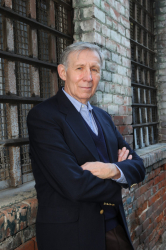
He also edited the four-volume Multicultural America: A Multimedia Encyclopedia (2013).
- Renewing Diversity Part 17: Rethinking Patient-Centered Approaches to Health Equity – by Carlos Cortés - October 11, 2026
- Renewing Diversity Part 16: Revisiting ‘The Children Are Watching’ – by Carlos Cortés - May 6, 2026
- Renewing Diversity: Part 15: Perspectives from Intercultural Pioneers– by Carlos Cortés - April 11, 2026