
7 Common Hazards to Look for After Summer Break
As summer winds down and kids head back to school, families often start spending more time in the backyard after school and on weekends. If you have a home playground, now is a good time to take a closer look at it. Months of summer sun, rain, storms and everyday play can leave behind safety hazards that may not be obvious at first glance.
Before the kids return to regular outdoor play, take a few minutes to walk around the playground and surrounding area. A simple inspection can help you spot small problems before they become bigger safety concerns. Here are seven common backyard playground hazards to look for after summer break.
1. Damaged or Worn Playground Equipment
Playground equipment takes a lot of abuse during the summer. Swings, slides, climbing structures, ladders and platforms can experience repeated use, exposure to the elements, and occasional damage from severe weather.
Look for cracked, broken, bent, or loose components, as well as sharp edges, exposed bolts, missing pieces, and signs of deterioration. Pay particular attention to areas that receive the most use.
If you find a significant safety concern, keep children off the equipment until it can be properly repaired or replaced. Following the manufacturer’s maintenance recommendations can also help keep equipment in good condition.
2. Worn or Inadequate Safety Surfacing
The ground beneath playground equipment is just as important as the equipment itself. Falls are one of the most common causes of playground injuries, which means adequate impact-absorbing surfacing is especially important beneath swings, slides, climbing structures, and other equipment where children could fall from a height.
Take a close look at the entire play area. Check for compacted, cracked, uneven or worn surfaces, as well as areas where loose-fill material has shifted away from high-use zones. Materials such as engineered wood fiber can move, compact, and become less effective over time, particularly in areas with heavy foot traffic. Homeowners should also make sure the protective surfacing extends far enough around playground equipment to provide adequate coverage in designated fall zones.
When evaluating playground surfacing, consider its Head Injury Criterion (HIC) score, which indicates how effectively a surface absorbs impact and helps reduce the risk of serious head injury. In general, lower HIC scores indicate greater impact protection. While surfaces that meet ASTM safety standards provide an important baseline, homeowners may also consider high-performing impact-absorbing materials, such as rubber mulch, for added protection.
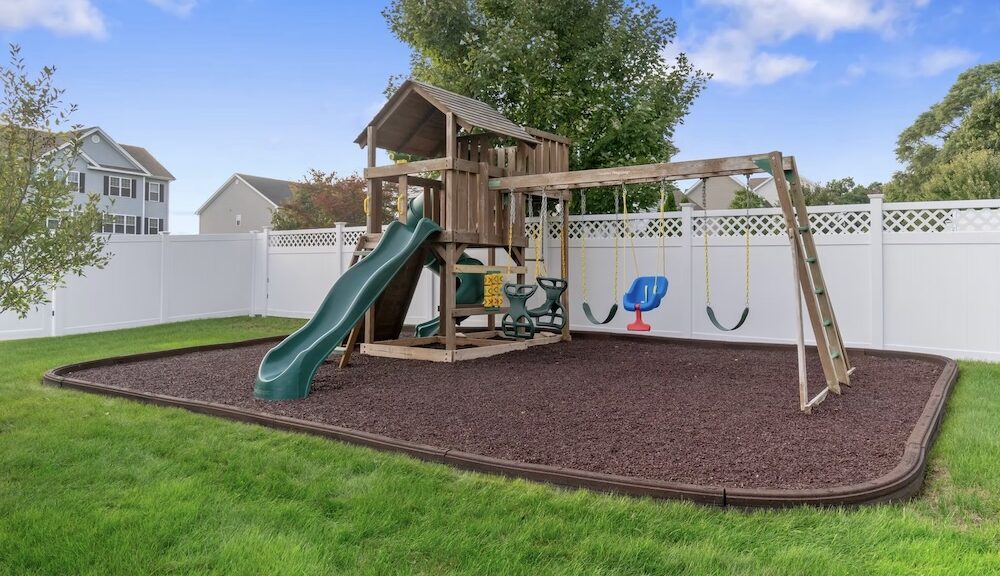
Rubber playground surfacing like rubber mulch and poured-in-place rubber are durable, impact-absorbing options for backyard play areas.
3. Trip Hazards and Uneven Ground
Kids rarely walk slowly and carefully across a playground. They run, jump, climb and move quickly from one activity to another, which means even relatively small trip hazards can become problematic. So walk around the playground and surrounding paths to look for holes, exposed roots, raised edges, broken pavement, rocks, and other irregularities. Pay special attention to transitions between playground surfacing, grass, sidewalks, and other surfaces.
Fixing these issues before the fall play season gets underway can help create a smoother, safer space for active kids.
4. Loose Hardware and Connections
A playground can look perfectly fine while small hardware problems are developing underneath the surface. Check bolts, screws, nuts, chains, fasteners and other connection points for signs of loosening, rust or damage. Swing chains and attachment points deserve particular attention because they experience repeated movement and stress.
Protective caps and covers should also be securely attached and free from damage. If hardware is missing or damaged, use replacement parts recommended by the playground manufacturer rather than improvising a repair.
5. Drainage Problems and Standing Water
Summer storms can expose drainage problems around a backyard playground. Water that collects beneath or around equipment can create slippery conditions, contribute to erosion, and potentially affect certain types of playground surfacing.
After a heavy rain, look for puddles, muddy areas, erosion and places where water consistently collects. Check nearby drains and drainage pathways for leaves, dirt and other debris that could prevent water from flowing away properly.
If water continues to pool around the playground, consider having the area evaluated to determine whether grading, drainage improvements, or surfacing repairs are needed.
6. Debris, Overgrown Vegetation and Other Outdoor Hazards
Summer growth can quickly change the area surrounding a backyard playground. Before fall play begins, check for sticks, rocks, broken glass, litter, and other debris that could cause injuries.
Trim back overgrown bushes and low-hanging branches that could interfere with play. Also look for exposed roots, thorny plants, insect nests, and other potential environmental hazards. Severe summer weather can leave behind fallen branches and other debris, so it’s worth giving the entire area a careful inspection (not just the playground equipment itself).
7. Damaged Fencing and Gates
If your backyard playground is enclosed by a fence or has a gate separating it from a driveway, pool, street or other area, inspect those boundaries as well. Look for damaged fencing, gaps, rust, sharp or protruding components, and other signs of deterioration. Gates should open and close properly and latch securely. Also check for pinch, entrapment, or other hazards around gate hinges and openings.
Keep pathways around the playground clear so children can move safely between the play area and the rest of the yard.
Don’t Stop at the Fall Inspection
A seasonal inspection is a great way to prepare your backyard playground for fall, but playground safety shouldn’t be a once-a-year task. Equipment, surfacing, and surrounding areas can change with weather and regular use.
Make a habit of giving the playground a quick visual check regularly, particularly after major storms or periods of heavy use. Address small maintenance issues promptly, and follow the manufacturer’s recommendations for more detailed inspections and repairs.
Parents should also make sure children know basic playground safety rules, such as using equipment as intended, avoiding overcrowding, and keeping an appropriate distance from swings and other moving equipment.
Start Fall With a Safer Backyard Playground!
Back-to-school season is a natural reminder to give your backyard playground some attention. A few minutes spent checking equipment, surfacing, hardware, drainage, landscaping and fencing can help identify potential hazards before they become bigger problems. With regular maintenance and properly installed impact-absorbing surfacing, families can create a backyard play space that’s ready for kids to enjoy throughout the fall and beyond.
- Is Your Backyard Playground Ready for Fall? – by Sheryl Berkley - September 1, 2026