
I’m anxious, on edge and worried, readers.
“Oh, c’mon man what is it about this time for crying out loud,” you may be asking.
Well, by the time you get around to reading this I will have stood before an audience of 200 people having just delivered a “call to action” at the end of the 37th celebration of the African American-owned Chattanooga News Chronicle.
Now although I have no idea how I’ll leave that stage emotionally, the one thing I do know is how I feel at this moment …on pins and needles about how my message may impact in some small way the survival of the Black press.
Hey, talk about a tall order.
You see, for the millions of us who were raised and thrived on getting our unfiltered news from the Black press, based on unveiled threats nowadays to those sources of information we have every right to be on edge. So yes, if you’re a follower of this columnist, you know that my modis operandi is ranting and raging about still another complex issue. The future of the Black is now at the top of my list.
With that, I decided to recast a version of a column I wrote back in April about the threats against the Black media and conclude it with some concluding thoughts.
I started this piece over a month ago. Really. But the truth is that I reread it for what seems like a gazillion times and lost more than a few hours of sleep wordsmithing it ad nauseam, consumed by the declines in the number of Black newspapers. Now the culprit behind my exasperation in trying to get this darn piece right was a headline that appeared in a Virginia newspaper. I’ll get to it shortly.
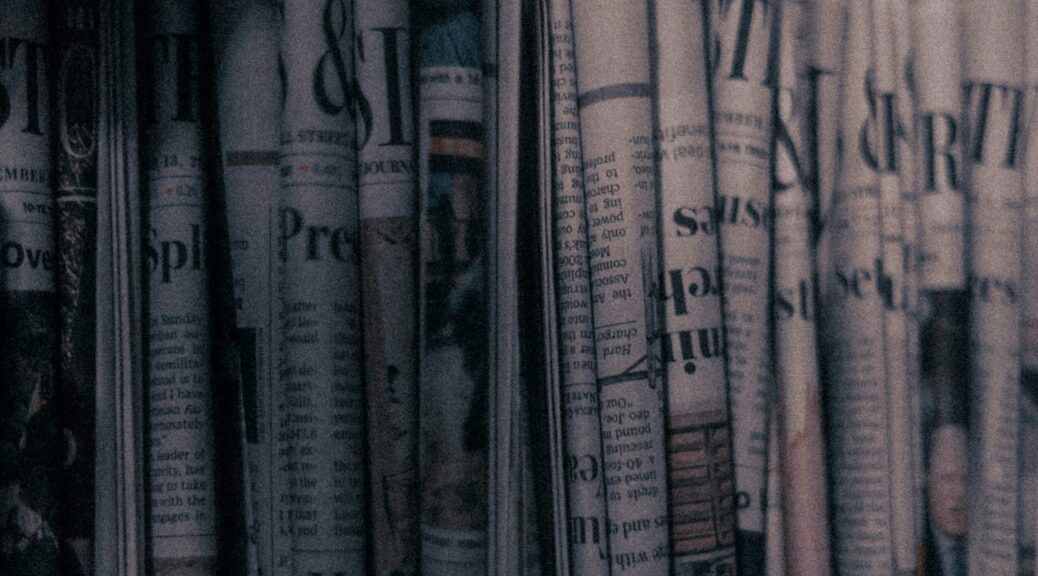
My point being is that for as long as I can remember, my day would start with a cup of coffee followed by wading through three or more newspapers. The touch and smell of fresh newsprint mixed well with the aroma of fresh coffee. That was before the current trend where many of those newspapers have gone completely out of business or gone online. Where once the shelves in places where I’d pick up my papers were stacked with newsworthy dailies, they’re now occupied with tabloid trash, candy, potato chips and Crispy Cream donuts.
Literacy lost and Snicker bars won.
So just like that my reliance on newspapers beyond reading them – for insulation, stuffing boxes, etc. – had changed forever. As a lifetime reader of Black newspapers – among them the Baltimore Afro-American, Chicago Defender, Pittsburg Courier, New York Amsterdam News, et al – I woke up to the headline, “The Richmond Free Press ceased publication,” a Black newspaper and held onto the fragile hope that someone had played cruel AI hoax on me. I wish I could sit here and say that was the case, but I can’t. Lord knows I can’t.
Now as background, the Freedom’s Journal was the first African American paper in the United States founded in 1827 by free African Americans. Today although their numbers continue to decline, 200 Black papers still exist although they face significant financial challenges including declining ad revenue and shifts to digital media.
Not to be ignored are the differences in where generations get their news. Gen Z and Millennials rely on social media while Gen X bridge the gap between the old and the new and Baby Boomers tend to favor traditional newspapers (with a cup of coffee within reach).
The Richmond Free Press was (it pains me greatly to use the word ‘was’ here) an independent newspaper in Richmond, Virginia, published on a weekly basis for 34 years focused on covering issues of concern for the Black community. Its founder started the paper because he felt these groups were underrepresented in the mainstream media.
In 2020, the newspaper’s coverage of Black Lives Matter protests and the toppling of Confederate monuments, put the paper in the crosshairs of the current administration’s current efforts to weed out anything reeking of DEI, especially if it highlights slavery or the boogey man of all boogey men…race.
For more context, the cease in publication of the Free Press was just another part of the anti-Black press trend sweeping the nation that impacted both public and private sectors, including universities that had for many years put a priority on diversifying their student ranks and workforces. Seemingly overnight the lethal word “diversity” has been scrubbed from internal websites and modes of communication.
Unfortunately, the demise of the Richmond Free Press has also been experienced by the Portland Skanner, a pioneering Black newspaper in Portland, Oregon that ceased operation 50 years after it began publishing. They closed their business due to changing technology facing the same issues that have plagued newspapers for the last decade—advertisers have migrated to social media platforms. But not to be dismissed was their coverage of protests and other issues not to the liking of the current administration.
Inarguably, the Black press has always played an important role in documenting the unfiltered truth, that’s often distorted, sugarcoated or completely ignored by so-called “mainstream” media. I challenge the reader to look beyond the Sports page at how often images of African Americans are portrayed in many (but not all) mainstream media, many times on the front page as frowning gang bangers and criminals. By contrast, many Black newspapers have drawn a line on publishing those caricatures and portrayals.
The undeniable truth is that the Black press has had an educated, informed readership of Black readers for decades. Their readership includes doctors, PhDs, CEOs, business owners, college presidents, sports icons, ministers, entertainers and in every other field. Sinister efforts to cease publication of the Black press are an insult and slap in the face of those and millions of other readers.
So what? Well, if you’re sitting in limbo grappling with what if anything to do to support the future of the Black media, ponder your answers to these questions:
- What if you took a seat at your local beauty salon, barbershop, dentist’s or lawyer’s office and reached for the latest Black newspaper and it is no longer there?
- What if someone you knew recently moved into your town and looked around for a Black newspaper to find a listing of Black owned businesses, churches, restaurants, etc., he/she wanted to support and not one could be found?
- What if you are the parent of a bright young Black student who aspires for a career in journalism but since mainstream publications offered few if any internships, you hoped that the local Black newspaper had opportunities, but those papers were no longer in existence?
- What if you are the head of an “Equal Employment Opportunity” organization that has for years placed ads in local Black-owned newspapers to attract customers and employees but got the message from skittish leaders that that must cease?
- What if you are a Black-owned business owner or another institution who has seen a drop in customers who usually find you through ads in a Black-owned newspaper but recently discovered that it ceased publication?
- What if you once promised financial support of a Black-owned publication but never delivered on your promise and now that publication is on the brink of going out of business?
- As a leader in a prominent sorority or fraternity, what impression could you make if you never take out an ad in a Black-owned newspaper to communicate an upcoming event?
- As a large business owner (grocery store, car dealership, retail chain, healthcare enterprise, hotel, convenience store, etc.), what’s the upside of having copies of a Black-owned publication in a lobby in your business along with trade and other publications and how could a simple act like that give you a competitive edge in attracting customers of diverse backgrounds.?
Now setting aside other “what if’s,” the truth is that quality Black-owned press isn’t just a luxury; it’s a vital tool for business growth, for social justice and providing critical information to an informed community.
Now what?
Well, as American author William Faulkner once wrote, “you move a mountain one stone at a time,” or (in my words) one new ad in a Black newspaper at a time!”
Years ago, the Golden Eagle, the magnificent bird that, if it weren’t for acts of preservation, would have become extinct. So, the question we’re faced with now is whether preservationists exist today who will work to make sure that the Black press does not become extinct.
My answer is an emphatic yes, but only if there’s a will and a limitless supply commitment.
Photo by Jonathan Gong on Unsplash

- For (some) men “quit” is a 4-letter word – by Terry Howard - October 1, 2026
- September: National Hispanic Heritage Month – Terry Howard - September 25, 2026
- Threats to the future of the Black Press – by Terry Howard - September 16, 2026