
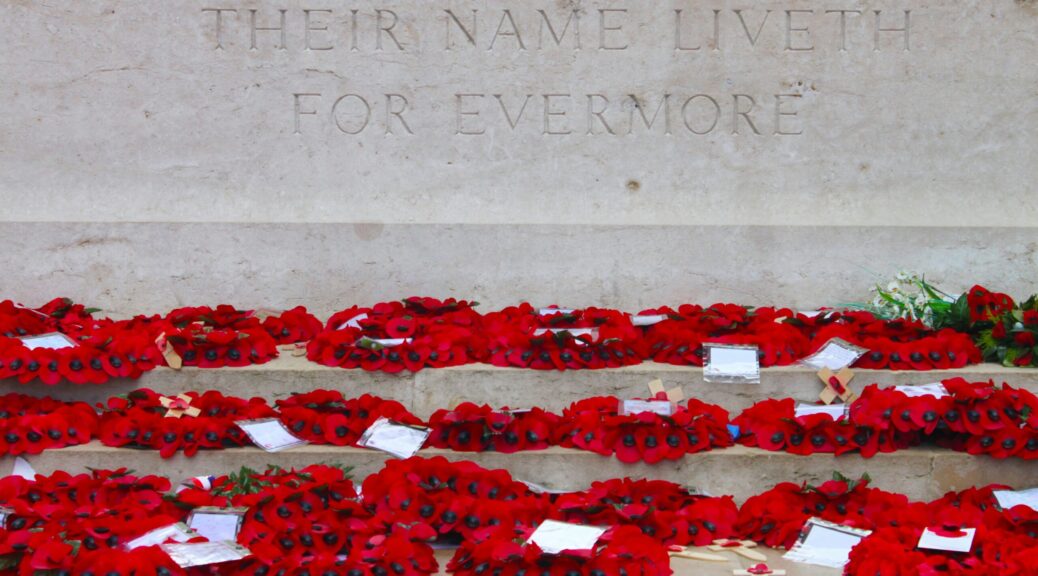
Twenty-five years ago, on September 11, 2001, terrorists attacked the World Trade Center and the Pentagon while passengers and crew members fought back aboard United Airlines Flight 93 before it crashed near Shanksville, Pennsylvania. Nearly 3,000 people were killed. The date remains etched in our collective memory—and in our worst nightmares.
Whenever I revisit that morning, I return to the gift that keeps on giving, the genius of Pulitzer Prize-winning columnist Leonard Pitts Jr. His nationally circulated column, published on September 12, 2001, gave voice to a country struggling to comprehend what had happened. Five years later, he reflected on the ordinary day that came before the attack: “On September 10, 2001, we went to bed. We slept in innocence. And then the morning came.”
That brief passage carries the heart of his argument. Before catastrophe, ordinary life can feel permanent: people go to work, check homework, prepare dinner and go to sleep expecting tomorrow to resemble today. After catastrophe, yesterday’s normalcy becomes something precious precisely because it cannot be recovered in quite the same form.
Pitts’s original response to 9/11 was fierce, wounded and defiant. He described Americans as a vast, argumentative family—divided by race, class, politics and culture, yet capable of standing together when attacked. He warned that grief would be followed by scrutiny, tighter security and dangerous demands to surrender basic freedoms. That warning deserves as much attention today as his call for unity back then.
His insight also invites us to examine other moments when American life crossed a threshold. The comparisons are not exact and pretending they would weaken the lesson. The January 6, 2021, attack on the U.S. Capitol was a political assault intended to disrupt the certification of the 2020 presidential election. Hurricane Katrina, which devastated the Gulf Coast in August 2005, was a natural disaster made worse by failures in infrastructure and government response; it caused about $125 billion in damage in 2005 dollars. The COVID-19 pandemic did not arrive in a single morning, but it transformed daily life and, by June 2022, had been associated with more than one million recorded U.S. deaths.
Each crisis was different. Each crisis also exposed vulnerabilities that had existed before the public fully confronted them. January 6 revealed how political falsehoods can become violence. Katrina exposed deep inequalities and failures of preparedness. COVID-19 tested public health systems, scientific trust and our willingness to protect one another.
We did recover—but not through sentiment alone. Recovery required first responders, health-care workers, public servants, neighbors, scientists, volunteers and ordinary citizens to perform difficult work. Buildings were rebuilt, floodwaters receded, and vaccines were developed with remarkable speed. Yet true to form and almost on cue, the temporariness of that unity rapidly gave way to political partisanship, bickering, blaming and competing versions of reality.
That is why nostalgia for national innocence is not enough. Innocence can mean hope, but it can also mean failing to notice dangers that are hiding in plain sight. The better goal is informed vigilance: remembering honestly, preparing seriously and refusing to let fear destroy the democratic freedoms and human bonds we say we claim to defend.
Pioneering author, historian and educator Dr. Carlos E. Cortés, University of California, Riverside, offers a useful three-part discipline: “Look unflinchingly at the past. Apply it to the present. Then pivot to the future.” Those words turn remembrance into responsibility.
So where does that leave us, twenty-five years after 9/11? Of course, we cannot anticipate or control every natural disaster, terrorist plot or emerging disease. But we can control whether we learn, whether we prepare, whether we protect constitutional principles under pressure and whether we care for one another after the cameras leave and the headlines disappear from the front page of national publications and evening breaking news.
In one of the most influential letters written in the last century, Dr. Martin Luther King Jr. wrote from the Birmingham Jail, “Injustice anywhere is a threat to justice everywhere.” My add-on written today is simpler and more colloquial, but it points toward the same human obligation: Our differences and divisions aside, mess with one of us, you mess with all of us.
That spirit should not appear only after tragedy. The real test is whether we can practice it the day before.
Photo by Cross-Keys Media on Unsplash
- Hey complicit men, if the shoe fits, wear it! – by Terry Howard - October 12, 2026
- For (some) men “quit” is a 4-letter word – by Terry Howard - October 2, 2026
- September: National Hispanic Heritage Month – Terry Howard - September 25, 2026