Category Archives: Transforming

Projects that are making a difference, improving lives, and building communities.

Fall of the Spiral Curtain – Part 1 – by Regina Sën

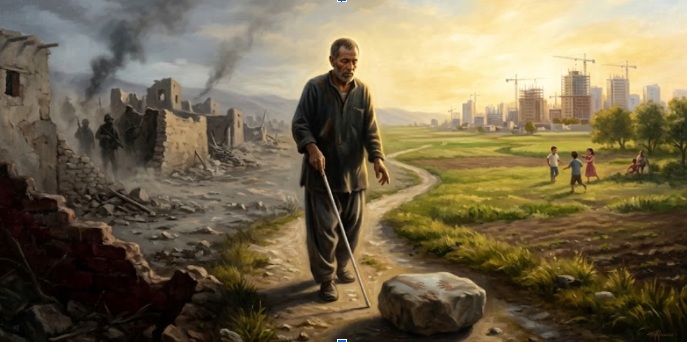
The fall of the iron curtain can never precede the fall of the spiral curtain. We are witnessing, in real time, the dangers of allowing citizens to rise in power before transcending the human spiral, in a land barren of emotional and energy hygiene, under fire, under pressure. In communities of old, regardless of faith or tradition, we encounter “the human spiral”: cycles of fear, judgment, shame, and misunderstanding that wound us—and others—in invisible ways. The following story explores the luxury of being sheltered, and patterns of reactivity that pass silently through generations, even when we are “raised with love.” Through the wisdom of a trusted elder (*do you have one?*)—a Guru, an ‘Aunty’, an ‘Old Soul’, whoever *your* people recognize as wise—we learn to bear witness to this spiral, to sit with another’s pain and misunderstanding, ultimately finding liberation: transcending through unconditional love, finding the hope of safety to grow in.

Continue reading Fall of the Spiral Curtain – Part 1 – by Regina Sën

Designing a successful environmentally conscious business – by Julie Morris

What Ecopreneurship Means

For academics, diversity professionals, and cultural inclusion advocates stepping into entrepreneurship, the pull is real: build an environmentally conscious business that aligns with values while still earning serious revenue. The tension is just as real, many future entrepreneurs worry that sustainability will dilute competitiveness, raise costs, or become performative in a marketplace that rewards shortcuts. Ecopreneurs are proving a different story through green entrepreneurship that treats environmental problems as green business opportunities rather than constraints. With the right grounding, sustainable startups can become credible, profitable ventures with impact that holds up under scrutiny.

Continue reading Designing a successful environmentally conscious business – by Julie Morris

Make a Difference Through Collaborative Movements in Education – by Muhammad Usman Qazi

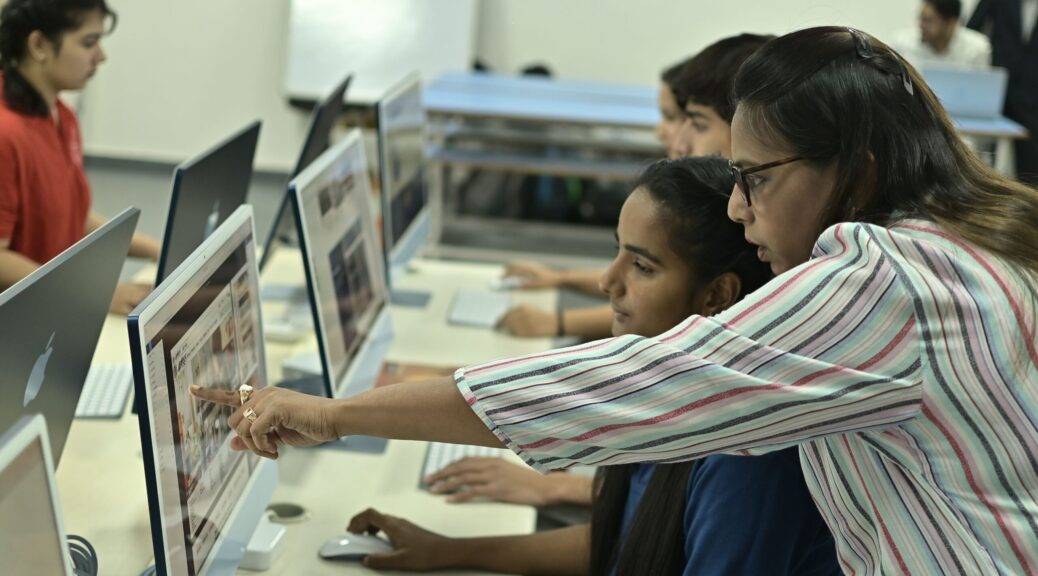
In recent years, much attention has been given to bridging the education gap and improving access to learning. While these efforts are essential, they represent only the beginning. The true impact of education emerges when access is combined with collaboration—when individuals, communities, and organizations come together to create meaningful and lasting change.

Continue reading Make a Difference Through Collaborative Movements in Education – by Muhammad Usman Qazi

Bombing innocent children – Terry Howard

Okay, I’ll take my licks and apologize if anyone finds my headline repulsive; SorryLo siento …Je suis désolé(e) …Es tut mir leid …or Entschuldigung …. 对不起 . …..Now if I missed a sorry in another language, well here’s my blanket apology; I’m sorry about that too.

So, with that said and out of the way, how about we consider our “repulsiveness” in a historical context. Let’s talk about the lingering power of images that are burnt into our subconscious and remain buried there sometimes for a lifetime. 

Continue reading Bombing innocent children – Terry Howard

Renewing Diversity No. 14: Interrogating Gender Bias in Artificial Intelligence – by Carlos Cortés, Angela Antenore

In 1816, 19-year-old Mary Wollstonecraft Godwin captivated her close friends with a story about a monster.  Two years later, now married and  known as Mary Shelley, she stunned the reading world with her novel, Frankenstein, or, The Modern Prometheus (1818).  

Frankenstein’s monster was a man.  It remained so in most film renditions.  Notable exceptions were the 1935 “The Bride of Frankenstein,” who was actually created by Dr. Victor Frankenstein as a partner for his original male version, and the 2026 “The Bride”.

Frankenstein’s monster was not totally evil.  He was big, strong, and often unaware of his ability to create havoc because of his size and strength.  In some versions, such as Guillermo del Toro’s 2025 film, the monster’s human sensitivities figure prominently.  

Today we are dealing with a monstrous new creation, artificial intelligence (AI).  To the best of our knowledge, AI doesn’t have feelings.  However, we know something else.  AI is male tilted, and some of our fellow human beings are responsible.

Continue reading Renewing Diversity No. 14: Interrogating Gender Bias in Artificial Intelligence – by Carlos Cortés, Angela Antenore

DEI Cutbacks and Immigrant Mental Health – by Diane Storman

Research increasingly links the erosion of diversity, equity, and inclusion (DEI) initiatives, alongside rising anti-immigrant rhetoric, to a significant decline in the mental health of immigrant populations (Lopez et al., 2017). This crisis is the direct result of a convergence of systemic hostility, and the withdrawal of institutional safeguards converge. The impact manifests as increased discrimination, reduced access to culturally competent care, and a pervasive fear of law enforcement intervention. As vital safety nets are dismantled, immigrants are left to navigate a landscape where institutional support is replaced by the constant threat of detention or deportation.

Continue reading DEI Cutbacks and Immigrant Mental Health – by Diane Storman

Global Education at the UN – by Mitchell Gold

A Reflection

In the early 1990s, shortly after the Brundtland Report and before environmental education became the dominant focus, there was a strong movement for Global Education. I recall attending a UN conference in 1993 where educators from across the world gathered, and each of the seven UN education agencies presented their vision of global education.

As I listened, I was struck by the sheer volume of material—44,000 pages of information. When I stood to speak, I asked the 3,500 educators present: Has anyone here read all of these pages? Not a single hand was raised. My point was simple: how can we move forward meaningfully if no one has absorbed the totality of what has been produced? Conferences must find better ways to share knowledge and distill it into usable wisdom.

Continue reading Global Education at the UN – by Mitchell Gold

Introducing Professor Bill (“Paul Revere”) Willis – by Terry Howard

Like millions, I was riveted to the breaking news about the passing of Civil Rights advocate Jesse Jackson and at 5:30 pm, during a commercial, I called Bill Willis to follow up on a conversation we’d had two days before. 

“Will I see you at this evening’s Board of Commissioners meeting (Douglas County, Georgia)  during which I will accept their African American History Month proclamation?  It starts at six and will be preceded by an art exhibition on the third floor.” I thanked him for the heads up and promised to get there as soon as I could.

 Well as it typically is it is for Bill Willis, not only was he there with one of paintings, but the impeccably dressed Willis was there to accept the Commissioners proclamation.

Continue reading Introducing Professor Bill (“Paul Revere”) Willis – by Terry Howard

Responding: Resilience interview with Levine at St. Elizabeth U.

Holocaust author/educator Deborah Levine, The Art of Resilience: From Pain to Promise

Thanks for sharing the youtube video. Your interview was enlightening and further exhibits your strive to help make the world better. I agree with you that people must first understand the roots of historical tragedies. Too often, these stem from widespread indifference, people ignoring suffering or choosing not to get involved.

I appreciate how you are demonstrating for others by your own active engagement that is rooted in core human qualities like resilience, determination, courage, perseverance, humanity, and decency. It is further emphasized through your personal journey via physical, mental, and spiritual resilience, turning pain into promise through storytelling and lessons from your life that include health setbacks and triumphs. The childhood diary comments are very memorable portions of your talk.


You convey hope and a practical blueprint. Learn from history’s failures of inaction, cultivate inner strength and empathy, use tools like writing and storytelling to grow and inspire, and step up to build a more decent world.

Holocaust Remembrance with determination – by Deborah Levine

originally published in The Chattanooga Times Free Press

International Holocaust Remembrance Day is January 27th, the anniversary of the 1945 liberation of the Nazi’s Auschwitz-Birkenau extermination camp. In 2005, the United Nations assigned the date to commemorate the Holocaust’s 6 million Jewish victims. But recently, the Google calendar removed International Holocaust Remembrance Day as part of the trend to blank out cultural and ethnic observances. Given the growing antisemitism and violence, like the recent arson of a Mississippi synagogue, many of us are determined to disallow this erasure of the Holocaust.

Continue reading Holocaust Remembrance with determination – by Deborah Levine