Category Archives: Social Issues

Social causes, activism, and projects

Microaggression and Stereotype – by Julia Wai-Yin So

You were at a house-warming party hosted by your immigrant friends from Mexico who just bought their first home. Your excitement was genuine. As you hugged your friend and his wife, you said, “I am so happy for you and your new home, especially in this neighborhood. Unlike other Latino immigrants, you are so accomplished.”

Your comment might have meant to be complimentary. Unfortunately, your Latino friend might have felt you just insulted his entire ethnic group. According to Dr. Derald Wing Sue from Columbia University, such remark falls under microaggressions–verbal, behavioral, or environmental slights that reflect the speaker’s conscious or unconscious stereotyping certain minoritized groups. Other examples include complimenting the English spoken by an Asian, or congratulating a college graduate while saying “You made me proud. I don’t think I have one black friend that has a college degree”. Though meant to compliment the recipient; such comments sadly also insult the ability or intelligence of the social group which the receiver belongs to.
Continue reading Microaggression and Stereotype – by Julia Wai-Yin So

On rustic church pews – by Terry Howard

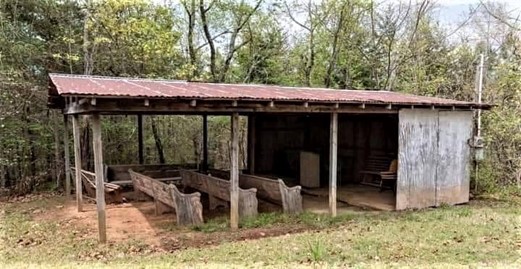
If ever there was an eye-catching picture, this one fits the bill.

You see, a fellow I grew up with in a small town in Virginia posted it on Facebook. I’m not sure of its source or time, but think that maybe it was sometime in the 40s or earlier. Who knows for sure?

Okay, I admit to having lost count of the number of times I’ve looked at it, and am doing so right now as Juneteenth is in the spotlight. However, to get other reactions I randomly shared it with several folks.

Anti-abortion and the Descent into Fascism – by Marc Brenman

What can be said about the anticipated anti-abortion decision from the US Supreme Court that hasn’t been said already? From a civil rights and social justice perspective, the reasoning in Justice Alito’s draft opinion is dangerous. It presages and exemplifies anti-democratic tendencies already present and vigorous on the American right. There are many “rights” that are not mentioned explicitly in the Constitution. Even though Alito’s draft says the decision should not be used as precedent in restricting other rights, the effort is already underway to do so. These include privacy, LGBT rights, the rights of people with disabilities, and the education of non-citizen children in public schools. And of course, the rights of women, educational rights, and the right to housing, to eat, and to live in a clean environment.

Although we hear about it relatively little, the Equal Rights Amendment has never been added to the Constitution. However, there are many laws from Congress on protecting women, people with disabilities, and the environment. Women’s health advocates want Congress to pass similar laws protecting abortion. This is unlikely to occur, with the close division between the parties in the Senate, and the likely loss of Democratic House seats in the mid-term election. In addition, the Supreme Court can overturn acts of Congress if they believe the laws are not rooted in the Constitution. 

Continue reading Anti-abortion and the Descent into Fascism – by Marc Brenman

Afflictions of American Health Care – by Eliana Teel

When I was seven years old, I had my first MRI, or Magnetic Resonance Imaging – a medical imaging machine that generates internal images of the body. The tubular machine was quite large in comparison to my petite body. I can still remember how scared I was as they placed headphones twice the size of my head over my ears and pushed me back into the small cylinder. Or how the nurse called the IV that shot cold, contrast dye throughout my bloodstream a “butterfly clip” to ease the nerves. The MRI was ordered to examine my neck and upper spine because I was experiencing a lot of unusual pain there for a child that young. What my family and I didn’t expect was to be in that room for two more hours as they caught a glimpse of something concerning in my lower back.

Continue reading Afflictions of American Health Care – by Eliana Teel

African American History Month: what else don’t we know? – by Terry Howard

This piece explores another African American bit of history. It is about John Lewis and James Zwerg.

Like many, I would love to have been a proverbial “fly on the wall,” listening intently to candid conversations between those two men. Of course, we –well, most of us anyway – know about the late congressman John Lewis. But James Zwerg?

The exam paper that stumped all – by Mona Bopanna

How will India respond in 2022 to this regressive stance towards women?

In December, 2021, millions of secondary school students in India appeared for their Class X (Grade 10) exams conducted by the Central Board of Secondary Education (CBSE).

Since its inception in the 1920s, the Board has gone through several changes and emerged as one of the largest such organisations in the world, with more than 25,000 school — based in India and other countries — affiliated to it. Each year, about 2 million students take the secondary board exams.

Continue reading The exam paper that stumped all – by Mona Bopanna

Algorithmic Biases & Economic Inequality – by Pearl Kasirye

America has a long history of racial segregation and systemic racism that made it difficult for ethnic minorities to achieve financial and economic stability. Well-researched academic studies have found that “even after decades of growing diversity…most Americans still live in racially segregated neighborhoods.”

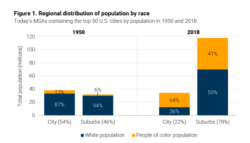
A study conducted by the University of Minnesota found that 64% of the urban city population are people of color while only 34% are white. Take a look at the graph below:

Equity


This data shows that in the 1950s, the suburbs were populated by a majority of white people (94%), and in 2018, they are still the majority (59%). While the cities have become even more populated by people of color in 2018 than in 1950.
Continue reading Algorithmic Biases & Economic Inequality – by Pearl Kasirye

Environmental Justice: Apocalypse Now? – by Marc Brenman

The topic of environmental justice (EJ) has become popular. We find it expressed in President Biden’s equity program, for example. I’ve been working with a group of advocates on the topic for about twelve years. Before that I helped write one of the first EJ programs for a federal agency while at the US Department of Transportation in the late 1980’s. At the time I knew nothing about the issue. I mentioned my ignorance to Bob Bullard, one of the fathers of the concept. He told me to read his books. Now I’ve become an expert, with books and essays, including one on the aftermath of Hurricane Katrina in New Orleans in 2005.

EJ has been overtaken by events, and today is sometimes called “environmental racism.” We now recognize the climate as a problem, and not as benign Mother Nature. EJ is the confluence of environmental issues with civil rights, resulting in health disparities for many people of color and low income people. They tend to live in lower marshy areas that are more subject to ocean level rise, flooding, and extreme storms. Even today, many lack air conditioning and are therefore more endangered by extreme heat. Many farmworkers live in rural towns in the West under extreme drought conditions. African-Americans own cars at the lowest level of any demographic group in the United States, and hence can’t escape in an evacuation order. Many African-Americans in Southern and Border states live near hog and chicken waste ponds and power stations and dumps that spew noxious fumes.

Continue reading Environmental Justice: Apocalypse Now? – by Marc Brenman

Ending the park equity divide – By Diane Regas

Years of research has shown that spending time in nature reduces cardiovascular disease, obesity, diabetes, asthma and mental illness. The last 18 months have underscored the immense benefits that our parks and public greenspaces provide. As the nation struggled through the COVID-19 pandemic, parks were outdoor oases that allowed millions of Americans a safe place to escape the confines of their homes. And parks in 98 of the nation’s 100 most populous cities doubled as venues for meal distribution, COVID testing and outdoor classrooms.

But parks and the benefits they provide are not evenly distributed in those cities. New research is demonstrating that the absence of these green spaces is disproportionately and negatively affecting our nation’s communities of color.

Continue reading Ending the park equity divide – By Diane Regas

The Impact of Images – by Kenyada Posey

Cultural expressions, icons, and the arts have played a major role in how we’ve seen ourselves and others in the past, and can play a major part in bringing us together in the future. Before social media, newspapers and black and white television exposed us to the lives of others, arts, and society. Whether it be negatively or positively, music, TV, and movies and the imagery they evoke will continue to impact our society and the way we view community.

As a Black woman, the images shown in movies, TV, and mentioned in music has had a major impact on me and my self image.  Cultural expressions have seemingly been more negative than positive and date back to the runaway slave flyers posted around America a century or two ago. The image of the Black woman and Black man were usually exaggerated with a huge nose and a goofy-like look to depict ignorance. We have also seen the image of the angry Black woman plastered everywhere.
Continue reading The Impact of Images – by Kenyada Posey