Religious Diversity is one of the most challenging, controversial, and complex issues of our time. Few diversity professionals speak on the topic, but it’s my passion and I recently gave a seminar on it at a conference at the University of Tennessee at Chattanooga. Why had these business professionals and administrators chosen this particular session to attend? Some were curious, “I have a general interest in religious diversity, especially learning about other religious traditions.” Others were focused on the application of new information, “I want to understand more about religious diversity so that I can better interact with people from all religious backgrounds.” Our discussion focused not only on the university, but also on business, “I need to increase my understanding and ability to competently work with clients who identify as religious.”
Continue reading Calendars & Religious Diversity – by Deborah Levine
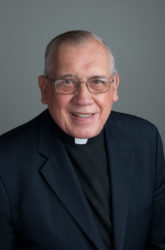 The Rev. Dr. John T. Pawlikowski is a Servite Friar priest, Professor Emeritus of Social Ethics, and Former Director of the Catholic-Jewish Studies Program, part of The Bernardin Center for Theology and Ministry, at Chicago’s Catholic Theological Union (CTU). Pawlikowski was appointed to the United States Holocaust Memorial Council by several presidents, chaired the council’s Subcommittee on Church Relations, served on its executive committee, the Committee on Conscience, and academic committee. He also served as president of the International Council of Christians and Jews (ICCJ) and its Abrahamic Forum and currently holds the title of Honorary Life President. Pawlikowski is a member 3 key committees of the Parliament of the World’s Religions (Global Ethic, Peace and Justice, and Climate Action Task Force). He has authored/edited 15 books on Christian-Jewish Relations as well as on social issues such as economic justice, war and peace, and ecological sustainability. He is the former editor of New Theology Review and a member of the editorial board of the Journal for Ecumenical Studies.
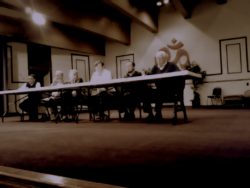 In a time when racial, political, economic and religious divisions in the United States are increasingly obvious, the people of one southern city, Chattanooga, Tennessee, are attempting, through dialogue, to understand the religious beliefs of one another. On a chilly November Monday evening a group of over fifty people gathered at a Hindu temple for the Sixth Interfaith Panel Discussion. The attendees and panelists were ordinary people, with extra-ordinary beliefs concerning the value of gaining knowledge and understanding of the faith traditions of one another.