
In recent years American public discourse has often heard the term “transactional morality.” In simple terms it means that getting to a social goal that is deemed worthy of pursuit can be carried on with little or no determined moral constraints. Flexibility is its prime characteristic. And that flexibility can include lies, deliberate misinformation and governmental control of public communication.
I perceive transactional morality gaining an increasing foothold in American society as we enter 2025. In my judgment this trend must be confronted head-on with a strong counterweight. Such a counterweight is the Global Ethic. which emerged from the 1993 convening of the Parliament of the World’s Religions in Chicago. This 1993 convening celebrated the one hundredth anniversary of the initial parliament that was part of the 1893 World’s Fair in Chicago.
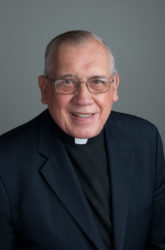 The Rev. Dr. John T. Pawlikowski was a Servite Friar priest, Professor Emeritus of Social Ethics, and Former Director of the Catholic-Jewish Studies Program, part of The Bernardin Center for Theology and Ministry, at Chicago’s Catholic Theological Union (CTU). Pawlikowski was appointed to the United States Holocaust Memorial Council by several presidents, chaired the council’s Subcommittee on Church Relations, served on its executive committee, the Committee on Conscience, and academic committee. He also served as president of the International Council of Christians and Jews (ICCJ) and its Abrahamic Forum and currently holds the title of Honorary Life President. Pawlikowski is a member 3 key committees of the Parliament of the World’s Religions (Global Ethic, Peace and Justice, and Climate Action Task Force). He authored/edited 15 books on Christian-Jewish Relations as well as on social issues such as economic justice, war and peace, and ecological sustainability. He was the former editor of New Theology Review and a member of the editorial board of the Journal for Ecumenical Studies.