Stop! Before concluding that the word “failing” rather than “feeling” in this title is a typo; no, it’s a purposeful oxymoron. If you remember the late Congressman John Lewis’ “good trouble” motto, then you’ll get my drift.
Now with that out of the way, let’s move on.
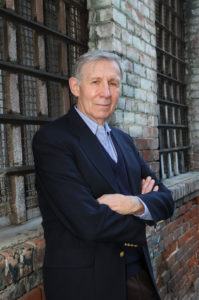
In Part One, we explored the extraordinary career of Dr. Carlos Cortés and, given his background, thought that he’d be the perfect person to speak on pressing issues in today’s world, one rife with unprecedented challenges. Cortés is currently the Edward A. Dickson Emeritus Professor of History and co-director of the Health Equity, Social Justice, and Anti-Racism curriculum of the School of Medicine at the University of California, Riverside. Regretfully, that’s just a tiny slice of his lengthy curriculum vitae.
Okay, that name might not ring a bell with you unless you’re a close follower of credits for animated films and children’s television. He’s probably best known for his two decades as Creative/Cultural Advisor for “Dora the Explorer” and “Go, Diego, Go!” and more recently Creative Consultant for the movie, “Puss in Boots: The Last Wish.” In fact, when he gives public lectures and does book signings, sometimes more people show up with Dora books for him to sign for their kids, rather than for books he’s written.
We are seeing the divisiveness in our world intensify and 2024 will increase that trend, especially given the U.S. presidential election. These issues of profound disagreement demonstrate the broad range of thought diversity that DEI must engage with in order to assist leadership in navigating future challenges.
The American Diversity Report has been a leader in anticipating trends and Instructing and inspiring strategy-making discussions. We will continue our much needed work with a special category for conversations about our divisive world throughout 2024. Unlike most of ADR conversations, Trends 2024 articles will focus on current and emerging hot topics. Your predictions, dialogue, and explanations are welcome.
Let’s demonstrate how diversity professionals can best facilitate robust conversations that improve understanding without exacerbating divisions. Keep in mind that the goal is to Instruct & Inspire – not to Advocate or Lobby.
Examples of topics include:
campus protests relating to the war
spike across the nation in acts of antisemitism and islamophobia
book banning
status of the voter rights act
erosion of trust in the supreme court
action on fossil fuel
culture wars around gender
The ADR invites you to participate in this Divisive World project by submitting articles that add to these conversations. Note that these are discussions and not advocacy for specific groups or individuals. Our emphasis is on healing, not intensifying the divisiveness. Your articles should be designed to follow the ADR motto: Instruct & Inspire.
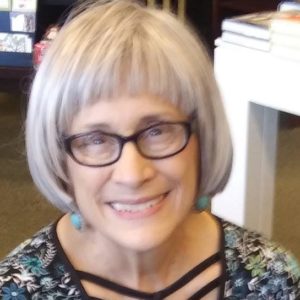
Sickened by the Israel-Hamas war, I reached out to a highly regarded thought leader, Deborah Levine, Founder of the American Diversity Report, for her insight on a disturbing trend – upticks in war-related acts of hate aimed at Jews and Muslims in the U.S.
Terry: Hey Deborah, should I assume that your attention over the past month has been devoted, if not entirely, to the tragedies in the Middle East?
Deborah: Quite a bit. My four grandchildren live in Israel, and we have been following them on Facebook since Oct. 7. While they are safe for now, it has been traumatic for us all, especially when we talk to them on WhatsApp and hear bombing in the background. Meanwhile, I am getting many calls asking for my assistance in bridging the divisiveness that was already part of society but has now been greatly intensified.
Terry: Considering the war and its resulting increases in acts of antisemitism and Islamophobia in the US, what are your thoughts about developing something highlighting divisive/hurtful words and language that divides? For example, I’m not sure that many are familiar with the history behind the expression, “From river to sea,” and language that disparages Palestinians.
Deborah: Wow, talk about controversy! The phrase isn’t about disparagement, it is socio- political. For the Jewish people the phrase means the elimination of Israel and a replacement by a Palestinian nation. For Palestinians, I believe it means freedom from occupation. By the way, what prompted your interest in delving into this treacherous area?
Terry: Oh my, where do I start? Documented incidents of antisemitism, and islamophobia to a lesser extent, have dominated the news, even more since the October 7 attack on Israel. But most acts of hate go unreported, so we have to keep reported incidents in perspective. So to answer your question, I’ve always been interested in the complexities of socio-political history. What have you been seeing?
Deborah: We have seen a growth in antisemitism for quite some time. Incidents range from hate speech to vandalism, to bombings of Jewish sites. The Jewish community has been vigilant in trying to stop hate speech which has been rampant online before it turns into hate crimes. But now that vigilance has to reflect the present level of fear. A recent session offered to the Jewish community here in Chattanooga included local and state law enforcement and the FBI that shared how they were on the lookout for hate crimes, especially by lone wolves who are difficult to track and often influenced by what they see online. Some in the community were too afraid to show up, worried that coming together would provide a target for Jew haters.
Terry: Is it a fact that news coverage seems to be more on the side of reporting acts of antisemitism and less on acts of islamophobia? A while ago at the invitation of a Muslim friend, I visited a mosque during which I asked why they kept plywood in the lobby. I was told that it was because bricks were frequently thrown through their windows and hateful graffiti was constantly scrawled on the building and on plywood covering their windows. You rarely hear about those incidents. They were hesitant to complain fearing more acts.
Deborah: I think that it’s very difficult to tell about any bias. I don’t see data to support this one way or the other. In the midst of so much information we’re getting, personal perspectives are probably going to dictate the answer to this.
Terry: Pro-Palestinians supporters are quick to say that any criticism of Israel is unacceptable and met with claims of antisemitism which stifles free speech. What’s your response to this claim?
Deborah: Good question, and one that has been asked many times over the years. In the past, there has been space to criticize Israel without appearing to be antisemitic. But I believe that in the current situation that may not be the case. Partly it’s because the rhetoric of the past is being applied in a context that makes it closer to hate speech rather than free speech. The dividing line has been disappearing since Oct. 7.
Terry: On the Israeli-Gaza conflict, what are the top questions you would pose to challenge Panelists if you were to facilitate a debate between an Israeli and a Palestinian?
Deborah: In a newspaper column I wrote days after Oct. 7, I said that this is not the time for dialogue. Although I have had many requests for such a dialogue, I’m not sure that it’s possible to appear objective yet. In discussion with others, their attempts to appear impartial in discussions have been perceived as traitorous. For that reason, I’m more inclined to go with the written word which requires more thought and provides more time to think things through.
Terry: Okay, is there is a question or two that you hoped that I would ask, but didn’t?
Deborah: The Israel-Hamas war has far- reaching implications for us and the effect isn’t going away anytime soon. If I were asked for a resolution my first response would be that I have no idea. Then I would bring up the Middle Ages, often called the Dark Ages, as I believe that we are entering a time where violence is a norm, a balanced understanding of history is often irrelevant, and online information will only add to the divisive world that we are entering. Having said that, we must have the courage to educate, inspire and speak out and do less criticizing. I’ll leave with an old rabbinic saying, “If not me than who. If not now, then when.”
Terry: Thanks Deborah. Now here’s a quote from William Faulkner, one that brings this into the historical perspective you reference … “All of us labor in webs spun long before we were born.”
Why It Matters:
Belonging, Values, Socialization, Structure, Aspirations, and Community
As I reflect on the importance of finding common ground among people of diverse customs, beliefs, and religions, I am reminded of the values and principles that have been taught throughout my life.My journey, filled with a sense of purpose, has shown me the significance of building bridges that connect individuals, regardless of their differences.It is in understanding and embracing our shared humanity that we can truly bring about the impact of belonging, uphold core values, shape the way we socialize, give structure to our lives, and reach our collective aspirations as a global community.
Why African Americans support Palestinians (in case you wondered)!
“Neal” wrote: “Terry, I liked your recent piece on the Israel-Hamas conflict. But as the saying goes, ‘there are two sides to every coin.’ So as a Black person, I hope you’ll balance that one with an African American perspective on Palestine. I suppose I shouldn’t hold my breath until you do, huh?”
Duly noted Neal. And thanks for your, eh, “vote of confidence.”
A few days after Neal’s email – while comfortably ensconced in my favorite chair – I scrolled my TV channels in search of an “Andy of Mayberry” episode I’d recently recorded, a search that was interrupted when I came across a heated interview with journalist Piers Morgan and a Palestinian guest, he too a journalist.
The subject? Well, you guessed it – media coverage of the plight of Palestinians during the Israeli-Hamas war.
In case you missed it, October marked National Disability Employment Awareness Month. Here’s why it matters: People with disabilities represent a vast pool of untapped talent in a competitive global labor force, particularly with the domestic unemployment rate at historically low levels.
Nevertheless, too many companies still ignore people with disabilities in the hiring process — despite their proven talent, merit and ability to do the job. Moreover, even some progressive employers which hire persons with disabilities may fail to retain, train and advance this overlooked segment of the workforce due to unlawful discrimination.
The pervasive use and abuse of both prescription and illicit drugs are becoming increasingly concerning, and when coupled with the burden of societal trauma and untreated mental illness, the nation’s economy bears a significant negative impact.Addressing these complex issues demands a multifaceted approach, yet one approach that has proven notably effective but has faded from the forefront in recent years is the connection between successful treatment and the restoration of self-worth through meaningful employment.
Current debates about preserving history can be toxic, but our Bluff View Art District illustrates an important dimension to that debate: Art. One of Bluff View’s treasures is its oldest building, the Houston Museum of Decorative Arts. The museum’s collection of antique glass, porcelain and pottery is one of the finest in the world. And the story behind the collection is as fascinating as the artifacts themselves.
Visiting the museum, I heard about Anna Safley Houston who was supposedly born in 1876. I say “supposedly” because written records were iffy back in the year that Alexander Bell invented the telephone and the art of glassworks was emerging. Born in a small rural town, Anna was an unlikely collector of that art which she stored in an East Ridge barn.
“Rubbernecking” is a term primarily used to refer to bystanders staring at accidents. More generally, it can refer to anyone staring at something of everyday interest from a safe distance. The term derives from the neck’s bending while trying to get a better view.
************************************
With a flip of a remote control or finger, we have the ability to change the channel or turn the page away from events in the news that sickens and shocks us. And that’s what we do. But that’s easier said than done if you’ve not been personally impacted by the event or know someone who has. Which brings us to the current conflict between the Israelis and Palestinians, and relatedly to a recent email I got from “Ernie” a Jewish friend who lives with his wife in Florida.
You see, Ernie’s daughter and her family live in Israel. Thankfully, they escaped with their lives when the recent horrific attack on Israel occurred. But unlike the convenience afforded to most of us, Ernie was unable to “rubber neck” his away from the horror because the matter was personal for him. Very personal.

 With a flip of a remote control or finger, we have the ability to change the channel or turn the page away from events in the news that sickens and shocks us. And that’s what we do. But that’s easier said than done if you’ve not been personally impacted by the event or know someone who has. Which brings us to the current conflict between the Israelis and Palestinians, and relatedly to a recent email I got from “Ernie” a Jewish friend who lives with his wife in Florida.