Category Archives: About Us

About the American Diversity Report

Wartime Part4: Why the West Fails to Defeat Regimes – by Chaim Goldberg

The Secret Pharaoh Hides from the Pentagon

A. The Biblical Question We Never Solved

How does the most sophisticated military force of the ancient world — the army of Egypt, the greatest empire on earth — march deliberately into a split sea and drown?

Think about what had just happened. Ten plagues had systematically dismantled Egyptian civilization. The Nile turned to blood. Crops were destroyed. Livestock died. And just days before that final march, death had visited every Egyptian household in a single night — the firstborn of every family, from Pharaoh’s palace to the lowest servant. Egypt was on its knees.

Yet — Pharaoh’s army charged into the parted waters. Willingly. With full force. Where was their free will? Where was the most basic human instinct — survival?

Continue reading Wartime Part4: Why the West Fails to Defeat Regimes – by Chaim Goldberg →

Threats to the future of the Black Press – by Terry Howard

As a lifetime reader of Black newspapers – among them the Baltimore Afro-American, Chicago Defender, Pittsburgh Courier, New York Amsterdam News – I woke up to the headline, “The Richmond Free Press ceased publication,” a Black newspaper and held onto the fragile hope that someone had played cruel AI hoax on me. I wish I could sit here and say that was the case, but I can’t. Lord knows I can’t. 

Continue reading Threats to the future of the Black Press – by Terry Howard →

Growing Up Female in Hong Kong – by Belinda Wong

Life is never easy in Hong Kong. When I was a kid, the percentage of girls receiving proper education was low.  Girls having higher education was much rarer. Boys were expected to do good at school and then at work.  No such expectations for girls. Luck was always on my side. I passed all the examinations which I needed to pass to move on to the next level.  My formal education ended being a graduate of the Chinese University of Hong Kong with a major in Sociology.  I was having a free time at school and then free choice in my career.

Continue reading Growing Up Female in Hong Kong – by Belinda Wong →

Renewing Diversity: Part 15: Perspectives from Intercultural Pioneers – by Carlos Cortés

In August, 2023, two of my friends — Sandra Fowler and Daniel Yalowitz — set out to make a difference.  They envisioned a book on the field of interculturalism structured around individual professional autobiographies written by twelve people, mostly in their eighties, whom they deemed to be intercultural pioneers .  I was one of the dozen selected, also the oldest at 91 when the book — Creating the Intercultural Field: Legacies from the Pioneers — was published in 2025.

Within diversityworld, the field of interculturalism is not all that prominent.  It isn’t a widely-trumpeted diversity term like microaggressions or white fragility or critical race theory.   It doesn’t make headlines like DEI.  In fact, although its origins date back to the early twentieth century, interculturalism has operated effectively in the shadows without the widespread public recognition of hotter and more critically scrutinized fields like ethnic studies.

Continue reading Renewing Diversity: Part 15: Perspectives from Intercultural Pioneers – by Carlos Cortés →

Women Storytelling for Women’s History Month – by Deborah Levine

originally published in The Chattanooga Times Free Press

Folks often cite famous women in history as their inspiration during Women’s History Month. The stories about Marie Curie, Rosa Parks, Eleanor Roosevelt and Ruth Bader Ginsburg are good examples. But here in Chattanooga, we have our own inspirational women who have spoken about Women’s History Month and its meaning. Let’s learn from the stories that they share.

Continue reading Women Storytelling for Women’s History Month – by Deborah Levine →

Creative Writing as a Tool for Mental Health – by Diane Storman

Writing Through It

Creative writing can be an effective tool for processing and regulating emotional responses. It can help writers enhance self-awareness, manage their mental well-being through daily writing practices, and foster connections within communities facing shared mental health challenges. (Author’s note: For the purposes of this article, creative writing refers to the practice of deliberately using narrative forms such as storytelling, journaling, and poetry to express thoughts and emotions.  Mental health is defined here as a state of emotional, psychological, and social well-being that influences how individuals think, feel, and act.)

Continue reading Creative Writing as a Tool for Mental Health – by Diane Storman →

Stable Money, Fair Credit, Stronger Communities – by Julie Morris

pastedGraphic.pngI

 Why the “Boring” Stuff Matters

When we talk about equity and inclusion, we often picture classrooms, workplaces, and voting booths. But equity is also built (or blocked) at the checkout counter, in the loan office, and at the kitchen table when a family is trying to plan next month’s bills. Access to stable financial resources and fair lending opportunities shapes who can take a risk, recover from a setback, and invest in the future—across every kind of community.

Continue reading Stable Money, Fair Credit, Stronger Communities – by Julie Morris →

Community Coalitions for Effective/Equitable Climate Action – by Olya K-Mehri 

Climate and environmental challenges are often described as global problems, but their impacts are deeply local. From flooding and heat stress to air quality and biodiversity loss, communities experience environmental change in ways that are shaped by place, inequality, and existing social conditions. In this context, community coalitions and collaborative movements are essential to effective and just climate action.

Continue reading Community Coalitions for Effective/Equitable Climate Action – by Olya K-Mehri  →

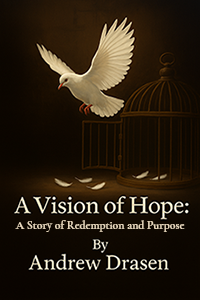
The Power of Collaboration – by Andrew Drasen

In tackling complex social challenges, collaboration is not optional. The National Coalition for Drug Legalization illustrates this principle at every level. Founded by Veronica Wright, the coalition brings together law enforcement veterans, educators, nonprofit leaders, and recovery advocates to create a unified platform for research-informed policy, public education, and actionable change.

Continue reading The Power of Collaboration – by Andrew Drasen →

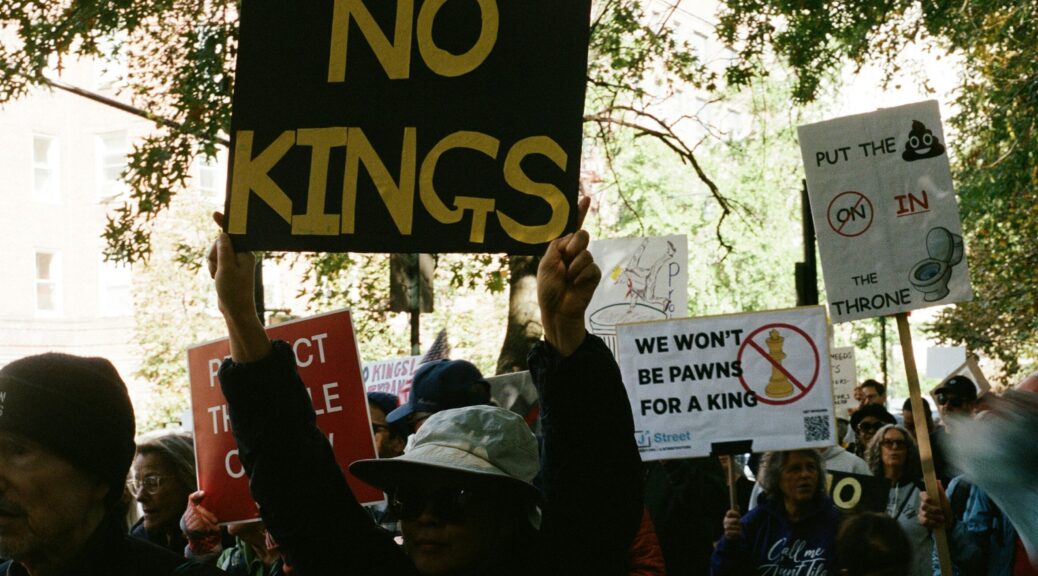
Random thoughts on No Kings Day protests – by Terry Howard

“Sorry, but I don’t remember seeing many white faces during civil rights protests and marches in the sixties.
So, I’ll take a pass.”

That was one of the “no thanks” responses I got from “Fernando,” one of several Black folks I invited to attend the recent No Kings Day protest with me. Hold that for now because I want to leave with a full-throated response to “Fernando” in closing.  

Now in case you didn’t know, cared to know, or reside on another planet (and much to the chagrin of “someone” who is obsessed with crowd size), in the largest single day of protest in American history, over 8,000,000 people took part in some 3,300 “No Kings” rallies recently spanning every continent on Earth while millions more participated remotely by watching coverage on television or online.

pastedGraphic.pngpastedGraphic_1.png

       Georgia protesters                       Virginia protester

So, despite temperatures in the mid-forties, I made the short drive to a local No Kings Day protest.  It seemed that the only difference between that protest compared to the one I attended last year was a much bigger turnout, more young people in attendance and more creative posters, some with graphic images and language way too inappropriate to include in this narrative. Plus, given that this an election year a few politicians were there deftly working the crowd. And from what I could glean from some conversations, many protesters were there not necessarily to protest for themselves but for generations to come. 

Continue reading Random thoughts on No Kings Day protests – by Terry Howard →