Category Archives: Transforming

Projects that are making a difference, improving lives, and building communities.

End of Affirmative Action? A Tale of Two Stories – by Dr. Carlos Cortés

Keynote Address for Constitutional Law:
The End of Affirmative Action

Part of the Signature DIAlogue Webinar Series of the
Los Angeles County Department of Human Resources

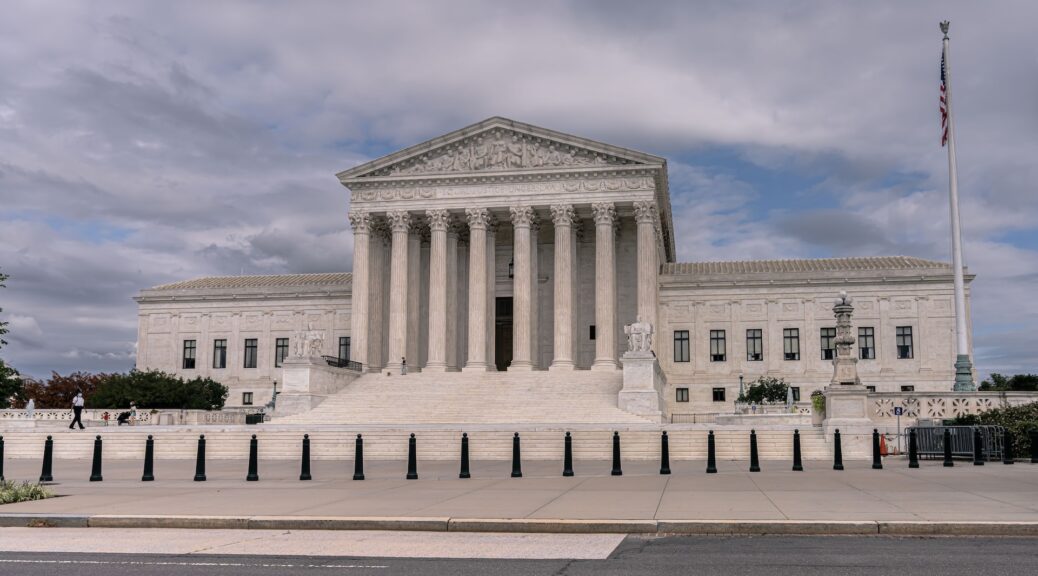
Thank you for the opportunity of reflecting on Affirmative Action, particularly the two recent Supreme Court decisions that struck down the admissions policies of Harvard University and the University of North Carolina. I’ll approach this topic as both an 89-year-old retired history professor and a half-century diversity consultant/public lecturer who actually witnessed the birth of affirmative action.    

The six-decade affirmative action journey involves two intersecting stories: a vision story and a systems story. Both are rooted in the civil rights movement and were launched officially by President John F. Kennedy’s March 6, 1961, Executive Order 10925.

Continue reading End of Affirmative Action? A Tale of Two Stories – by Dr. Carlos Cortés

Exceptional Students: A Journey of Challenges and Growth – by Zen Benefiel

The Corporate Odyssey:
A Journey of Challenges and Recognition

My life’s odyssey has been shaped by a commitment to empowering exceptional students and a pursuit of excellence. It all began with a brilliant mind and an engaging attitude, leading to a successful ‘corporate’ career as a production control coordinator for an aerospace company. Managing a significant commercial spares desk and overseeing millions in monthly deliverables, I excelled and gained recognition. However, my suggestion to introduce interpersonal skills classes was met with resistance, leading to my eventual outcast from the corporate circle.

Continue reading Exceptional Students: A Journey of Challenges and Growth – by Zen Benefiel

A Young Writer’s Quest – by Marcus Slater

My name is Marcus Slater and I am a high school senior in Chattanooga, Tennessee. My writing journey began when I was in eighth grade. I started writing fiction stories about monsters and teenagers who rise up to defeat them. Writing helps me escape from reality because sometimes reality is boring. Writing also helps me realize that anything is possible if you use your mind. Activating my imagination and creating something that I can share with others inspires me. Currently, Rachel Symthe is my favorite author. I admire her beautiful and marvelous work on her webtoon Lore Olympus. Stephen King is also one of my favorite authors. His works, The Shinning and Carrie, are phenomenal. I have had a chance to watch them, and I recently started reading the novels.

Continue reading A Young Writer’s Quest – by Marcus Slater

Three Ways Technology Can Drive Inclusive Communication – by Kenya McPheeters

The ability to communicate is essential to inclusion in professional, learning, or social settings. A Deaf employee, for example, can’t fully contribute to a business unless they can participate in impromptu meetings or hallway chats with colleagues. If English is a second language for a medical student, they need detailed and accurate notes to retain critical information. For a senior aging into hearing loss, losing the ability to connect with family members by phone can be devastatingly isolating. I know of this situation all too well – In my work as a sign language interpreter I’ve seen how connections can be lost when communication isn’t available or readily accessible

In all of these instances, inclusive communication enhances diversity by facilitating involvement, acceptance, and belonging. Today, innovative technology is creating new opportunities for people of different backgrounds, experiences, and linguistic modes to seamlessly share information, collaborate, and engage. Three examples are outlined below.

Continue reading Three Ways Technology Can Drive Inclusive Communication – by Kenya McPheeters

The Scared States of America – by Terry Howard

Rejection?……Death?…..Aging?…..
Being judged?…..Loneliness?

What’s your innermost fear readers? I posed that question (with the options above and others) to some folks whose views I value. Those are the fears that bubbled up. Their answers follow. But to make this personal, ponder your answer to that question.

Now before we get to the responses from those I “surveyed,” I’ll start with a conversation with an African American friend who, like me, is the father of sons. We were talking about the recent spate of gun deaths sweeping the nation and the disproportionate impact on African Americans. Here it is:

Continue reading The Scared States of America – by Terry Howard

“I see nothing!” ….. really Clarence, really? – by Terry Howard

Supreme Court Justice Clarence Thomas has been in the news recently, for all the wrong reasons. 

You see he was outed for having received millions of dollars’ worth of gifts over the last 20 years from billionaire Harlan Crow. With wife Ginny, globetrotting Thomas has been living the high life aboard a million-dollar yacht and on a private jet while puffing away on cigars, munching on caviar and sipping expensive wines. 

Now what’s interesting is that once he got caught with his pants down and forced into the limelight, like a deer caught in the headlights Thomas pulled out his Sergeant Schultz defense, “I see nothing! I hear nothing! I know nothing!” 

Continue reading “I see nothing!” ….. really Clarence, really? – by Terry Howard

Stereotype and Character Assassination – by Julia Wai-Yin So

Having worked in the US for the last 40 some years, I was once a target of character assassination (CA). That experience prompted me to write this article to raise awareness that being a member of a minoritized group can put us at an additional risk of being targeted. This article explores the association between stereotype and character assassination.

Gordon Allport’s The Nature of Prejudice defines stereotype as an exaggerated belief associated with a category (i.e. a social group). Whether positive or negative, it is when one applies the group characteristics to a member of the group while ignoring the uniqueness of the specific member.  This article focuses on the use of negative stereotype of a social group to attack the character of a member of the same group. Many times, this baseless accusation can have serious negative consequences on the victim, especially when it is turned into an act of CA. 

Continue reading Stereotype and Character Assassination – by Julia Wai-Yin So

Diversity and Speech No. 37: Building a More Inclusive Democracy – by Carlos E. Cortés, Joseph Kahne

Carlos:  Joe, from the first time we had lunch together, I’ve been struck by one thing: like me, you really believe that you can make the world a better place.   Am I right?

Joe: I plead guilty to that one. 

Carlos: Maybe that’s one reason we hit it off so well from the beginning.  But it’s one thing to believe we can make a difference and another thing to actually make a difference.  

Joe: Agreed.  

Continue reading Diversity and Speech No. 37: Building a More Inclusive Democracy – by Carlos E. Cortés, Joseph Kahne

Get Back to the Basics- by Jacob Robinson

Growing up and living in Georgia, you see many families attend the typical Sunday and Wednesday services offered by local Christian churches, especially in my area, and the parking lots would be filled to the brim like a pitcher of sweet tea. As for my family, we did not grow up in the church. In this case we were outsiders, and I felt that way about my religious background growing up. My parents did not fail in providing me any spiritual feeling as I was taught to treat others equally, to not discriminate, and to “love thy neighbor as yourself.” 

I would attend church via friends as I grew. My childhood friend from elementary school introduced me to the church; where we would be taught the basics of Christianity in small groups. The basics were the essentials, and not much more was needed, in my opinion, to follow religion. 

Continue reading Get Back to the Basics- by Jacob Robinson

Ending Teenage Smoking – by Matthew Cook

Teenage smoking has been a problem for over a century. Smoking itself has existed for thousands of years, but it really took off when cigarettes were invented in the 1840’s. For a long time, smoking was the norm – everybody did it. In fact, in the early 20th century, doctors even encouraged it. Because of this, teen smoking was a major problem for a long time. However, although it was encouraged in the first half of the 20th century, people woke up in the latter half. They realized that smoking caused lung cancer, and from the 1960’s through the 1980’s, smoking became much less popular. In fact, a report published by the CDC in 1992 said that half of smokers quit in that timeframe.

Continue reading Ending Teenage Smoking – by Matthew Cook