
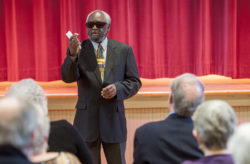
His name is Stan Maclin. He lives in Harrisonburg, Virginia, having moved there 20 years ago. He is the founder and curator of the Harriet Tubman Cultural Center in that city.
It should come as no surprise then that Maclin’s Center has garnered national attention and many phone calls ignited by the recently released movie “Harriett,” the story of Harriett Tubman who single handedly made many forays deep into the south to free slaves.
When asked why he started the Center, in words that undoubtedly flowed from his mouth hundreds of times over the years, Maclin said that he wanted to open a place where African Americans can learn about their history, identity, and culture. He wanted to be able the educate future generations so that history does not repeat itself.
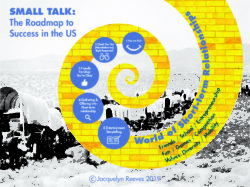 Small talk delights and confounds us, and it is worth asking why.
 Former Southern Cameroon (Northwest & Southwest regions of Cameroon) is considered a minority group in Cameroon. Approximately 20% of the population (5 Million) of Cameroon are from and reside in these two English-speaking regions. This minority population has been marginalized both in public institutions and state positions. The feeling of marginalization started developing and growing among the anglophone population, when the 1961 Federal Constitution was changed by President Ahidjo in 1972; changing the status of Cameroon from the Federal Republic, to the United Republic of Cameroon. The sentiment started to develop among the anglophone population that the francophone population was better represented politically, economically and socially. This fueled claims of self-determination within the Anglophone population. (ICG 02/08/2017).
 Reprinted in honor of Madeleine Albright R.I.P. 1937-2022