Category Archives: Transforming

Projects that are making a difference, improving lives, and building communities.

Political Violence & Inclusion – by Deborah Ashton

Throughout history, political discourse in the United States has oscillated between civility and conflict. There were notable times when individuals from opposing perspectives engaged in constructive debate, exemplified by the 1965 exchange between author James Baldwin and conservative commentator William F. Buckley Jr., as well as the bipartisan relationships of leaders such as Ronald Reagan and Tip O’Neill during the 1980s. Yet, it is important to recognize that political violence is deeply rooted in the nation’s origins. The American Revolution itself was marked by actions that, had they failed, would have been deemed treasonous. As we complain about masks being worn to hide the perpetrator’s identity, colonists dressed up as Native Americans when they engaged in the Boston Tea Party. Hiding one’s identity is not new.

Continue reading Political Violence & Inclusion – by Deborah Ashton

Renewing Diversity Part 9: Rediscovering My Professional Journey – by Carlos Cortés

For nearly a year I’ve been going through an out-of-body experience. It was launched by a simple request that has turned into a not-so-simple journey.  Here’s what happened.

In the fall of 2024, Steven Mandeville-Gamble, Director of the University of California, Riverside, Library, asked me to donate my professional papers to the library’s Special Collections.  Feeling quite honored, I agreed.  Since then I have been preparing my papers for delivery.  This has involved months of wading through file cabinets, bookcases, and stacks of boxes crammed with books, articles, correspondence, course notes, past public lectures, workshop outlines, video and audio tapes, and published and unpublished manuscripts. 

Continue reading Renewing Diversity Part 9: Rediscovering My Professional Journey – by Carlos Cortés

Your final job interview is with yourself – by Martin Kimeldorf

Writing your Final Resume

“It’s hard to know when to respond to the seductiveness of the world and when to respond to its’ challenge.  If the world were merely seductive, that would be easy.  If it were merely challenging, that would be no problem.  But, I arise in the morning torn between the desire to improve the world and a desire to enjoy the world.  This makes it hard to plan the day”.
~  E. B. White

Somewhere around 1970 I came across the notion of  self-help support groups for the unemployed. They reported remarkable results so I set the task of translating this into a workbook for young adults: Job Search Education. The success of that title brought me some 20+ book contracts of various topics from leisure wellness, to intergenerational programing, to mixology. It’s been a grand trip…and now as I take step back in the last quarter of my life I have found the value in writing one last “resume”. It is directed not at future employers; it is simply a summation for myself. It may inspire you to do the same.

I plotted out an outline that contained the following categories:

  • Student & Early Accomplishments
  • Adult Work Experiences
  • Fun or Humorous (magic, theater, paintings)
  • Volunteer Work
  • My Favorite Saying

Without further ado about nothing (See Shakespeare’s play with that title), I’ll proceed with samples and words.

Continue reading Your final job interview is with yourself – by Martin Kimeldorf

Bridging the Education Gap – by Muhammad Usman Qazi 

How LearnWithQazi.pk Empowers Underserved Children Through Accessible Online Learning

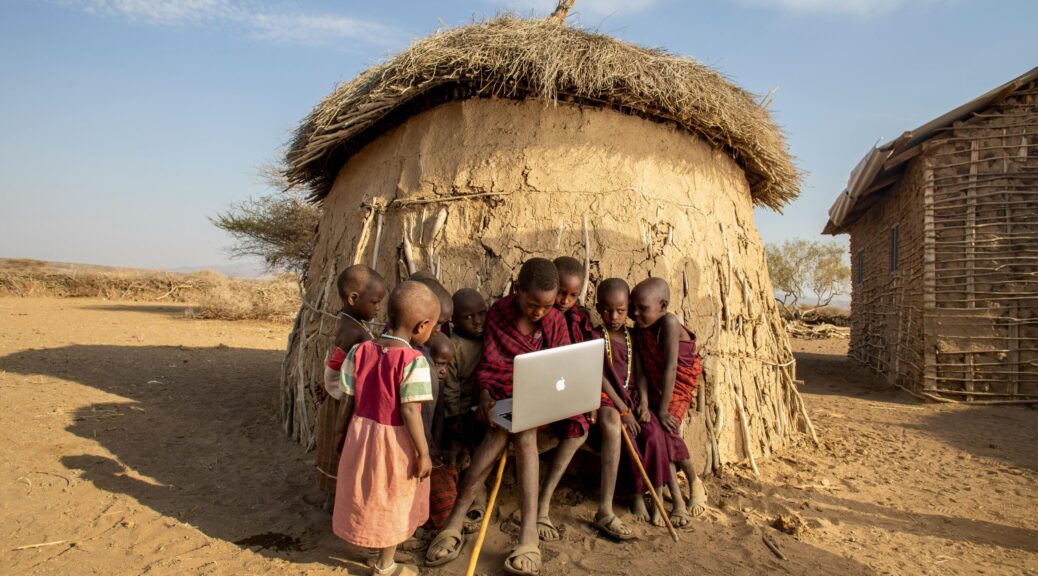
Education is a fundamental right that opens doors to opportunity, growth, and empowerment. Yet, according to the 2024 UNESCO Global Education Monitoring Report, over 251 million children and youth worldwide remain out of school. This stark reality affects millions, especially in underserved communities where access to quality education is limited due to poverty, geographic isolation, or other barriers.

Continue reading Bridging the Education Gap – by Muhammad Usman Qazi 

A Brief History of Humankind – by William Hicks

A RACE TO FRUITION OR A FIGHT TO THE DEATH?

In chapter one of his book, A New Earth: Awakening to Your Life’s Purpose, Eckhart Tolle writes about “The Flowering of Human Consciousness”, using as a metaphor the appearance of the first flower on the planet as a seminal event in the evolution of the flora with which we humans are most familiar and, nowadays, take almost universally for granted. But the event, deemed somewhat insignificant in the history of the planet, is monumental in that it signals a growth in a direction of fantastic beauty and presence that enhances the very being of the planet itself and its human occupants.

Continue reading A Brief History of Humankind – by William Hicks

As We Code, So We Reap – by Debanjan Borthakur 

The  Roots of Biased AI

Human prejudice stretches back millennia, and the seeds of racism and bias that we sowed long ago have now taken root and flourished within artificial intelligence. Bias existed long before machine learning algorithms emerged; whenever society invents a new technology, it inherits the prejudices and discrimination of earlier eras. In the nineteenth century, redlining maps dictated who could receive loans—systematically denying Black Americans access to mortgages, insurance, and other essential financial services. Today’s credit-scoring algorithms still mirror those same exclusions. As AI extends into recruitment, administration, medicine, and the media, alarm bells are sounding: if we do not imbue our machines with ethical values, they will merely magnify our deepest biases.
           Continue reading As We Code, So We Reap – by Debanjan Borthakur 

Take the ‘Age of AI’ seriously – by Deborah Levine

originally published in The Chattanooga Times Free Press

I didn’t take it seriously when a friend in the internet security business told me that AI is reshaping the world and our future. Surely that was an exaggeration. Or so I thought until I was recruited to speak about intercultural leadership in the ‘Age of AI’ during a 3-day virtual symposium for SIETAR (Society for Intercultural Education, Training and Research). It was an honor, but also a vital opportunity to learn about AI from researchers and educators around the globe. 

Continue reading Take the ‘Age of AI’ seriously – by Deborah Levine

Intergroup Relations – by Debanjan Barthakur

Lessons from Life and the Classroom

This year, I had the opportunity to teach Intergroup Relations at the University of Toronto as a part-time instructor. It was a new and enriching experience. While at the University of Rhode Island, I once took a course titled Non-Violence and Conflict Reconciliation—at the request of a friend. Since then, I’ve been deeply interested in issues of social harmony and justice. The question of how we can build peace in our society has often occupied my thoughts. Initially, the plan was to teach a different subject. But quite unexpectedly, I found myself teaching this course at a time when divisions between groups—across the world—are becoming sharper. Conflicts based on ideologies, religions, and identities continue to shape current political realities. The urgency of improving intergroup relations is not just felt in North America, but equally in India and elsewhere, I was born in India and I closely observe the socio-political issues pertaining to both societies. 

Continue reading Intergroup Relations – by Debanjan Barthakur

The Difference Between Good and Nice – by Deborah Ashton

It is important to know the difference between being good and being nice. Good people are not always nice. And nice people are not always good. Being nice is easy and being good is fierce hard work. 

The question is, do you choose to be a good person or a nice person?  Pope Francis, who we lost on Easter Monday chose to be a good person he understood that which is preached in 1 John 3:18, good deeds make a difference, in the vernacular talk is cheap. We are what we do, and good people do good deeds.

Continue reading The Difference Between Good and Nice – by Deborah Ashton

Strategy Behind the SIETAR  AI Symposium: ADR Interview with Papa Balla Ndong

AI SymposiumAmerican Diversity Report

Bridging Cultures with Code

ADR (Deborah Levine): Papa Balla, thank you for joining us. You’ve worn many hats in the AI and intercultural world , as the creator of SIETAR AI, the promoter of the Intercultural AI Framework, and a lead contributor to the EU ACT in GPAI. Could you start by telling us what inspired the creation of the Virtual SIETAR AI Symposium?

Papa Balla Ndong: Thank you for having me. The Virtual SIETAR AI Symposium was born from a sense of urgency to ensure that intercultural perspectives are not an afterthought in the AI space, but a foundation. AI is shaping how we work, communicate, and understand the world. Yet, without cultural sensitivity and ethical alignment, it risks deepening global inequities. The symposium is a space where engineers, educators, policymakers, and cultural practitioners can co-create a more inclusive and responsible AI future.

ADR: How does the Intercultural AI Framework inform the structure or strategy of the Symposium?

Ndong: The Framework is the backbone. It’s not just a theory , it’s a methodology that centers on three pillars: intercultural sensitivity, iterative dialogue, and ethical adaptability. Each session in the symposium maps to one of these, whether we’re discussing dataset bias, AI ethics across borders, or the human element in machine learning. We’re not just talking about inclusion; we’re practicing it through multilingual panels, cross-regional collaboration, and time zone-aware scheduling.

ADR: SIETAR AI is still quite new. What role does it play in this initiative?

Ndong: SIETAR AI is our think-and-do tank. It connects interculturalists who may never have imagined themselves working with AI. Through this platform, we’ve trained educators on AI literacy, advised on ethical AI curricula, and collaborated with tech developers to humanize AI systems. For the Symposium, SIETAR AI serves as the bridge between the intercultural field and the technological ecosystem.

ADR: You were also selected as a lead contributor for the EU ACT within GPAI. How has that shaped your perspective on global AI governance?

Ndong: Immensely. Being part of GPAI’s EU ACT group means engaging in the practical drafting of codes of conduct and frameworks that could shape legislation. What I bring to the table, and advocate for — is the recognition of cultural plurality. We must understand that a one-size-fits-all approach to AI ethics won’t work. African values, Asian philosophies, Indigenous epistemologies — they all matter. The Symposium reflects this ethos by offering a platform for those voices to be heard and integrated into AI norms.

ADR: This all sounds very ambitious. What are the main challenges you’ve faced in organizing the Symposium?

Ndong: Time and trust. Coordinating across continents is a logistical puzzle. But even more, gaining the trust of communities who’ve been excluded from tech dialogues takes time. We’re saying: “Your voice is not only valid — it’s vital.” That shift doesn’t happen overnight. We’re learning to listen deeply and build long-term partnerships, not just events.

ADR: Who are some of the key collaborators or participants in this year’s edition?

Ndong: We’re bringing together UNESCO experts on education and technology, grassroots AI developers from Africa and Latin America, European policymakers, and even artists and poets. AI isn’t just technical — it’s deeply cultural and emotional. 

ADR: And what would success look like for you, after the Symposium ends?

Ndong: Success is a seed. If someone leaves the symposium with a new partnership, a project idea, or simply the sense that they belong in the AI conversation — then we’ve done our job. We want the Intercultural AI Framework to live beyond documents and symposiums. It must become a living practice.

ADR: Finally, for our readers who might want to get involved, how can they connect?

Ndong: We’re open. Anyone can join the mailing list of SIETAR AI, attend the symposium (many sessions are free), or contribute to our collaborative Intercultural AI Framework. This is a global dialogue, and everyone has a seat at the table.

ADR: Thank you, Papa Balla. Your work is a reminder that technology without culture is incomplete — and that the future of AI must be both human and humane.

Ndong: Thank you — and may we build that future, together.


Note: Deborah will give a presentation on Intercultural Leadership in the Age of AI for the Symposium on Friday, April 11.