
Five decades ago, the only consumer that brands cared about was the White Anglo-Saxon Protestants (WASPs). The reason being that they represented the majority of the consumer market. Some years down the line, a few companies/brands realized that directing marketing material towards the African-American ethnic population has the potential to boom up their business. So, they devised multicultural marketing strategies.
But today, a few more years down the line, shows a different consumer picture. Now, the population of America has become progressively diverse. The mixed-race population and Asian people are the two fastest growing groups in the US. On the other hand, there is a lag of growth in the Non-Hispanic white segment of the US population. From July 2015 to July 2016, Asian and mixed-race population grew by 3% while Non-Hispanic whites grew by just 5,000. Research suggests that by 2040, the minority groups today would combine to attain a majority in the US population. So, the marketing strategies that used to work a few decades back would no longer work in the future. This has led to professionals diversifying their marketing procedures.
Continue reading Diversity Marketing and Communication Today – by Anna Kucirkova
 Diversity is increasingly becoming a powerful force in the determination of an organization’s success. Everyone has talents, some of which are recognized and used, and others never identified and thus never put into use. Organizations that engage diverse teams can draw on the synergy associate with it to innovate and subsequently achieve unprecedented success. It is evidenced in Harvard Business Review article, titled, “How diversity can drive innovation.” In that piece, (Hewlett, Marshall & Sherbin) assert, “Employees of firms with 2-D diversity are 45% likelier to report a growth in market share over the previous year and 70% likelier to report that the firm captured a new market.”
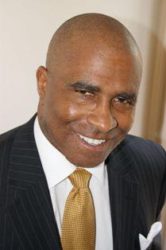 Jim Woods is President of Woods Kovalova Group, a Diversity and Leadership Management consulting firm located in Denver. We believe that tackling big thorny challenges requires big unconventional ideas. We provide boundary-pushing proposals for changing the way organizations work and leaders lead.