
Tag Archives: Equity

From Crisis to Comeback – By Sabrina Sanchez, Yeruwelle De Rouen

A CEO’s Journey Back to Restorative Leadership
A Case Study 

Abstract

This case study explores how TGTHR, a Boulder, Colorado-based non-profit working to end youth homelessness, navigated a period of acute organizational crisis through restorative leadership and courageous self-awareness at the executive level. Rather than offering a traditional turnaround narrative, the story highlights the CEO’s willingness to lead vulnerably, acknowledge ruptures, and engage deeply in restorative work even as conditions worsened. Through its partnership with Intersectional Innovations, a leading EBI consulting firm, TGTHR stabilized not by bypassing conflict, but by embracing a relational, equity-rooted approach to repair and culture-building. As the organization enters its next chapter, the CEO is intentionally returning to restorative practices: underscoring their value not just in recovery, but in long-term cultural stewardship.

This case study offers rare and practical insight into what it looks like when active restorative leadership chooses transparency, humility, and restorative over performance and perfectionism. It explores TGTHR’s transformation through a restorative lens and centers Annie’s personal journey as CEO highlighting her emotional toll of the crisis, the self-reflection required to show up differently, and the courage it took to choose vulnerability when conditions continued to worsen. This article exposes the messiness of true cultural change and how restorative leadership rarely looks clean and tidy and how returning to the “why” after conflict can rebuild trust one conversation at a time.

Continue reading From Crisis to Comeback – By Sabrina Sanchez, Yeruwelle De Rouen

Renewing Diversity Part 10: Unpacking the Inclusivity Dilemma in Health Care – by Carlos Cortés

I recently received an invitation to attend the national conference of the Society for Intercultural Education, Teaching, and Research.   The conference theme was “Inclusive Interculturalism.” The implicit message was simple: in order to be inclusive, interculturalists need to make a conscious effort .  Inclusivity doesn’t come naturally.

In my last month’s ADR column I addressed a similar issue about the development of multicultural education. I argued that multiculturalists need to be cognizant about whom they may be excluding as well as including. The more that you exclude categories of people, the less inclusive the curriculum becomes. 

Continue reading Renewing Diversity Part 10: Unpacking the Inclusivity Dilemma in Health Care – by Carlos Cortés

Glossary: Terms Related to Diversity – by Marc Brenman

The following definitions are designed to accompany studies and materials on diversity, equity, equal opportunity, and nondiscrimination. The intent is to provide a common understanding to facilitate discussion and a common ground for discourse and action. The nature of the civil and human rights field, as well as human resources, is such that understandings change over time,  circumstances, and technological developments. Hence these definitions are subject to change, and in the spirit of the need for a common understanding, feedback is welcome, as well as suggestions for additional terms that need defining. 

Glossary of Terms Related to
Diversity, Equity, and Equal Opportunity

Continue reading Glossary: Terms Related to Diversity – by Marc Brenman

Renewing Diversity #2: Teaching Health Equity – by Carlos Cortés, Adwoa Osei

In July, 2020, the two of us became the inaugural co-directors of the University of California, Riverside, School of Medicine’s new Health Equity, Social Justice, and Anti-Racism (HESJAR) curricular initiative.   Since then the teaching of health equity to medical students has been a journey of continuous renewal.   

Publications about health equity emerge nearly every day.  Each year’s student cohort provides new pedagogical challenges.  Every module we teach raises new issues regarding learning and assessment.  We can’t stand still. 

Continue reading Renewing Diversity #2: Teaching Health Equity – by Carlos Cortés, Adwoa Osei

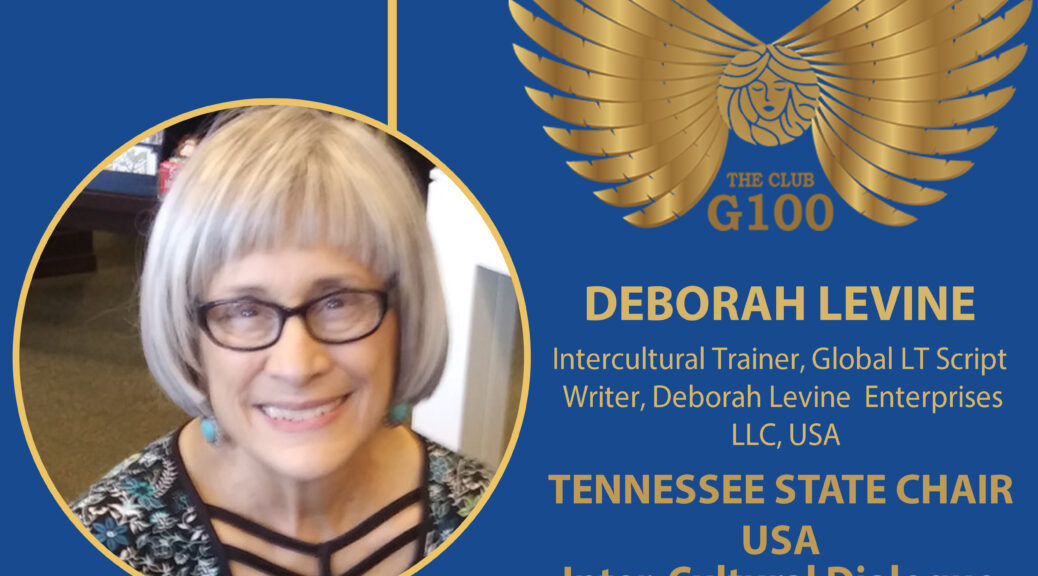
TN Chapter of G100 Women Leaders – by Deborah Levine

Inter-cultural Dialogue for Equity

I’m honored to be the Tennessee State Chair of the Inter-Cultural Dialogue Wing of G100 Women Leaders / All Ladies League. I hope to bring together women making a difference in our state. It reminds me of when I founded the Women’s Council on Diversity and the Global Leadership Class more than 20 years ago. Let’s go again: Crosscultural boundaries Locally & Globally – Instruct & Inspire!  (Let me know if this interests you.)

G100 is a huge action-think tank that comprises 100 wings/sectors, led by 100 Global Chairs  like Dr. Aurora Martin who is Global Chair/Inter-Cultural Dialogue and Advisors like Global Advisor/Inter-Cultural Dialogue Shon Abegaz. The Chairs further nominate 100 country chairs in 100 countries for global reach and impact. Country chairs, like Monica Jaramillo who is the USA Country Chair/Inter-cultural Dialogue,  then foster communities of 100 members directly or through further distributed leadership of region/state/city/district chairs.

G100 is a powerful Group of women leaders and achievers from all walks of life who wish to give back and move us all forward as architects of the future. It’s a league of luminaries of eminence and excellence including Nobel Laureates, Heads of States, Ministers, Businesswomen, Philanthropists, Investors, Entrepreneurs, CEOs, Corporate and Community Leaders – like me.

Continue reading TN Chapter of G100 Women Leaders – by Deborah Levine

Diversity and Speech Part 39: Creating Health Equity – by Carlos Cortés and Adwoa Osei

The two of us first met in July, 2020, when we were asked to serve as inaugural co-directors of the University of California, Riverside, School of Medicine’s new Health Equity, Social Justice, and Anti-Racism (HESJAR) curricular initiative.   Health equity, social justice, and anti-racism are important concepts, but they can easily degenerate into little more than buzz words.  Our challenge was to transform those six words into a focused, integrated, and transformative learning experience for our students.  

Continue reading Diversity and Speech Part 39: Creating Health Equity – by Carlos Cortés and Adwoa Osei

Diversity and Speech Part 31: Health Equity – by Carlos Cortés and Adwoa Osei

In July, 2020, the two of us met for the first time as inaugural co-directors of the University of California, Riverside, School of Medicine’s new Health Equity, Social Justice, and Anti-Racism (HESJAR) curricular initiative.   Beginning with our initial conversations it became clear that addressing speech — physician speech, patient speech, medical school speech — would be central to our journey.   

For an entire year (2020-2021) we planned.  This involved reading, particularly about efforts at other medical schools.  It also involved listening: to students; to other faculty and staff; and particularly through a series of community conversations in which medical students interviewed local residents about their experiences with the health care system.  Those conversations deeply informed our curriculum development.   

Continue reading Diversity and Speech Part 31: Health Equity – by Carlos Cortés and Adwoa Osei

Challenges of Teaching about Diversity and Health Equity – by Carlos E. Cortés

A Difficult Conversation about Difficult Conversations forDeveloping Medical Educators of the 21st Century:
New Ideas and Skills
for Adaptable and Inclusive
Learning Environments Conference

February 4, 2022 (Revised, February 6, 2022)

 Let’s start with today’s ground rules.  None.  No rules; no powerpoints.

But three hopes.  That you speak honestly without obsessing about maybe saying the wrong thing, a bane to diversity discussions.  That you contemplate divergent ideas.  And that you reflect openly on your own perspectives by posting comments and questions in the chatbox as we go along.   

So let’s turn to our theme, difficult conversations about diversity and health equity.  Health equity conversations necessarily involve discomfort because they address the idea of group diversity, not just random individual differences.

Continue reading Challenges of Teaching about Diversity and Health Equity – by Carlos E. Cortés

Algorithmic Biases & Economic Inequality – by Pearl Kasirye

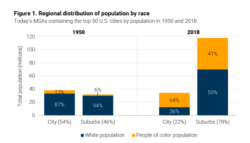
America has a long history of racial segregation and systemic racism that made it difficult for ethnic minorities to achieve financial and economic stability. Well-researched academic studies have found that “even after decades of growing diversity…most Americans still live in racially segregated neighborhoods.”

A study conducted by the University of Minnesota found that 64% of the urban city population are people of color while only 34% are white. Take a look at the graph below:

Equity


This data shows that in the 1950s, the suburbs were populated by a majority of white people (94%), and in 2018, they are still the majority (59%). While the cities have become even more populated by people of color in 2018 than in 1950.
Continue reading Algorithmic Biases & Economic Inequality – by Pearl Kasirye

How to Build a Measurable Pathway to Racial Equity in One Generation – by Mike Green

Consider the tremendous economic opportunity inherent in a single percentage point. Think about the enormous economic impact of moving the needle of progress along a pathway toward racial equity by just a single percentage point.

First, let’s define the term, “racial equity” to establish a common frame of reference and understanding. For many, racial equity refers to equitable access to resources and opportunity. That definition is accurate but incomplete. In the realm of homeowners, business owners and investors, “equity” refers to “ownership.” Equitable ownership of lands, homes, businesses and intellectual property are valued assets that can be passed onto future generations as “generational wealth.” This is a more complete definition of racial equity in measurable terms.

Continue reading How to Build a Measurable Pathway to Racial Equity in One Generation – by Mike Green