Category Archives: Inclusion

Diversity and Inclusion

Why Diversity Improves Project Management – by Michelle LaBrosse

The human capacity for self-delusion is nearly bottomless. We think we’re smarter than we are, more capable than we are and tougher than we are. For example, in one survey, 9% of men actually believed they could win a fight against an elephant!

That unwarranted confidence certainly extends to project management. According to a Project Management Institute survey, 85% of executive leaders said they believe their organizations are effective in delivering projects to achieve strategic results.

Continue reading Why Diversity Improves Project Management – by Michelle LaBrosse

Reliving Transgender History- by Rafaela Amrita Crevoshay

Berlin of the early 20th century
lives in our hearts

If modern ultra-conservatives and “Christian” extremists consider their anti- Trans rhetoric to be a novel solution to their feverish longing for an America that once was, they ought to consult modern history. 

Their play book has been lifted from the authentic Nazi script, circa 1933.

Early 20th century Berlin became known for its pioneering social enlightenment. It was a global magnet for artistic innovation and intellectual ferment. It also gained a reputation for hedonism, nightlife, and unprecedented sexual freedom. This was the liberated cultural context in which the Institute for Sexual Science (Institut für Sexualwissenschaft) blossomed.

Continue reading Reliving Transgender History- by Rafaela Amrita Crevoshay

Disabilities are Different Abilities– by Allison Hill

My Story of Self-Acceptance

Growing Up

I have always known there was something different about me ever since I was a little girl. After I was born, it took me a while to do things babies did normally at an early age without trouble. I didn’t start walking until I was eighteen months old and talking until I was two and a half years. I was later diagnosed with Attention Deficit Hyperactive Disorder or ADHD. Because my skills developed a little later, my parents decided to enroll me in speech therapy. At age 7, I was having problems with my fine motor skills, and I was given a grasping tool to build strength in my fingers. At this age, I started taking exams in school, and that’s when we learned I had anxiety, specifically test anxiety. 

Continue reading Disabilities are Different Abilities– by Allison Hill

ADR Advisors: Influential Women in our Lives and Work

 ADR Advisors share women who inspire

When asked about the women who inspire them, our ADR Advisors share a range of iconic women and personal inspirations.  Some of the Advisors have chosen personal mentors, others have opted for historic figures and some chose both. My own choice is Margaret Mead, (see quote above) a pioneer in cultural anthropology also known for her research on sexual conventions in Western society.

Reading about the various influencers, I have no doubt that you’ll begin to generate a list of women who shaped your own lives.  Feel free to share in the Comments!

Continue reading ADR Advisors: Influential Women in our Lives and Work

ADR Friends: Women Who Inspire Us

In honor of Women’s History Month, hear about the women who inspire us and influence history. Let’s begin with a  quote from Dr. Hak Ja Han Moon, founder of Women’s Federation for World Peace and friend of the ADR:

“Women have the magical power to create harmony and to soften hearts. Brides build bridges. The world of the future can be a world of reconciliation and peace, but only if it is based on the maternal love and affection of women. This is a true power of womanhood. The time has come for the power of true womanhood to save the world.”

Continue reading ADR Friends: Women Who Inspire Us

Two Iconic Women Who Inspire Me – by Dr. Deborah Ashton

As a Black woman, whose family moved up from the Chicago slums to ‘the projects’, I was navigating the intersectionality of race, gender, and poverty in the USA. A historical iconic woman that inspired me would be Harriet Tubman, born a slave. I admire her because not only did she believe in human dignity and rights, but she also acted on her beliefs and principles. 

Harriet Tubman understood that she and the others who were enslaved were human beings and not chattel. I had the honor to visit the Harriet Tubman House in Auburn, NY. Her modest home gives witness to her tremendous courage. She had seizures and narcolepsy, i.e., traumatic brain injury, from being hit in the head when an overseer threw a heavy metal weight at a slave.  Harriet Tubman could be recognized during Women’s History Month, Disability Pride and Heritage Month and Black History Month. 

Continue reading Two Iconic Women Who Inspire Me – by Dr. Deborah Ashton

Where Are the Women’s Voices? – by Sheryl Axelrod

legal The Under-Representation of Women at the Highest Levels of the Legal Profession 

The extent of gender diversity at the highest levels of the legal profession, is dismal.  

I. BY THE NUMBERS: AT THE UPPER ECHELONS OF THE LEGAL PROFESSION, WHITE WOMEN ARE OUTNUMBERED BY MEN BY A FACTOR OF ALMOST AT LEAST 2 TO 1, AND THERE ARE NEARLY NO WOMEN OF COLOR AND LGBT+ WOMEN
Continue reading Where Are the Women’s Voices? – by Sheryl Axelrod

Diversity and Speech #36: Gender and Generations, An Evolving Conversation – by Carlos E. Cortés, Angela Antenore

A Co-Authored Interview

Carlos: Angela, we’ve been friends and diversity colleagues for thirty-five years.  It will be interesting to reflect on how the conversation about gender has changed over those decades.

Angela: Yes, but today we’ll only be able to look at a tiny slice of that huge topic. Let’s begin with language.  When we first started working together, we used the term gender to distinguish women from men.  Now we recognize greater complexities and fluidity, with terms like gender identity and non-binary.  

Continue reading Diversity and Speech #36: Gender and Generations, An Evolving Conversation – by Carlos E. Cortés, Angela Antenore

Bea Franklin Podcast – Her Historic Journey

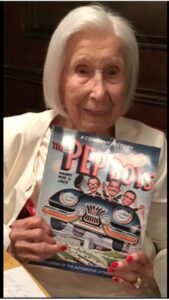
Bea Franklin Bea Franklin is a 98 year ‘young’ inspirational woman who is the daughter of The Pep Boys ‘Jack’ and wife of a World War II photographer. Bea is a breast cancer survivor & is still quite busy going on cruises, attending Broadway shows & UpScale NYC restaurants.
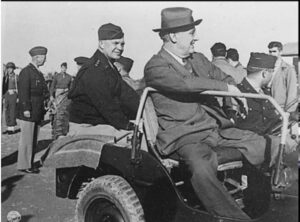


Hear Bea discuss her historic journey with memories of family, famous icons, WW II, and keys to a fulfilling life:

Franklin

  • Her World War II photographer husband.
  • World War II iconic photos: President FDR with Generals Eisenhower & Patton.


  • Liberation of the Dachau death camp.
  • Photos of Humphrey Bogart, Mickey Rooney & others.
  • House-guests including champion boxer/TV celebrity Rocky Graziano, hockey stars & even a former US President.
  • Attending a NYC Rooftop concert that featured Frank Sinatra.

CLICK for the Bea Franklin podcast 

Current Implications of Black History Month – by Marc Brenman

In 1926, Dr. Carter Godwin Woodson, an African-American historian, writer, and educator, created Negro History Week to honor the contributions of people of African descent in the U.S. He founded the Association for the Study of Negro (now African-American) Life and History in 1915 and the Journal of Negro History in 1916. Born in 1875 to former enslaved people in New Canton, Virginia, the Harvard-educated Woodson chose February for Negro History Week because the birthdays of abolitionist Frederick Douglass and President Abraham Lincoln fall then. He wrote, “What we need is not a history of selected races or nations, but the history of the world void of national bias, race, hate, and religious prejudice.” Dr. Woodson contributed to our understanding that a better knowledge of history is critical for people in the African diaspora to achieve greater pride, self-determination and collective progress.  Negro History Week itself changed. About fifty years later, near the close of the Black Power period (early 1970s), the celebration was renamed Black History Week and later expanded to Black History Month in 1976.

Continue reading Current Implications of Black History Month – by Marc Brenman