Category Archives: Transforming

Projects that are making a difference, improving lives, and building communities.

Black-Jewish Dialogue October 2020

Health, Healthcare and Equity

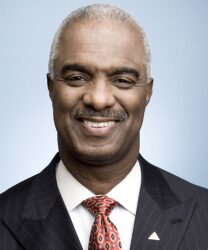
Presenters for this Black-Jewish Dialogue session included Beverly Coulter, Pastor William Hicks, and Dr. Frank Miller with facilitators: Rabbi Craig Lewis of Mizpah Congregation and Deborah Levine, ADR Editor. The discussion included descriptions of the healthcare challenges facing the African-American community and the Jewish community, as well as mutual challenges in the COVID-19 era.

Continue reading Black-Jewish Dialogue October 2020

Healthy Golden Years – by Milica Kostic

Staying Healthy in Your Golden Years During COVID-19

Retirement is a part of our lives where we look forward to relaxing and enjoying the abundance of extra time.  We have a chance to explore the world, pursue hobbies, and spend time with our grandchildren.

But let’s not forget that the key aspect of having a vibrant and productive retirement means you have to keep your body and mind healthy.

Today, with the COVID-19 pandemic, keeping a high focus on our health is more important than ever. As our older loved ones follow all the necessary precautions to keep themselves safe and healthy, they can also include some additional activities in their routines to help keep their minds sharp and bodies fit.

Continue reading Healthy Golden Years – by Milica Kostic

Reaching the Underserved in Gifted Education – by Holly Paul, Stacey Burt

A Camel Through the Eye of a Needle

The National Association for Gifted Children (2020a) defines gifted children as those “who demonstrate outstanding levels of aptitude…or competence…in one or more domains.” Gifted programs exist to provide enrichment to the core curriculum and support these children in reaching their potential. Unfortunately, racial and ethnic minority students are regularly underrepresented in these programs, with the largest disparity being black students. It is both immoral and illegal not to educate a child on the low end of the special education spectrum. Why, then, do we not have the same moral imperative to help all intellectually gifted students reach their potential?

Continue reading Reaching the Underserved in Gifted Education – by Holly Paul, Stacey Burt

Educate by Flipping the Eye – by Todd Cherches

When I originally envisioned the cover design of my new book, VisuaLeadership: Leveraging the Power of Visual Thinking in Leadership and in Life, the image of the eye on the front cover was going to be blue. Not because I have blue eyes (mine are hazel) but, simply, because blue is my favorite color. And because it would align with the name and the brand of my leadership consulting company, BigBlueGumball. lens


However, just before officially committing to the blue eye, in the spirit of thinking outside the box I came up with the idea of, instead, using a rainbow-colored eye. This multicolored eye, I felt, better represented the concepts of diversity, inclusion, and belonging, as well as more colorfully foreshadowing the book’s emphasis on innovation and creativity.

Continue reading Educate by Flipping the Eye – by Todd Cherches

Women and Higher Education Inequity – by Jaclyn Anderson, Margie Crowe 

 Faculty and Leadership Positions, COVID-19, and Structural Disparities 

Where Are the Allies?

The structural disparities linger within higher education and are influenced by long-standing patriarchal practices and ideologies. These inequalities can lead to a lack of diversity and inclusion of single-parent households and women. The problem has become salient given the current pandemic of COVID-19., which disproportionately affects women and single-parent households. Inflexible thinking and leadership practices in higher education have led to barriers to full inclusion of women in higher education positions that are exacerbated when women must choose between their career and their families. Current higher education leadership practices often disallow or acknowledge the right of women to exist in this space. Institutions are reluctant, and indeed refusing, to allow accommodations for staff, faculty, and students (allowing work from home, reducing attendance requirements, required on-campus hours). Administrations that are rife with patriarchal ideologies, with little or no understanding of the consequences of these archaic policies, seem to continue with business as usual.

Continue reading Women and Higher Education Inequity – by Jaclyn Anderson, Margie Crowe 

Our Fathers: Learning from Wounds – by Laszlo Petrovics

Perhaps the past Century will not be known for the World Wars, for the atom bomb, for the rapid growth of scientific technology leading to IT, nor for even the Holocaust and a new awareness of crimes against humanity. In the long eye of history, perhaps the past Century will be known for fatherlessness. As such it will also be known for “Atyahiány”, Our Father’s absence, a most bitter and embittering fatherlessness: For Hitler was fatherless, Stalin was fatherless, Sceuicescu, the tyrant of Romania, was a bastard, Sadam Hussein of Iraq had no father, the ruler of Libya, Khadaffi was fatherless, Castro was a bastard.

Continue reading Our Fathers: Learning from Wounds – by Laszlo Petrovics

Diversity & Speech Part 13: Education and Equity – by Carlos E. Cortés

Education, particularly higher education, has become ground zero for the clash of inclusive diversity and robust speech.  Many administrators and professors proclaim their support of both.  So do I.  Yes, they can co-exist.  But there will be clashes, inevitably.  Which means decisions, tough decisions, will have to be made.

In the wake of the Memorial Day police killing of George Floyd, those decisions became more complex and more contentious.  College leaders throughout the country proclaimed their horror about that Minneapolis event and vowed that their campuses would not only continue to support diversity, equity, and inclusion, but would also assert leadership in anti-racism.

Such anti-racist proclamations are needed.  But what does that mean when it comes to action?  What should college leaders do if members of their campus communities use their robust speech to express anti-equity ideas, particularly ones that are deemed to be racist?

Continue reading Diversity & Speech Part 13: Education and Equity – by Carlos E. Cortés

RIP John Lewis – By Elwood Watson

A Tribute to the ‘Conscience of Congress’

John LewisAs he’s laid to rest, there are no shortage of salutes to Congressman John Lewis, the formidable civil rights activist and legislator from Georgia who departed this earth on July 17, 2020, at the age of 80.

Mr. Lewis was a larger than life figure, a fierce, fiery presence packaged in a medium-sized man’s body. He was a person who lived an extraordinary life.

Continue reading RIP John Lewis – By Elwood Watson

Tribalism and The Vote – by Deborah Levine

Some have called our “Me & Us First” politics as nationalism but I prefer to apply the label ‘tribalism’.  In this COVID-19 environment, racial lines, regional preferences, current events and heavy political advertising, are not shaping public opinion as much as the identity of a specific community and the resonance of a leader to that community. Communities are built on religious and ethnic values, family preferences, housing patterns, and health habits. Their political choices have always been shaped by those cultural traits. With the economic fallout and the growing disparities in jobs and  education, politics will become a complex mix of leadership styles that symbolize communities along with the body language, word choice, and facial expressions that resonate specific communities. Policy positions and biographical details will be less relevant as they are filtered through the lens of each group.

Continue reading Tribalism and The Vote – by Deborah Levine