Category Archives: Transforming

Projects that are making a difference, improving lives, and building communities.

Black-Jewish Dialogue Nov.: Economics and COVID-19

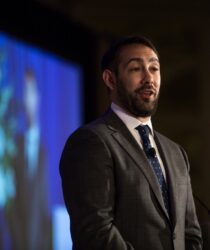
The November Black-Jewish Dialogue focused on the economic impact of COVID-19 on our communities. With participants from coast to coast, Bermuda and Hungary,  the dialogue has grown from a local Chattanooga initiative to a global discussion. Hosted by  Chattanooga’s Mizpah Congregation in partnership with the American Diversity Report, the dialogue began in August of this year with monthly virtual sessions.  Many thanks to Dr. Gail Dawson, Dr. Les Petrovics, and John Miles for sharing their expertise and experience with us.

CLICK for the November Dialogue
recording

Dialogue Partners:
American Diversity Report,  Chattanooga News Chronicle, Mizpah Congregation, Jewish Federation of Greater Chattanooga, C.U.R.B. – Citizens Uprooting Racism in Bermuda.

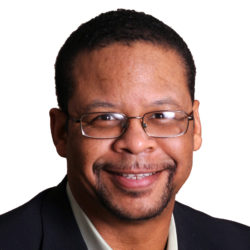
Forest Harper: INROADS Closing Corporate DEI Gap

InroadsForest T. Harper Jr. is the President and CEO of INROADS, the nation’s largest non-profit model of salaried corporate DEI internships and corporate and community leadership development for outstanding ethnically diverse talent at the pipeline and mid-career level.

This year marks 50 years for INROADS. Hear how the organization is important to corporate America’s landscape today and is proving effective in closing America’s Racial Wealth Gap.  Understand how to execute diversity & inclusion strategies to accelerate organizations in today’s multicultural market.  Harper shares how vital it is to establish talent pipeline development for attracting, recruiting and sustaining diverse talent as well as securing C-Suite alignment.

CLICK for INROADS podcast

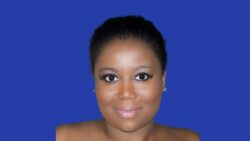
Laurel Taylor: Student Debt Specialist

student debt Laurel Taylor is the Founder and CEO of FutureFuel.io, a student loan repayment platform that uses innovative, technology driven solutions for customers to pay down student debt quickly and efficiently. Financial wellness and equal opportunities should go hand in hand, however, historically that’s not always the case. Regardless of one’s diverse background, financial literacy should be at the forefront of an overall healthy relationship with financial wellness. Laurel  has used her own personal experiences with student debt as a catalyst to founding FutureFuel.io and dedicating her life to help those burdened with student debt.

CLICK to hear Laurel Taylor’s podcast interview

Visiting the Covid-19 Homebound – by Terry Howard

The American Diversity Report’s theme focusing on the impact of COVID-19 on our community is as visionary as it is timely. It also opens up opportunities for contributors to offer insights tangential yet related impacts. What follows is a look at a peripheral issue; visiting those homebound because of the pandemic and other illnesses.

Two years ago, I fell off a 10-foot wall and broke three ribs. I ended up in the emergency room. The pain was excruciating.  Back home while holed up in my bedroom in recovery for over a month, and plying myself with pain medicine, I lost my appetite and close to 25 pounds. It was unnerving to steal a look at the barely recognizable person – me that is – in the bathroom mirror during that time.

Now although the last thing I wanted was visitors, quite a few well-meaning folks wanted to stop by. But the specter of being stared at like a car wreck on the side of the road was something I didn’t want and asking them not to visit proved more difficult than I could imagine.

Continue reading Visiting the Covid-19 Homebound – by Terry Howard

Election Public Service Announcement – by Terry Howard

A recent report co-authored by the Armed Conflict Location & Event Data Project and Atlanta-based Militia Watch, warned that Georgia, Michigan, Pennsylvania, Wisconsin, and Oregon are at highest risk of increased militia activity in the election and post-election period.”

I could kick myself in the behind for my oversight.

And still might.

You see, by the time the ink is dry on this, the 2020 elections will be behind us. But unfortunately, I missed an opportunity to offer some tips on how to protect yourself from potential spikes in violence by right wing militia should Trump lose.

Continue reading Election Public Service Announcement – by Terry Howard

BIPOC, COVID-19, and Disparities in Health Care

Black, indigenous, and people of color (BIPOC)

They are traditionally marginalized across all social systems,  but it’s more apparent today than ever due to the devastating effects of COVID-19 on BIPOC communities.  In 2020, BIPOC account for 27.3% of the U.S. population (Census.gov, 2020), yet BIPOC account for 58.1% percent of all COVID-19 cases to-date (CDC.gov, 2020).  Researchers and social scientists point to structural disparities as the main cause of the disproportionate COVID-19 infection rate among BIPOC (Cantos & Rebolledo, 2020; Valenzuela et al., 2020).  The data shows that a consequential proportion of the BIPOC communities are essential or service-related workers with limited or no access to health care, lower socioeconomic and education status, overcrowded housing with limited ability to social distance, and limited or no access to personal protective equipment.  These realities have created conditions where COVID-19 affects every aspect of the BIPOC social constructs.    

Continue reading BIPOC, COVID-19, and Disparities in Health Care

Health Disparities and the Culture of Lack – by William Hicks

Health disparities, i.e., differences in outcomes from disease experiences, are well-described and documented. The statistics that tell us of the incidence and prevalence of diseases within our populations (epidemiology) are readily available. In large measure, the prevalence (the number of cases within a population at any given time of measurement) of heart disease/high blood pressure, cerebrovascular diseases, diabetes, cancer, infectious diseases (influenza, pneumonia) are all among the top ten causes of death for all population subgroups (source: Statistica.com).

Continue reading Health Disparities and the Culture of Lack – by William Hicks

Diversity and Speech Part 14: Health Equity – by Carlos Cortés, Adwoa Osei

Completing her second year as a pediatrics professor at the University of California, Riverside, Adwoa was focused on providing clinical training for her medical students.  A retired UCR history professor, Carlos had no way of imagining that he would soon be joining the staff of a medical school.  .

Then the UCR School of Medicine decided to establish a new required curricular thread on Health Equity, Social Justice, and Anti-Racism.  Shortly after that, the School asked Adwoa and Carlos to become co-directors of the thread in order to get it started.

It was decision time for the two of us.  Still at an early stage of her medical teaching career, Adwoa had numerous obligations.  Experienced in health care cultural competence training, Carlos had been giving annual workshops on that topic to UCR’s incoming medical students.  But establishing an entire curricular thread?  That was a challenge.  But also an opportunity.  We couldn’t turn it down.   Continue reading Diversity and Speech Part 14: Health Equity – by Carlos Cortés, Adwoa Osei

Neurodiversity: An Organizational Asset – by Maureen Dunne, Cathy Schwallie Farmer

neurodiversityIntroduction

We make the case here that neurodivergent thinkers should be an important part of Diversity, Equity and Inclusion (DEI) policies because every organization stands to benefit from the inclusion of different cognitive perspectives in creating the organization’s culture.

This argument can be made from several different angles. For example, it can be made from the standpoint of a single organization, competing with other organizations in a commercial or industrial pursuit. It can also be made from the standpoint of the larger society, which stands to benefit from more innovative and equitable organizations.

Wouldn’t we all prefer to live in a world that values individuals for the skills and talents each of us uniquely possesses? Wouldn’t we all prefer to live in a world where seeming misfit pieces of the puzzle find a suitable home in the tapestry of the larger machine that is a 21st century economy?

Continue reading Neurodiversity: An Organizational Asset – by Maureen Dunne, Cathy Schwallie Farmer

The Surrender of the Medical Superhero – by Vishnu Unnithan

It was the first day of the new academic term and our batch was bubbling with excitement. Our surgery posting had finally dawned. Now was our chance to step into the operation theatre and watch first hand as surgeons washed up and dutifully, saved lives. When most medical students envision medicine as a career, prior to entering medical school, they more often than not dream about wearing scrubs and operating to the rhythmic beats of all the life support and monitoring machines. Without doubt, the first visit to the operation theatre is one of the most cherished memories of any medical student.

We were assigned to our units and were very warmly received by our senior consultants. Cases were allotted for observation and by rotation, we were even allowed to wash up and assist in the procedures. It was a thrilling experience as we got to take incisions and operate laparoscopic instruments under expert supervision and this led to the birth of an unextinguishable spark that caused many of my colleagues to decide upon surgery as a future career choice.

Continue reading The Surrender of the Medical Superhero – by Vishnu Unnithan