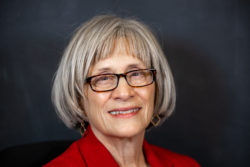
Deborah Levine founded the American Diversity Report in 2006. She is a Forbes Magazine top "Trailblazer" and award-winning author of 20 books. Her published articles span decades including: American Journal of Community Psychology, Journal of Public Management & Social Policy, The Bermudian Magazine, The Harvard Divinity School Bulletin.
With a screen & stage career spanning over 40 years, therapist Carol Potter is best known for her role as Cindy Walsh in Aaron Spelling’s Beverly Hills 90210, among many other Hollywood credits. She has also been seen on stages in New York, including the original Broadway production of Gemini, Los Angeles, and regional theater.
A Harvard graduate, she became a Licensed Marriage and Family therapist in 2001.
When an anniversary falls on Yom Kippur, the most solemn holy day of the Jewish calendar, thoughts of living and dying take on cosmic proportions. Fortunately, it’s rare for the two milestones to collide given the differences between the secular and Jewish calendars. Both are celebrations, but Yom Kippur which ends the New Year’s ten Days of Awe, is a sacred time when the celebration of life is combined with contemplation its finite nature. This year, I have a double dose of introspection and my mind sought the path separating living from dying and wandered from wonder and gratitude to mourning and humility.
When the Jewish New Year arrived, I got many questions about faith and calendars from Human Resource departments. They wanted to know why the holiday occurs on a different day each year according to our secular calendar. And they asked about food associated with the holiday. Offering the traditional apples and honey for a sweet New Year was the easy part. Explaining the timing was the real challenge.
What should I write about religion and religious calendars in these contentious times? I know that many organizations and companies would prefer that the issue of religious diversity would disappear. But every year, thousands of religion-based lawsuits claiming a “hostile or offensive work environment” are registered with the EEOC (Equal Employment Opportunity Commission).
Systemic Diversity Panels share ideas, articles, research and resources that reinforce our quest for diversity, inclusion, equity and social justice. The Systemic Diversity and Inclusion Linked group allow participants to share their work and encourage them to do so in a manner that is consistent with the group’s vision for peace, equity and social justice for all.
This group is committed to sharing ideas on effective policies and practices to eradicate misconceptions and biases in diverse workplaces, and thus promote positive work environments for all people. We also profile members and their work that aligns with our vision. See interviews at Systemic Diversity and inclusion Group.
Deborah Levine (Moderator)
Award-winning Author (14 books), including Un-Bias Guide for Leaders and Religious Diversity at Work | Speaker/Trainer & Coach | Founder/Editor: American Diversity Report |
Chattanooga, Tennessee, USA (See her Bio)
Joseph Nwoye, Ed.D (Partner)
Diversity & Inclusion Consultant with Unique Ability to Address Unconscious Bias, Inclusive Leadership @ Work & Beyond | Author of three books, including the most recent, Cultivating a Belief System for All (See his latest interview)
Montgomery Village, Maryland, USA
Colonel Reginald Hairston
Proven Senior Level Leader | Multiple Years Experience Setting Strategic Direction and Managing Change | Innovator | Author of Simple Man’s Leadership Guide
Chesapeake, Virginia, USA
Atena Hensch
Inclusive Diversity and belonging Specialist | Unconscious Bias | Gender | Cultural Intelligence | Certified Trainer
Geneva Area, Switzerland
Louise Duffield
VP @GatedTalent | SEO | Executive Search | Social Media | Branding | LinkedIn Optimization | LinkedIn Profile Writer
United Kingdom
When President Trump threatened to cut off $4 billion in foreign aid, the U.S. Global Leadership Coalition emailed how cuts could limit the response to outbreaks of the deadly ebola virus. Concerned, I immediately thought of John Germ, past president of Rotary International, who spoke at Glynn Hodges’ recent Mastermind meeting. Yes, we were inspired by his story of being the first in his family to graduate college. And we were speechless at his stories of navigating outdated military planes on the verge of crashing. We empathized with his struggles to finish college while marrying and having his first child. But it was his dedication to eradicating polio world-wide, his ability to see the challenge as an invitation, that held us in awe.
Hear Deborah Levine’s interview with Rabbi Tzvi and learn about the art of perseverance and endurance. She shares her personal stories that are captured in her memoir, The Magic Marble Tree. In this interview Deborah talks about her journey through pain and incapacitation and why she decided to write the book.
Click below to hear true stories that will inspire you to Never Give Up!
I have been puzzled by colleagues congratulating me on my humility. What are these folks talking about? People who knew me years ago would definitely be amused by that. At best, I was described as “Sweet but Stern.” At my boldest, I was told that I could terrorize entire cities. Community leaders had a white-knuckled grasp on their chairs when I tersely announce my intention to speak off-the-record. Not even a voice from the back of the room calling out, “Oh ho, this should be good!” slowed me down.
Unconscious bias training is an admirable project but may often be ineffective. The fuzzy, vague term of unconscious bias is often applied indiscriminately, but unconscious bias isn’t a one-size-fits-all term amenable to a one afternoon of training. Yes, it can refer to the incident where the police were called to arrest two African-Americans waiting for a meeting at Starbucks. But it can also mean only smiling at customers that look like you, rejecting resumes from diverse applicants, and promoting the employees who resemble the current leadership team. If we want to address unconscious bias effectively, we need to first be aware of how the senses, emotions, and brain interact to create unconscious bias. Second, we must go beyond awareness of our biases to sensitivity to their impact. Lastly, we need to develop a system that internalizes wise decision making with ongoing reinforcement of that competence.
Dr. Nwoye is an educator and inclusion specialist. As the president of Diversity Frontier, he focuses on unconscious bias and diversity policies & practices that work. Dr. Nwoye has contributed more than 50 articles with focus on tackling social issues such as achievement gaps, race, and gender among others. He served as the Director of Multicultural Education at Illinois State University and as chief investigator on discriminatory issues. Dr. Nwoye is the author of three books. His most recent one which is the focus of this podcast. (Click for Amazon)Cultivating a Belief System for Peace, Equity and Social Justice For All.
With a degree in psychology and master’s in screen writing, Selene Calloni Williams has authored several International best-selling books and documentaries. Her focus is on psychology, deep ecology, shamanism, yoga, philosophy, and anthropology. As a direct student of James Hillman, she studied and practiced Buddhist meditation in the hermitages of the forests of Sri Lanka, and is an initiate of Shamanic Tantric Yoga. She is the founder and the director of the Imaginal Academy Institute Switzerland.

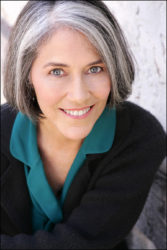 With a screen & stage career spanning over 40 years, therapist Carol Potter is best known for her role as Cindy Walsh in Aaron Spelling’s Beverly Hills 90210, among many other Hollywood credits. She has also been seen on stages in New York, including the original Broadway production of Gemini, Los Angeles, and regional theater.
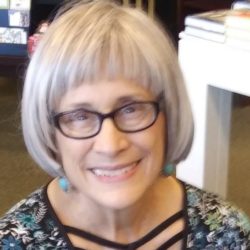 Deborah Levine (Moderator)
 Joseph Nwoye, Ed.D (Partner)
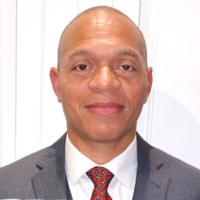 Colonel Reginald Hairston
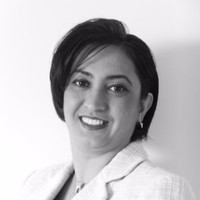 Atena Hensch
 Louise Duffield
 When President Trump threatened to cut off $4 billion in foreign aid, the U.S. Global Leadership Coalition emailed how cuts could limit the response to outbreaks of the deadly ebola virus. Concerned, I immediately thought of John Germ, past president of Rotary International, who spoke at Glynn Hodges’ recent Mastermind meeting. Yes, we were inspired by his story of being the first in his family to graduate college. And we were speechless at his stories of navigating outdated military planes on the verge of crashing. We empathized with his struggles to finish college while marrying and having his first child. But it was his dedication to eradicating polio world-wide, his ability to see the challenge as an invitation, that held us in awe.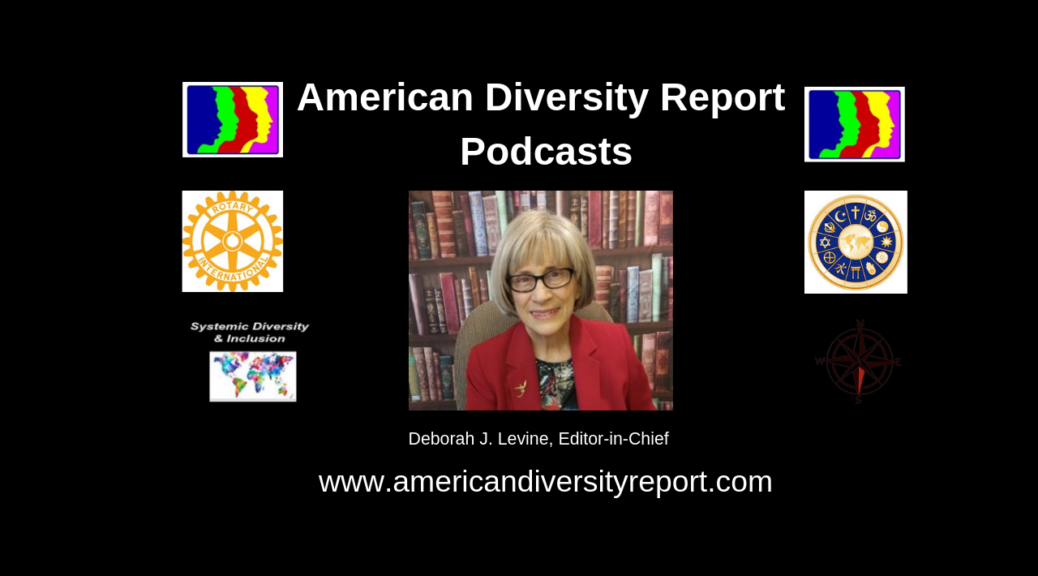
 With a degree in psychology and master’s in screen writing, Selene Calloni Williams has
 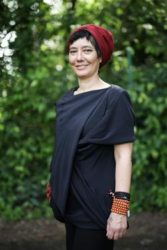 authored several International best-selling books and documentaries. Her focus is on psychology, deep ecology, shamanism, yoga, philosophy, and anthropology. As a direct student of James Hillman, she studied and practiced Buddhist meditation in the hermitages of the forests of Sri Lanka, and is an initiate of Shamanic Tantric Yoga. She is the founder and the director of the Imaginal Academy Institute Switzerland.