Category Archives: Authors

Diversity and Speech Part 7: Critical Theory – by Carlos E. Cortés    

This is the seventh in a series of columns based on my research as a former fellow of the University of California National Center for Free Speech and Civic Engagement.   In these columns I have discussed what I call the diversity movement — the composite of the myriad individual, group, and organizational efforts to reduce societal inequities that penalize people because of their actual or perceived membership in certain social groups.   In particular I have focused on the various issues raised  concerning language and the exercise of speech. 

In the past two columns I compared two threads of that diversity movement: intercultural diversity and equity-and-inclusion diversity.   For the most part interculturalists emphasize voluntary speech restraint through the development of intergroup understanding.  In contrast, while they often draw upon interculturalist principles, some inclusionists are more willing to pursue direct speech restraints, such as through regulations.  When it comes to the third strand of the diversity movement, critical theory, its advocates tend to take an even stronger position in support of  the direct restraint of speech, including through laws and codes.   

Continue reading Diversity and Speech Part 7: Critical Theory – by Carlos E. Cortés    

Hurdling Heavy Accents – by Terry Howard

Perhaps it’s attributable in part to shifting demographics, which has attracted people from across the globe, but there’s no denying the growth in cultures that have permeated Douglas and surrounding Georgia counties, their schools, businesses and neighborhoods. And that growth has been accompanied by an increase in the number of accents and the challenges that come with communicating through accent differences.

No matter how hard I work at it, I often struggle attempting to communicate with someone with a “heavy” accent. Am I alone? A situation a few years ago, one that left me feeling woefully incompetent, made this poignantly clear. Here’s what happened. Tell me if it resonates.

Continue reading Hurdling Heavy Accents – by Terry Howard

“Whitening” me? – by Terry Howard

In one of his legendary “folks, let’s not air our dirty laundry” features, Pulitzer Prize winning columnist Leonard Pitts began a recent column, “Blacks, too, judge each other by the color of their skin. How sick is that?” with this loaded old folk saying: 

“If you’re white, you’re all right. If you’re brown, stick around. If you’re black, get back.”

Now the funny – well, no, maybe not always so funny – thing is that every now and then someone will put something out that makes you reflect on your own experience relative to that issue. And that old saying from my past is one.

Continue reading “Whitening” me? – by Terry Howard

The Courage of the Mystery Man – by Terry Howard

      “… You can call it fate or call it destiny. Sometimes it seems like a mystery. Timing is everything!” ~ Garrett Hedlund

Fate? …Destiny? … I cannot explain it.

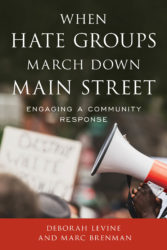
You see, someone recently sent me a quick read on courageous acts by courageous people. “So, are you trying to tell me something?” I thought to myself while putting the piece aside. Now by coincidence – or destiny? – I remembered that Deborah Levine and Marc Brennan are about to release their long-awaited book, When Hate Groups March Down Main Street.”

All that said, days later I received the following story from “Mariah,” that provided an opportunity for me to pull all these pieces together:

Continue reading The Courage of the Mystery Man – by Terry Howard

Diversity & Speech Part 6: Equity and Inclusion – by Carlos E. Cortés    

This is the sixth in a series of columns based on my research as a former fellow of the University of California National Center for Free Speech and Civic Engagement.  In earlier columns I argued that our nation’s system of expression is far too complex to be encompassed by the simple, misleading couplet, “free speech.”  In fact, over more than two centuries, our nation has developed a complex constitutionally-based system that combines robust legally-protected speech with selective legal limitations on speech.   

Therefore, diversity advocates should not be drawn into the position of opposing free speech. They don’t need to, because it does not actually exist. Instead they should defend the basic societal value of  robust speech, while also reframing the discussion by clarifying the tensions that inevitably arise when the valuable imperatives of diversity and speech intersect. Simultaneously they should function within the American historical tradition by proposing carefully focused additions to the current list of legal limitations. 

Continue reading Diversity & Speech Part 6: Equity and Inclusion – by Carlos E. Cortés    

Disability Employment Awareness: Five Questions for EEOC – by David B. Grinberg

October is National Disability Employment Awareness Month (NDEAM). The observance, which dates back to 1945, is sponsored annually by the U.S. Department of Labor, Office of Disability Employment Policy.

Did you know? The employment population ratio for people without disabilities (65.7%) was more than triple that of people with disabilities (18.7%) in 2017, according to the U.S. Bureau of Labor Statistics.

The “N-Word Still Stings! – by Terry Howard

BREAKING NEWS: Using slurs to make a point sparks debate on academic freedom. Emory University law professor Robert Saunooke said he tells his students before the start of his first class that there are words and phrases he’ll use that might be uncomfortable (Atlanta Journal-Constitution 9/19/19). And he delivered on that promise by uttering the “N-Word” a couple of times.

“Hey N_ger!”

Boom! Out of nowhere verbal lightning struck me directly. Continue reading The “N-Word Still Stings! – by Terry Howard

Experiencing Diversity Through the Marine Corps Training Process – Reginald Hairston

The Marine Corps’ purpose as stated on its webpage is to, “Defend the people of the United States at home and abroad. To do that, we make Marines who win our Nation’s battles and return as quality citizens.”  To the casual reader, the first half of the purpose, which is to defend the United States, is stated in simple terms and easily understood.  However, it is the latter half of the purpose that bears some investigating and begs the question, “What does make a better citizen mean?”  To answer this question, I want to take you on a journey through the process of becoming a Marine, the transformation that occurs and the life-changing impact of being immersed into a sea of diversity creates. 

Citizens from every walk of life you can imagine arrive by bus to one of three locations.  Young men and women who have signed an enlistment contract arrive at Marine Corps Recruit Depot, Parris Island, South Carolina or Marine Corps Recruit Depot, San Diego.  Officer candidates receive their initial training at the Officer Candidate School located in Quantico, Virginia.  For the purposes of this journey, we will focus on the experience of the recruits who matriculate through one of the training Depots.

Continue reading Experiencing Diversity Through the Marine Corps Training Process – Reginald Hairston

Breaking Down the Walls to Disability in the C-suite – by Louise Duffield

Overcoming obstacles to the integration of disabled people in the C-Suite should be at the top of every board agenda. Often, I hear about diversity, but diversity efforts alone do not  deal with the challenges facing disabled senior executives or aspiring leaders. These challenges can be addressed, and leaders have a responsibility to turn around the stigma surrounding disability in the C-suite.