It’s almost the Jewish new year, but may not feel like one, with vaccines being banned, Turnip destroying democracy, dragging the nation into war, and making Americans poorer, hungrier, dumber, sicker, less safe, and more prone to natural disasters. He’s facing more days in court, alas with a Get Out of Jail Free card form the Supreme Court, which has absented itself from the Constitution. The book of Proverbs says “To do righteousness and justice is preferred by God above sacrifice” (Proverbs 21:3). The psalmist exhorts: “Give justice to the weak and the fatherless; maintain the right of the afflicted and the destitute” (Psalms 82:3).
September 11, 2026, is the beginning of the Jewish High Holy day of Rosh Hashonah. It means “the head of the year.” Some say it’s is the birthday of the universe, the day God created Eve and Adam.
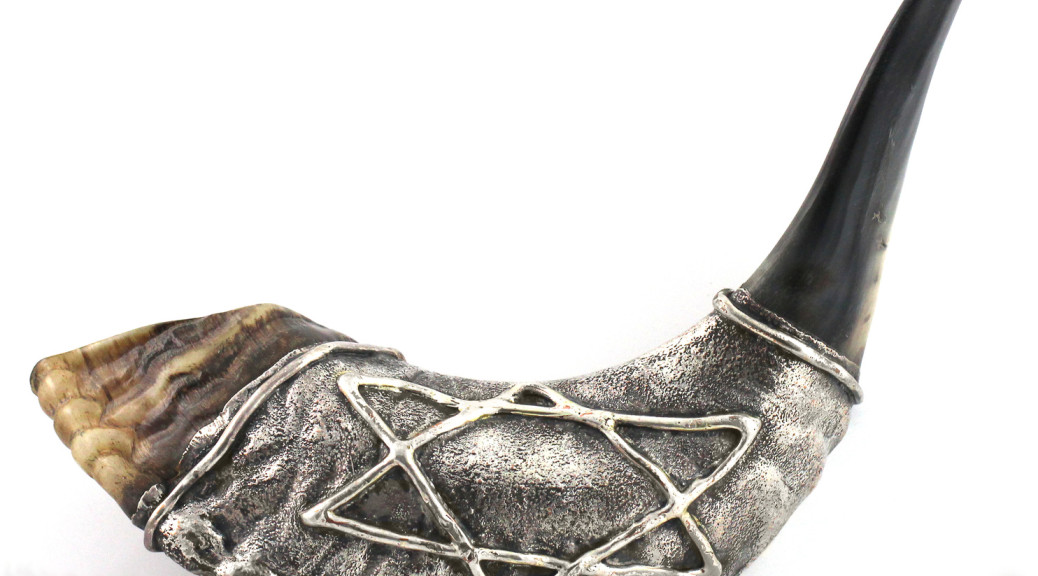
On this day the Book of Life is opened for ten days. We’re supposed to examine ourselves and our society, confess our sins, and ask to be inscribed in the Book of Life for another year. The Hebrew Bible says, “In the seventh month, on the first of the month, there shall be a sabbath for you, a remembrance with shofar blasts, a holy convocation.“ Leviticus 16:24. The shofar is the ram’s horn, hollowed out and blown. The blasts of the shofar are wakeup calls. The sound of the Big Bang is that of the blown ram’s horn.
Rosh Hashonah is the time to shake off our spiritual slumber, reconnect to our source, and recommit to our divine mission. In one of the Jewish books that interprets the Bible, the Mishnah, we’re introduced to the theme of the holiday, that of judgment: “On Rosh Hashonah all human beings pass before him [God] as sheep before a shepherd” (Tractate Rosh Hashonah 2). Curiously, there is virtually no mention of our own personal judgment in the prayers. Instead, they’re about the general condition of the world. Judaism says there is a way to minimize or even eliminate the bad effects of our mistakes on our eternity. This mechanism is “teshuva” (return) and the result is called “kaparah,” a spiritual cleansing.
In the Talmud, Rabbi Kruspedai of 3rd century Palestine quotes his teacher Rabbi Johanan: “Three books are opened on Rosh Hashonah: One for the utterly wicked, one for the wholly good, and one for average person. The wholly righteous are at once inscribed and life is decreed for them; the entirely wicked are at once inscribed and destruction destined for them; the average person is held in the balance from Rosh Hashonah until Yom Kippur. If they prove themselves worthy they’re inscribed for life, if not they’re inscribed for destruction.” (15b) Yom Kippur is the Day of Atonement, ending the ten day period starting with Rosh Hashonah. These are also called the Book of Life, for those judged to be completely righteous; the Book of Death, for those judged completely wicked; and the Middle Book for those in between. This may resonate with the Middle Way of Buddhism.
Rebbe Yitzchak in the Talmud, the body of Jewish civil and ceremonial law and legend said, “A person is not judged (on Rosh Hashonah) except according to his actions of that exact moment.”
The Kabbalists (students of the mystical branch of Judaism) teach that the continued existence of the universe depends on God’s desire for a world, one renewed when we accept her kingship anew each year on Rosh Hashonah. How nice that desire fuels the world. She creates every one of us anew with a blank slate at the beginning of each year. We can ask ourselves, “If I were born this very instant, without the limits of my habits, patterns, and actions, what would I do? How would I want to live this brand-new year?”
Every seven years, the Jewish concept of Shemittah, the Biblically mandated Sabbatical year, requires us to discharge debt. Creditors release debtors from loans. The release – called Shemittat Kesafim (release of monies) – is triggered on Rosh Hashonah following the Sabbatical Year. Deuteronomy 15:10 says, “Your heart shall not be resentful when you give to him.” Extending credit to the needy is a form of charity. Today the Europeans are extending credit to the Ukrainians, as they repel a Russian invasion. Half of my ancestors come from Ukraine, but I never felt much connection to it. However, my father, a US Army officer, spent much of his career working on ways to repel a Soviet invasion. Make no mistake that Putin is a Soviet KGB apparatchik, and Turnip is his victim of Compromat.
The motivation to repair is described as mipnei tikkun ha-‘olam, for the sake of order of the world. Today, Tikkun Olam has become a popular phrase—healing the world. Many ways have been developed to get around the decree, including:
- Justifications for the neglect;
- Critique for the neglect and calls for reinstatement;
- Contractual stipulations – actual or implied – that circumvent the law;
- Communal ordinances that abrogate the law of debt cancellation.
Which is why we have lawyers, I guess.
The debt forgiveness is often symbolic. For example, the Baghdadi scholar Rabbi Yosef Hayim (1835-1909), discussed debt relief in his Ben Ish Hai : “It’s good if a woman loans a loaf of bread or two or three to her friend on the day before Rosh Hashnoah, and after, when the borrower pays her back, she‘ll say to her: “I cancel [the debt],” and thus this woman fulfills the commandment of Shemittah.” But really, a loaf of bread? That gets stale soon after you buy it?
We’re given free will on this day. Opportunity knocks. Or blows like a ram’s horn. The issue is not Henderson the Rain King’s “I want, I want,” but whether we’ll appreciate what is valuable and make proper choices for the coming years. We’re being taught to recognize the needs of others, see ourselves as responsible for them, and understand that the greatest need any of us have is to appreciate reality more deeply. I don’t claim to have achieved any of these. Democracy is aspirational, and is in grave danger, the worst of our lifetimes. It may not survive this Trump presidency. The world is full of contradictions and surprises. For example, I’ve always been happy that my grandfather escaped from Ukraine in 1911.
The Jewish model of time is a spiral. Time progresses through a seasonal cycle. Each year we pass through the same seasonal coordinates that contain the spiritual potentials created within them. The Jewish holidays are signposts on the spiral of time to teach us which quality has been embedded in that particular season. When our cyclical journey through time encounters a holiday, we re-experience the quality of that time. Whatever it is that originally occurred then occurs every year. Thus every holiday is a metaphysical window of opportunity. The key question about every holiday is what is the particular opportunity it presents? Jewish holidays have physicality, which is emphasized over metaphysics. Some Jews are trying hard to recapture their spirituality.
Typically on this holiday, one lights candles, saying the blessing over them:
Ba-ruch A-tah Ado-nai E-lo-hei-nu me-lech ha-olam asher ki-deshanu be-mitzvo-tav ve-tzvi-vanu le-hadlik ner shel Yom Hazikaron.
– Blessed are You, Lord our God, King of the Universe, who has sanctified us with His commandments and has commanded us to light the candle of the Day of Remembrance.
The Shekekheyanu blessing is also recited:
Barukh atah Adonai Eloheinu Malekh ha-olam shehekheyanu, v’kiyimanu, v’higiyanu laz’man hazeh.
– Blessed are You Lord Our God, Ruler of the Universe, who has given us life, sustained us, and allowed us to reach this day.
A popular observance during this holiday is eating apples dipped in honey, a symbol of our wish for a sweet new year. Challah, the bread usually eaten on the Sabbath (not braided as at regular meals but instead baked in a circle or spiral- a wish that the coming year will roll around smoothly without unhappiness or sorrow) is also dipped in honey before eating.
Another popular practice is Tashlikh (“casting off”). We walk to flowing water such as a creek or river on the afternoon of the first day and empty our pockets into the water, symbolically casting off our sins. Small pieces of bread are put into our pockets to take out and cast away. Symbolically, the fish devour the sins. But what happens to the poor fish?
The common greeting is L’shanah tovah (“for a good year”). This is a shortening of “L’shanah tovah tikatev v’taihatem” (or to women, “L’shanah tovah tikatevi v’taihatemi”), which means “May you be inscribed and sealed for a good year.” The Hebrew word for “sin” is “chet,” which is derived from an old term used when an archer “misses the mark.” This informs the Jewish view of sin: all people are essentially good and sin is a product of our errors, or missing the mark, since we’re all imperfect.
A critical part of Rosh Hashonah is making amends for these sins and seeking forgiveness. It’s hard for me to admit sin, seek forgiveness, and make amends. It’s also hard to figure out my relationship to Judaism generally, even in a society in which racism and anti-Semitism is common and growing. Even the antisemitism is being used by the Trump cultists to attack higher education. Alas, some Jews are allowing ourselves to be used as a stalking horse by Trump. Others are mortified by the tragedy in Gaza. War is hell and no one has clean hands. I hesitate to be defined by my enemies. Apocalyptic views are easier right now, with a plague, hurricanes, forest fires, and a President who embodies hate and threatens civil war and everything he doesn’t like, including democracy. Worldviews are clashing and the Trumpian/Putinesque forces of nihilism and denial temporarily winning. The Golems (the Jewish version of Zombies) appear to have prevailed. They’ve sucked out the brains of the Republicans and are coming for the Democrats.
Is this the End of Days? I’m not a disciple of hope; nor am I without hope. The philosopher Hannah Arendt didn’t believe in hope; she believed in starting again, anew. The playwright Samuel Beckett had the right attitude: “Ever tried. Ever failed. No matter. Try Again. Fail again. Fail better.”
According to Joshua 6:1-27, the Walls of Jericho fell after Joshua’s army marched around the city blowing trumpets made of ram’s horns. Joshua commanded the army, “Don’t give a war cry, don’t raise your voices, don’t say a word until the day I tell you to shout. Then shout!” Shout like the demonstrators against ICE. We’re informed by the past but we won’t go back. Resist. Silence equals death.
L’Shana Tovah!