Category Archives: Inclusion

Diversity and Inclusion

Diversity and Speech Part 4: Navigating the N-Word – by Carlos E. Cortés

Leelee Jackson and Geoffrey Stone are hardly household names in diversity circles. But in 2019, my interactions with Jackson, a talented young playwright, and Stone, a passionate defender of free speech, helped illuminate the challenging complexities of diversity and expression.

As a fellow of the University of California National Center for Free Speech and Civic Engagement, I have been examining the myriad tensions created when two laudable principles collide: the defense of robust speech and the effort to create greater inclusivity. This intersection has generated considerable controversy, including among diversity advocates.

Continue reading Diversity and Speech Part 4: Navigating the N-Word – by Carlos E. Cortés

Stopping the Stigma of Mental Illness – by David B. Grinberg

May is Mental Health Month, a nationwide effort to raise awareness and help end the stigma for people with mental health conditions.

Let’s remember that as public discourse about mental health increases, the associated stigma decreases. That’s why it’s critically important to shine a spotlight on a range of mental health issues affecting people of all ages, from depression to dementia.

Fostering open communication, education, transparency, advocacy and outreach — both online and off line— are solid strategies to eradicate prevalent myths, fears and stereotypes.
Continue reading Stopping the Stigma of Mental Illness – by David B. Grinberg

National Welding Month: Challenge & Opportunity – by Deborah Levine  

In April, I joined the Chattanooga Regional Manufacturers Association (CRMA) Alliance in Manufacturing Excellence (AIME) as Editor-in-Chief of the American Diversity Report. I was invited to be the official communications person by Lulu Copeland, the facilitator and committee chair of CRMA AIME. Copeland is also the founding member of the Society of Women Engineers (SWE) for whom I facilitated an inaugural panel years ago. My assignment at this event marking National Welding Month was to interview women in the welding profession.

Continue reading National Welding Month: Challenge & Opportunity – by Deborah Levine  

Stopping Sex Bias on Wikipedia – By David B. Grinberg

Wikipedia, the popular online encyclopedia, continues to marginalize women on its English language pages and among its staff. This conclusion is not theoretical but unequivocal. It’s based on academic studies, public statistics and anecdotal evidence.

Wikipedia’s data is daunting, according to the Wikidata Human Gender Indicator.
To wit:

• Less than 18% of 1.6 million English Wikipedia bios are about women, up from 15% in 2014.

• Put another way: of about 1,615,000 bio pages, fewer than 300,000 are about women.

• Meanwhile, men account for about 90% of all English Wikipedia’s volunteer editors.

Wikipedia’s brand image is more reflective of 1920s paternalism than 21st century modernism. The San Francisco-based nonprofit Wikimedia Foundation, which oversees Wikipedia, has a noble mission: Democratize the free flow of information and knowledge to diverse populations worldwide.

But is English Wikipedia practicing what it preaches?

Continue reading Stopping Sex Bias on Wikipedia – By David B. Grinberg

Diversity and Speech Part 3: The Diversity Movement – by Carlos E. Cortés

Diversity advocates cannot avoid dealing with the intersection of inclusive diversity and robust speech. Tensions between those two imperatives are inevitable. These tensions complicate our efforts to address such speech-related issues as privilege, power, marginalization, hostile work environments, and the expression of intergroup hate.

This is the third in a series of columns based on my research as a current fellow of the University of California National Center for Free Speech and Civic Engagement. In the first two columns I argued that diversity advocates should not be drawn into the position of opposing free speech. We don’t need to, because totally “free” speech does not exist in the United States.

Continue reading Diversity and Speech Part 3: The Diversity Movement – by Carlos E. Cortés

Secretary of State Madeleine Albright – by Deborah Levine

AlbrightReprinted in honor of Madeleine Albright R.I.P. 1937-2022
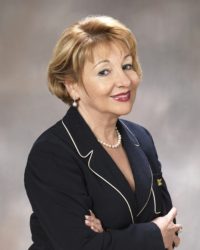
Former Secretary of State Madeleine Albright is a petite woman who can fill large university auditorium with her presence. These days, Dr. Albright teaches, lectures and writes. She frequently speaks to university audiences land enjoys telling young people that they can be anything they want to be with hard work. Her audiences listen enthusiastically and a recent crowd at the University of Tennessee at Chattanooga was no exception. A packed house and 2 overflow rooms with video feeds were arranged for the presentation by our 64th Secretary of State. She was the highest ranking woman in government from 1997-2001 and the first female Secretary of State.

Continue reading Secretary of State Madeleine Albright – by Deborah Levine

 Sadie Hawkins Day: An Example of Cultural Delusion – by Eileen Meagher

Sadie Hawkins Day!  I didn’t know anything about it. The vibrations though with which the name permeates our culture and whatever the holiday celebrates have always seemed a wee bit strange and but also lighthearted.  It is celebrated on November 13th and since today is November 13th I feel oddly compelled to inform myself of the wisdom or lack of wisdom passed on by this “Holiday.” It would appear to be a very American holiday, but the Scots and my Irish ancestors might argue with that since they celebrate something comparable on February 29th called of course “Leap Year.” But that is another story!

The Sadie Hawkins Story

The American story is that Al Capp, a famous and brilliant cartoon artist of the last century,3 depicted in his daily cartoon, Lil Abner, the trials and tribulations of a hillbilly town called Dogpatch.  The most powerful and the richest man in Dogpatch was named Hezekiah Hawkins who had a daughter named Sadie and at the advanced age of 35 she had not married.  Sadie was also “the homeliest gal in all them hills” and her father was scared that she would spend her life at home as a spinster, a terrible and humiliating fate for any woman in Dogpatch.

Continue reading  Sadie Hawkins Day: An Example of Cultural Delusion – by Eileen Meagher

Fiona Citkin: Women Immigrants Success in the US

Originally a professional educator from Ukraine, Fiona  Citkin is among the successful women immigrants to the US. She  came to America as a Fulbright Scholar studying languages and cultures. She holds 2 doctorates, speaks 3 languages, and has published several books,  including the award-winning Transformational Diversity. Fiona is Managing Director of Expert MS Inc. For her latest book, How They Made It in America , she interviewed 100 immigrant women and profiled 18 of them in this book.

women immigrants

Editor’s note: I’m honored to be included among the 18 profiles in the book.

CLICK to hear Fiona’s podcast

Gritty Women – by Dr. Deborah Levin

By default, gritty women famous for their accomplishments are highlighted throughout Women’s History Month.  Society looks to prominent women as role models exemplifying idealistic aspirations of achievement.  Often, their humble beginnings are overlooked as emphasis is placed on successes and outcomes.  With few exceptions, famous women did not begin their lives as famous people.  Their experiences, family upbringing, life-learnings, challenges, and accomplishments cultivated into opportunities at the right time.  Famous women made history by taking action.  One should never assume history is past tense.  History continues evolving and growing organically, providing new opportunities to add accomplishments.

Angela Duckworth, author of Grit: The Power of Passion and Perseverance, explains extremely successful individuals demonstrate unusually high levels of resiliency and hard work.  These individuals have an intrinsic understanding of their desired goals and are determined to achieve them.  Gritty people combine hard work, resiliency, and drive with a sense of direction.

Continue reading Gritty Women – by Dr. Deborah Levin