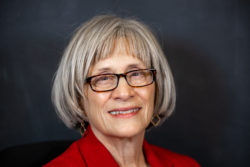
Deborah Levine founded the American Diversity Report in 2006. She is a Forbes Magazine top "Trailblazer" and award-winning author of 21 books. Her published articles span decades including: American Journal of Community Psychology, Journal of Public Management & Social Policy, The Bermudian Magazine, The Harvard Divinity School Bulletin.
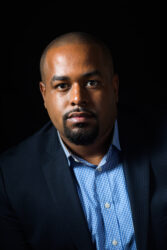
Joshua DuBois is the CEO of Gauge.ai. He is a multicultural marketing expert and the former Faith Advisor to President Barack Obama. Joshua will explain how business leaders can adequately engage in conversations around diversity, equity, and inclusion, in ways that match the moment. Learn how businesses can engage with the communities in which they operate, and tap into the potential of their talent pool. Be introduced to Gauge.ai and NXTLAB work and why they are the future of corporate responsibility. Take advantage of DuBois’ tips and insights for how business leaders can “get it right” in terms of aligning themselves with marginalized communities.
Todd Cherches is the CEO & Cofounder of BigBlueGumball, an innovative New York City-based management consulting firm specializing in leadership development and executive coaching. He is also a three-time award-winning Adjunct Professor of leadership at NYU, and a Lecturer on leadership at Columbia University. Todd is a member of Marshall Goldsmith’s “MG100 Coaches”; a TEDx speaker; and the author of VisuaLeadership: Leveraging the Power of Visual Thinking in Leadership and in Life, published by Post Hill Press/Simon & Schuster (May, 2020).
Mirette Seireg is the founder and owner of Mpath LLC, the first woman-owned library of its kind to achieve gender parity. Changing the music world for females and other underrepresented composers, Mirette has scouted talent world-wide from nearly every continent on earth.
Mpath’s music library is represented by APM Music in North America and EMIPM in the rest of the world (both owned by Sony). In addition to managing Mpath, Mirette Seireg is an active member of the Production Music Association where she spearheaded the creation of and chairs the Inclusion and Diversity Committee, and she serves on the Mark Awards Committee. The renowned Berklee College of Music / Boston Conservatory at Berklee and Mpath have an on-going mentorship program to provide emerging composers hands-on experience.
Mpath music is curated by two-term governor of the Television Academy (Emmys) and multi-award-winning Film, Television, Advertising, Game, composer/producer, Michael A. Levine who notes, “When music is created by composers who have different life experiences, they bring different musical ideas to the table. At Mpath we feel diversity isn’t just the “right” thing – it makes the music better.”
Marilyn Kallet recently served two terms as Knoxville Poet Laureate, 2018-2020. She has published 18 books, including How Our Bodies Learned, The Love That Moves Me and Packing Light: New and Selected Poems, Black Widow Press. She translated Paul Eluard’s Last Love Poems and Benjamin Péret’s The Big Game.
Dr. Kallet is Professor Emerita at the University of Tennessee and is a member of the TN G100 Women Leaders. From 2009-2020, she mentored poetry groups for the Virginia Center for the Creative Arts, in Auvillar, France. Her poetry has appeared recently in Plume and American Diversity Report.
Maria James-Thiaw is a poet, performer and an educator from Central PA. She has written three poetry collections and her poetry has been published by Cutthroat Journal of the Arts, Love Your Rebellion and other journals. Her choreopoem, Reclaiming My Time: An American Griot Project debuted in Summerdale, PA in 2018 to 6 sold out audiences. She won the Art of Protest Poetry Prize from Penn State for works from that production. In 2020 she created a Zoom version entitled RMT 2.0. This performance poet attended Marilyn Kallet’s workshops in France in 2011 and 2015. Maria is a graduate of Goddard College’s MFA in Creative Writing Program and she is the Program Coordinator of Creative Writing for CASA, Capital Area School for the Arts in Harrisburg, PA.
Dialogue Partners:
American Diversity Report, Chattanooga News Chronicle, Mizpah Congregation, Jewish Federation of Greater Chattanooga, C.U.R.B. – Citizens Uprooting Racism in Bermuda.
I paid close attention when an old friend jokingly asked on Twitter: “Can anyone tell me why I’m so Angry all the time?” But it’s not so funny that rage is the new normal. We’ve gotten louder and more contentious, as we’ve suddenly been catapulted into a new Middle Ages with a politics and economics that mirror medieval lords and serfs with castles, indebted servants, and a dying middle class. Each age group is struggling in its own way and there are super-angry people in every generation. Tweets that aren’t crude and rude are often cries for help, for someone to listen, respond, and care. Both sides of the COVID coin are expressed online: anger and despair.
Many of the despairing are young and I’ve written previous columns about their skyrocketing suicide rates. But many of them are elderly and their desperation makes them more vulnerable than ever.
Aubrie Fennecken is the Global Executive Director of WIN: Women in Innovation, a nonprofit organization built to close the gender gap in innovation. Aubrie speaks on why equity in innovation is so critical to breaking the cycle of inequity in our world more broadly. WIN is an amazing community of innovators across the globe innovation resources. She explains what her organization is doing to address the gender gap and support innovative women.
The Workplace: Personality Diversity
& Compassionate Accountability
Nathan Regier is the CEO and founding owner of Next Element Consulting, a global leadership firm focusing on personality diversity and compassionate accountability. He is author of three books on compassionate workplaces.
Hear Nate explain this critical dimension of diversity. Learn how personality discrimination shows up in the workplace and what companies can do to include all personality types.
UPCOMING RESEARCH: Participate in Nate’s survey of workplace personality diversity. It’s anonymous, but if you leave your email, the results will be shared with you: SURVEY
Candy Johnson: Before becoming President and CEO of the Urban League of Greater Chattanooga in January of 2021, she served as a senior advisor to Chattanooga Mayor Berke. She led community-focused initiatives to create sustainable partnerships and external investments to advance the administration’s economic, racial and social equity agenda with the goal of improving community quality of life. Johnson also led the COVID-19 Economic Recovery Alliance in partnership with Bloomberg Associates and co-created the Styles L. Hutchins Black College Student Fellowship. A native of Clarksville, Tennessee, Johnson was the youngest member ever elected to public office for the Clarksville City Council.
Michael Dzik: Executive Director of the Jewish Federation of Greater Chattanooga since 2001. Much of Michael’s work focuses on community relations, bringing together people of all faiths, cultures and backgrounds to find common ground and understanding while building strong connections and friendships. Through programs such as the Jewish Film Series, exhibits, speakers, and multi-faith panels, the Jewish Federation works to connect all of our Chattanooga community.
Jorge Quezada is Vice President of Inclusive Diversity at Granite, a century-old construction company with a diverse portfolio of roads, tunnels, highways, and airports.
Jorge is an inclusionist who focuses on our full intersectionality. Jorge helps people unleash their uniqueness by creating an inclusive environment where people have a voice; belong and regardless of age, they know they can contribute. Going beyond the numbers to inspire and develop an inclusive mindset in the workforce is his mission.
In my more than half a century dealing with diversity, I have seen multiple changes in the field of training, coaching, and consulting. COVID presents an unprecedented mountain of changes in the DEI field that merit an overview of the past, present and future. As much as I appreciate some of you giving me the title of Diversity Futurist, Diva, Matriarch and Fairy Godmother, I’m well aware of the many experts reading the American Diversity Report and welcome your comments on the future of diversity.

 Corporate Responsibility in the Future
 Todd Cherches is the CEO & Cofounder of BigBlueGumball, an innovative New York City-based management consulting firm specializing in leadership development and executive coaching. He is also a three-time award-winning Adjunct Professor of leadership at NYU, and a Lecturer on leadership at Columbia University. Todd is a member of Marshall Goldsmith’s “MG100 Coaches”; a TEDx speaker; and the author of VisuaLeadership: Leveraging the Power of Visual Thinking in Leadership and in Life, published by Post Hill Press/Simon & Schuster (May, 2020).
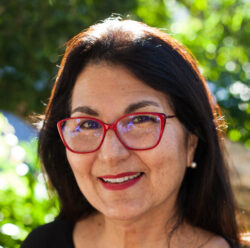 Mirette Seireg is the founder and owner of Mpath LLC, the first woman-owned library of its kind to achieve gender parity. Changing the music world for females and other underrepresented composers, Mirette has scouted talent world-wide from nearly every continent on earth.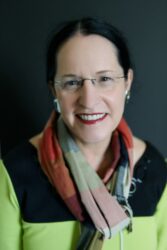
 Dr. Kallet is Professor Emerita at the University of Tennessee and is a member of the TN G100 Women Leaders. From 2009-2020, she mentored poetry groups for the Virginia Center for the Creative Arts, in Auvillar, France. Her poetry has appeared recently in Plume and
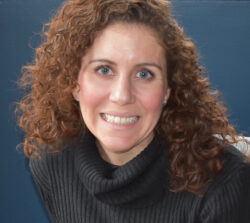 Aubrie Fennecken is the Global Executive Director of WIN: Women in Innovation, a nonprofit organization built to close the gender gap in innovation. Aubrie speaks on why equity in innovation is so critical to breaking the cycle of inequity in our world more broadly. WIN is an amazing community of innovators across the globe innovation resources. She explains what her organization is doing to address the gender gap and support innovative women.
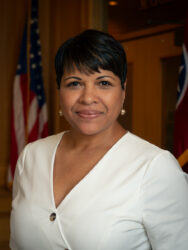 Candy Johnson: Before becoming President and CEO of the Urban League of Greater Chattanooga in January of 2021, she served as a senior advisor to Chattanooga Mayor Berke. She led community-focused initiatives to create sustainable partnerships and external investments to advance the administration’s economic, racial and social equity agenda with the goal of improving community quality of life. Johnson also led the COVID-19 Economic Recovery Alliance in partnership with Bloomberg Associates and co-created the Styles L. Hutchins Black College Student Fellowship. A native of Clarksville, Tennessee, Johnson was the youngest member ever elected to public office for the Clarksville City Council.
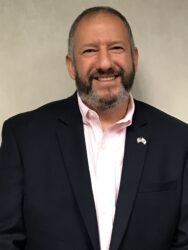 Michael Dzik: Executive Director of the Jewish Federation of Greater Chattanooga since 2001. Much of Michael’s work focuses on community relations, bringing together people of all faiths, cultures and backgrounds to find common ground and understanding while building strong connections and friendships. Through programs such as the Jewish Film Series, exhibits, speakers, and multi-faith panels, the Jewish Federation works to connect all of our Chattanooga community.