Category Archives: About Us

About the American Diversity Report

Quick Reference Religious Diversity Cards – by Deborah Levine

Path to Religious Literacy
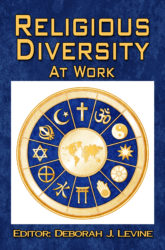
Religious DiversityWhile leadership training will often include issues related to Diversity & Inclusion, few programs include instruction in religious diversity. Yet, cultural awareness, cultural competence, global leadership, and cross-cultural communication are embraced as the tools of the market place of the future. What accounts for this black hole of information on diverse religions?  One has only to turn on the TV, open a newspaper, or check the internet headlines to see that religion is a major factor in interactions across the planet.  It is both puzzling and disturbing that a virtual vacuum of expertise exists in the relationship-oriented sectors of our society: business, education, government, and human services. Trying to avoid culture clash of belief systems can result in a paralyzing sense of being overwhelmed and under-prepared. Too many leaders are left scrambling for strategies and resources designed to turn the religious diversity novice into an expert.

Continue reading Quick Reference Religious Diversity Cards – by Deborah Levine →

Offshore billionaires launch into space – by Deborah Levine

Originally published in The Chattanooga Times Free Press 

If you’re the richest person on Earth, your next step might be to launch yourself into space. That’s what Jeff Bezos has done. I guess this planet is just too boring to invest in. Maybe that’s why his company, Amazon, paid an effective federal income tax rate of only 4.3 % on U.S. income, even when Trump’s administration dropped the rate to 21%. Continue reading Offshore billionaires launch into space – by Deborah Levine →

12 Steps to Diversity Recovery – by Susan McCuistion

Abstract

Our approach to Diversity and Inclusion (D&I) is broken. We have done the same thing over and over for years, expecting better representation and more equitable treatment, all to no avail. In fact, many people still don’t know exactly what D&I is.

At every turn, there’s news about people being mistreated, excluded, and harmed. The social and political unrest often seem impossible to escape. Situations arise on a regular basis that create a social media nightmare for organizations resulting in public shaming and forced apologies. The mental, emotional, and physical toll this turmoil takes impacts us all, regardless of our role— victim, perpetrator, or observer.

We can’t fix the mess we’re in with a 2-hour training session. Creating a world that is truly more equitable for everyone is a process. It takes time and practice.

Cultivating compassion can help us nurture more connected communities and workplaces. On the surface, compassion sounds like a soft skill. However, compassion isn’t just about being kind to other people and doing nice things for them. Instead, it’s an active process through which we build skills and knowledge to understand what kind of help is wanted, rather than assuming what is needed.

This article is distilled from my book, “The D Word: 12 Steps to Diversity Recovery,” which is focused on building the skills needed to bring a more humanitarian approach to D&I using compassion and resilience.

Continue reading 12 Steps to Diversity Recovery – by Susan McCuistion →

Religion, Relationships and Generational Trends – by Dr. William Hicks

A Christian Case Study

The problems and trends facing society are complex: moral turpitude and decay; increased crime; the deterioration and demise of the family; despair, loss of purpose and insidious incompetence among our young; economic irresponsibility and the disappearance of personal and corporate integrity. These problems are essentially spiritual problems and relational in their essence. Systemic solutions related to the welfare system, economic system, and criminal justice system merely the symptoms of the problems. It is logical that spiritual approaches to these problems are the most effective means to ameliorate them and their negative and all-too-often tragic consequences.

Continue reading Religion, Relationships and Generational Trends – by Dr. William Hicks →

Making Healing a Priority – by Drs. Temika Edwards and Cynthia R. Jackson

Abstract

An outlier incident has crushed the economy, hurled masses into unemployment, closed schools, and forced isolation. The global pandemic has generated a health crisis tsunami of suffering, anxiety, depression, and addiction, which is why our inner and outer healing must be a priority for overall health and well-being. Authors Edwards and Jackson view inner and outer health as the wholeness required to adapt to an ever-changing environment. They explain the differences and connections between inner and outer health, as well as the importance of altering one’s environment to secure the essence of inner peace and be an extension of one’s own perceptual systems when their own are compromised. Spoken from lived experience and research, Drs. Edwards and Jackson describe the impact to a person’s well-being when inner and outer health are not in harmony and discuss the fortitude that it takes to focus on one’s own healing – not the healing solutions chosen by someone else. Focusing and committing to inner and outer healing positively can affect one’s personal and professional lives and the communities around them if prioritized.

Continue reading Making Healing a Priority – by Drs. Temika Edwards and Cynthia R. Jackson →

Holistic Retirement: Structure, Community and Purpose – by Eric J. Kruger

Planning for a Fulfilling Life After Work
During and After COVID – 19
Beyond the Financial and Legal Aspects 

Abstract

This article addresses the importance of including all the major aspects of a fulfilling and healthy lifestyle in retirement. The large majority of books and articles on retirement planning focus just on the financial and legal aspects. The article emphasizes paying attention to eight major facets of life after full-time work as critical to a successful, fulfilling, and balanced existence: in two words, “Holistic Retirement.”

Continue reading Holistic Retirement: Structure, Community and Purpose – by Eric J. Kruger →

ESL in the Virtual Classroom – by Beth Lynne, EdD

A Look at How Foreign-born Students are Faring in the Pandemic

Abstract

At this writing, students around the world have been on lockdown since March 2020. As a result, online and virtual environments have been used by school districts in order to reduce regression and loss of skills. This essay presents a look at English language learners (ELL) and challenges they face as a consequence of loss of face to face instruction. Regulations, testing, the digital divide, support of ESL students, and improving attendance in relation to ELLs is examined. A section about implications for future instruction as LEP students as classrooms open up again and some who have graduated go to the next phases in their lives is explored.

Continue reading ESL in the Virtual Classroom – by Beth Lynne, EdD →

Words shape us for better or worse – by Deborah Levine

 (Originally published in The Chattanooga Times Free Press) 

Attempts to bring our diverse society together is nothing new. Controversies and road blocks surrounding the attempts aren’t new either. It may seem that way to some folks with furious debate over “structural racism”, but it’s the terminology that’s new, not the reality.

Our language has struggled over decades to find ways to express the mission of inclusion without creating a nasty backlash. Back in the day, Multiculturalism was supposed to heal disparities. It did not. Then it was Diversity. That didn’t resolve much and Diversity & Inclusion became popular. Not a major game changer, so we went to Diversity, Equity, and Inclusion (DEI) to address structural disparities. Has DEI had the desired results in the community, workplace, university, or any place? I’m not convinced.
Continue reading Words shape us for better or worse – by Deborah Levine →

Denial doesn’t make it rain – by Deborah Levine

Originally published in The Chattanooga Times Free Press 

There hasn’t been much noise from the climate change deniers this week despite data showing that there are 109 congressional representatives and 30 senators, who refuse to acknowledge the scientific evidence of human-caused climate change. That’s 25% of our federal elected officials including Tennessee’s Republican Senator Marsha Blackburn and Congressman Chuck Fleischmann.

Maybe the silence is due to the unprecedented heatwave in the West and Southwest. The photos of livestock roaming brown fields with no grass might encourage the deniers to lay low. Not to mention the pictures of Lake Mead. If you’ve ever toured Lake Mead and the Hoover Dam you know that this symbol of American scientific innovation built during The Depression was a stunning tourist destination well as providing drinking water and farming irrigation. Today’s situation leaves the water level at its lowest since the 1930s. You can now see the stone walls of the lake and we’ll see even more in the coming months.

Continue reading Denial doesn’t make it rain – by Deborah Levine →

Our Mental State is Depressing – by Deborah Levine

Originally published in The Chattanooga Times Free Press

It was a newsworthy moment when tennis star Naomi Osaka announced that she wouldn’t participate in media interviews because of her battle with depression and anxiety. The fact that the World Tennis Association fined her $15,000 got even more press. But her withdrawal from the French Open has put the issue of mental health front and center.  It’s not as if she’s the first athlete to suffer from depression and anxiety. NBA All-Star Kevin Love, gymnast Aly Raisman, and baseball’s Zack Greinke have talked about their struggles, as has Olympic swimmer Michael Phelps, who called Osaka’s coming forward a “game-changer… I hope this is the breaking point of really being able to open up and save more lives”.

Continue reading Our Mental State is Depressing – by Deborah Levine →