Tag Archives: diversity

The DEI Future: Old, New and Maybe – by Deborah Levine

A Diversity Futurist’s Perspective
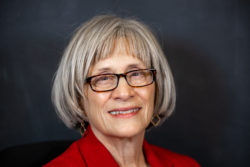
DEBORAH LEVINE
Editor-in-Chief Deborah J. Levine

In my more than half a century dealing with diversity, I have seen multiple changes in the field of training, coaching, and consulting.  COVID presents an unprecedented mountain of changes in the DEI field that merit an overview of  the past, present and future.  As much as I appreciate some of you  giving me the title of Diversity Futurist, Diva, Matriarch and Fairy Godmother, I’m well aware of the many experts reading the American Diversity Report and welcome your comments on the future of diversity.

Continue reading The DEI Future: Old, New and Maybe – by Deborah Levine
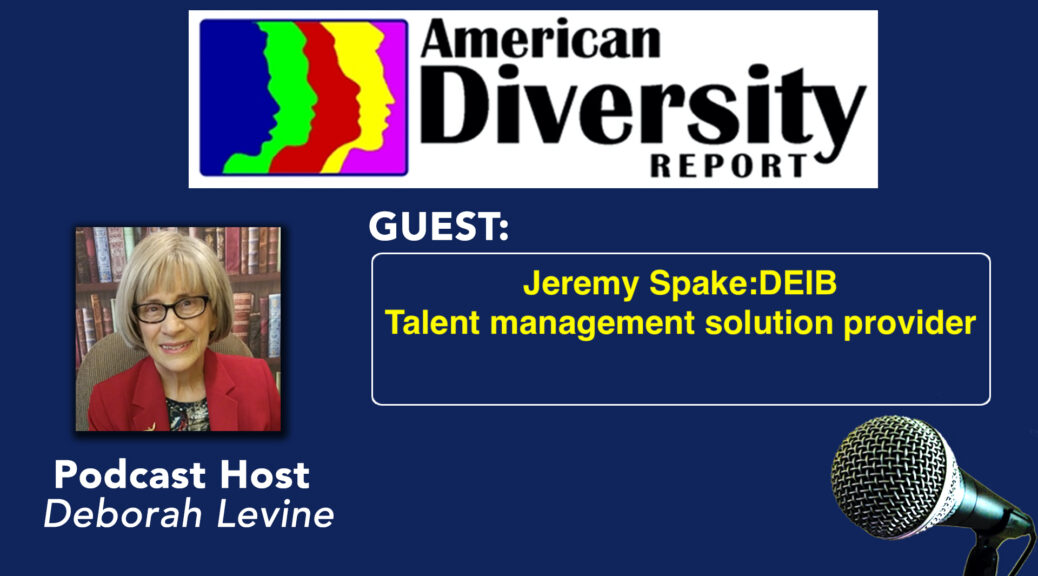
Jeremy Spake: DEIB Talent management solution provider

Jeremy SpakeJeremy Spake is a Principal on the Thought Leadership & Advisory Services team at Cornerstone OnDemand, a leading global SaaS-based talent management solution provider. In this capacity, he works to develop continuous performance management, data-driven compensation, and succession strategies to advise organizations on how to drive people theory into practice. Central to this work is providing guidance to embed talent management strategy with Diversity, Equity, Inclusion & Belonging (DEIB) initiatives for clients.  Spake has led pay equity initiatives, Employee Resource Groups, advocated for inclusive benefits offerings and regularly leads talent management strategy workshops for Cornerstone’s clients around the world. He lives in Seattle with his husband David and cat Oliver.

CLICK links to Resources discussed by Jeremy Spake: 

CLICK for podcast interview
with Jeremy Spake


Is it just a Box? – by Michele Wages

Complexity of Diversity

As I rode the elevator, I overheard a conversation between two African American adults.  They were talking about one of their bosses and one said, “People who are not Black do not understand the prejudices and oppression we have gone through.”

As I left the elevator and walked into the doctor’s office, I was handed a clipboard with some required forms I needed to fill out.  One section caught my attention: Race.  It asked me to check a box.  I immediately thought about the conversation I just heard, and looked over my choices, Caucasian, Asian, Hispanic, Native American, Pacific Islander.  I then thought about prejudices and oppression for each choice.

Continue reading Is it just a Box? – by Michele Wages

Diversity and Speech Part 17: Diversity Training – by Carlos E. Cortés

2020 turned into a momentous year for diversity training.  The COVID-19 pandemic forced many diversity trainers, myself included, to re-invent themselves by adapting their workshops into an online format.  The Memorial Day killing of George Floyd thrust anti-racism into the center of diversity training, challenging those presenters who had generally soft-pedaled the issue.  President Donald Trump’s September 22 executive order, “Race and Sex Stereotyping,” caused government agencies and contractors, including some higher education institutions, to suspend or mute their diversity training.

Continue reading Diversity and Speech Part 17: Diversity Training – by Carlos E. Cortés

Here to Stay: Cultural Diversity & Inclusion – by Robert Maisel

The words “diversity” and “inclusion” are big buzz words in today’s society, and they should be as they are very relevant and important in today’s times. But although these words are often thrown around, it is important for us to think critically about what they mean. And to assess their impact on business and society as a whole.

Many large companies are hiring for diversity in race and gender, amongst several other categories. But why, so often, is culture left out of the equation? Should it be? Definitely not. And here’s why.

Continue reading Here to Stay: Cultural Diversity & Inclusion – by Robert Maisel

Diversity and Speech Part 14: Health Equity – by Carlos Cortés, Adwoa Osei

Completing her second year as a pediatrics professor at the University of California, Riverside, Adwoa was focused on providing clinical training for her medical students.  A retired UCR history professor, Carlos had no way of imagining that he would soon be joining the staff of a medical school.  .

Then the UCR School of Medicine decided to establish a new required curricular thread on Health Equity, Social Justice, and Anti-Racism.  Shortly after that, the School asked Adwoa and Carlos to become co-directors of the thread in order to get it started.

It was decision time for the two of us.  Still at an early stage of her medical teaching career, Adwoa had numerous obligations.  Experienced in health care cultural competence training, Carlos had been giving annual workshops on that topic to UCR’s incoming medical students.  But establishing an entire curricular thread?  That was a challenge.  But also an opportunity.  We couldn’t turn it down.   Continue reading Diversity and Speech Part 14: Health Equity – by Carlos Cortés, Adwoa Osei

Future of Diversity Amid Pandemic – ADR TOWN HALL

ADRThe American Diversity Report (ADR), an award-winning digital multimedia platform, offered a virtual Town Hall featuring a distinguished panel of experts to discuss the future of diversity, equity and inclusion (DEI) in education and employment amid COVID-19. We thank the many donors who made this event and ADR’s next year possible. CLICK to see List of ADR DONORS 

“For 15 years, ADR’s dozens of writers from around the U.S. and the world have provided Inspiration, Instruction, and Innovation expertise.  We recognize that COVID-19 requires an innovative approach to Diversity, Equity  Inclusion,” said Deborah Levine, ADR’s Editor-in-Chief and award-winning author of 15 books.

CLICK SEE THE TOWN HALL VIDEO.

Continue reading Future of Diversity Amid Pandemic – ADR TOWN HALL

Tribalism and The Vote – by Deborah Levine

Some have called our “Me & Us First” politics as nationalism but I prefer to apply the label ‘tribalism’.  In this COVID-19 environment, racial lines, regional preferences, current events and heavy political advertising, are not shaping public opinion as much as the identity of a specific community and the resonance of a leader to that community. Communities are built on religious and ethnic values, family preferences, housing patterns, and health habits. Their political choices have always been shaped by those cultural traits. With the economic fallout and the growing disparities in jobs and  education, politics will become a complex mix of leadership styles that symbolize communities along with the body language, word choice, and facial expressions that resonate specific communities. Policy positions and biographical details will be less relevant as they are filtered through the lens of each group.

Continue reading Tribalism and The Vote – by Deborah Levine

Music and NeuroCommunication: Part 2 – by Deborah Levine

Neuro Communication with James Brown

My musical neurocommunication with Ravi Shankar ended with his deep bow. The burst of applause was startling after the stillness, as was the quick dash of movement to the bathrooms. I turned to Cousin Sam, thanked him, and started to put on my coat. Sam didn’t move, ”We should stay for the next act.” I whined at that, “I’m tired and it’s a long schlep back to campus on the bus.” “Trust me. We should stay,” he said softly, but firmly. And so, mildly kvetching (complaining in Yiddish), I was still seated when the curtain re-opened.

Continue reading Music and NeuroCommunication: Part 2 – by Deborah Levine

Music and Neurocommunication: Part 1 – by Deborah Levine

Neurocommunication with Ravi Shankar

My cousin Sam and I escaped our Harvard dorms and were about to experience neurocommunication as we headed out to a Ravi Shankar concert in a small neighborhood theater in Boston. I was just seventeen, you know what I mean, and it was frostbite territory standing at the bus stop in Cambridge, Mass. Freezing almost took my mind off of being homesick for my family back in New York. Overcome with loneliness, I needed an attitude adjustment and Sam insisted on some music therapy. He thought that classical sitar music from India would distract and soothe  – reboot my brain.  I wondered why we were the only Harvard students who ‘d come to hear this relatively unknown musician from India. But it was the sixties and Shankar hadn’t yet been labeled by The Beatles’ George Harrison as “the godfather of world music”.

Continue reading Music and Neurocommunication: Part 1 – by Deborah Levine